Connect with us

Entertainment

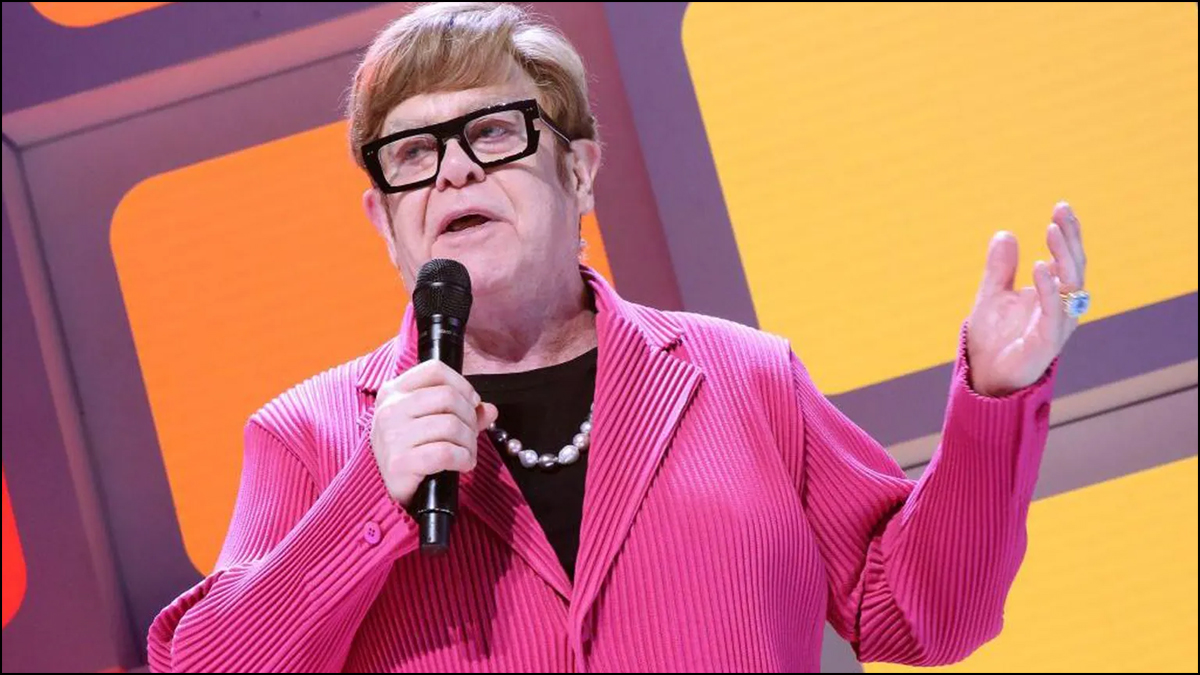
Elton John and Dua Lipa seek protection from AI

Published

on

Dua Lipa, Sir Elton John, Sir Ian McKellen and Florence Welch are among a list of stars calling on the prime minister to update copyright laws in a way that protects them from artificial intelligence.

A letter signed by more than 400 British musicians, writers and artists, addressed to Sir Keir Starmer, says failing to give that protection would mean them “giving away” their work to tech firms.

Also at risk, they write, is “the UK’s position as a creative powerhouse”.

They want the PM to back an amendment to the Data (Use and Access) Bill that would require developers to be transparent with copyright owners about using their material to train AI models.

A government spokesperson said: “We want our creative industries and AI companies to flourish, which is why we’re consulting on a package of measures that we hope will work for both sectors.

“We’re clear that no changes will be considered unless we are completely satisfied they work for creators,” they added.

Other signatories include author Kazuo Ishiguro, playwright David Hare, singers Kate Bush and Robbie Williams, as well as Coldplay, Tom Stoppard and Richard Curtis.

Sir Paul McCartney, who told the BBC in January he was concerned about AI ripping off artists, has also signed the letter.

“We are wealth creators, we reflect and promote the national stories, we are the innovators of the future, and AI needs us as much as it needs energy and computer skills,” it states.

They say their concerns can be met if the government backs an amendment proposed by Baroness Beeban Kidron ahead of a key vote in the House of Lords on Monday.

Baroness Kidron’s amendment, it says, would “allow both AI developers and creators to develop licensing regimes that will allow for human-created content well into the future.”

Not everyone agrees with the artists’ approach.

Julia Willemyns, co-founder of the Centre for British Progress think tank, said such proposals could hamper the UK and its bid for growth.

The measures would “do nothing to stop foreign firms from using content from the British creative industries,” she told the BBC.

“A restrictive copyright regime would offshore AI development, chill domestic innovation, and directly harm the UK economy,” she said.

However, the letter comes amid mounting concern from artists over the inclusion of their works, and material protected by copyright, in the data used to develop generative AI systems.

These tools, which can produce new content in response to simple text prompts, have become increasingly popular and available to consumers.

But their capabilities have been accompanied by concerns and criticism over their data use and energy demand.

What is AI, how does it work and what are the concerns about it?

In February, artists including Annie Lennox and Damon Albarn released a silent album to protest about the government’s proposed changes to copyright law.

The government carried out a consultation around its proposal to allow developers to be able to use creators’ content on the internet to help develop their models, unless the rights holders elect to “opt out”.

According to The Guardian, ministers were reconsidering the proposal following creator backlash.

Mr Ishiguro pointed the BBC to an earlier statement in which he wrote, “why is it just and fair – why is it sensible – to alter our time-honoured copyright laws to advantage mammoth corporations at the expense of individual writers, musicians, film-makers and artists?”

The Nobel Prize-winning author added that since then the only limited advance was that it now appeared the government had accepted the opt-out proposals were not likely to be workable, He thought a new consultation to find a fairer scheme was possible, though it remained to be seen how meaningful any consultation would be.

“It’s essential that they get this right,” he wrote.

MPs recently rejected a separate amendment tabled by Baroness Kidron that aimed to make AI developers accountable to UK copyright law.

Now, she says transparency obligations for tech firms under the new proposed amendment could support the development of licensing agreements between creators and companies.

“The UK is in a unique position to take its place as a global player in the international AI supply chain, but to grasp that opportunity requires the transparency provided for in my amendments, which are essential to create a vibrant licencing market,” Baroness Kidron said.

In their statement the government said: “It’s vital we take the time to work through the range of responses to our consultation, but equally important that we put in the groundwork now as we consider the next steps.

“That is why we have committed to publishing a report and economic impact assessment – exploring the broad range of issues and options on all sides of the debate.”

(BBC News)

Entertainment

Lilo and Stitch beat Tom Cruise in box office bonanza

Published

on

By

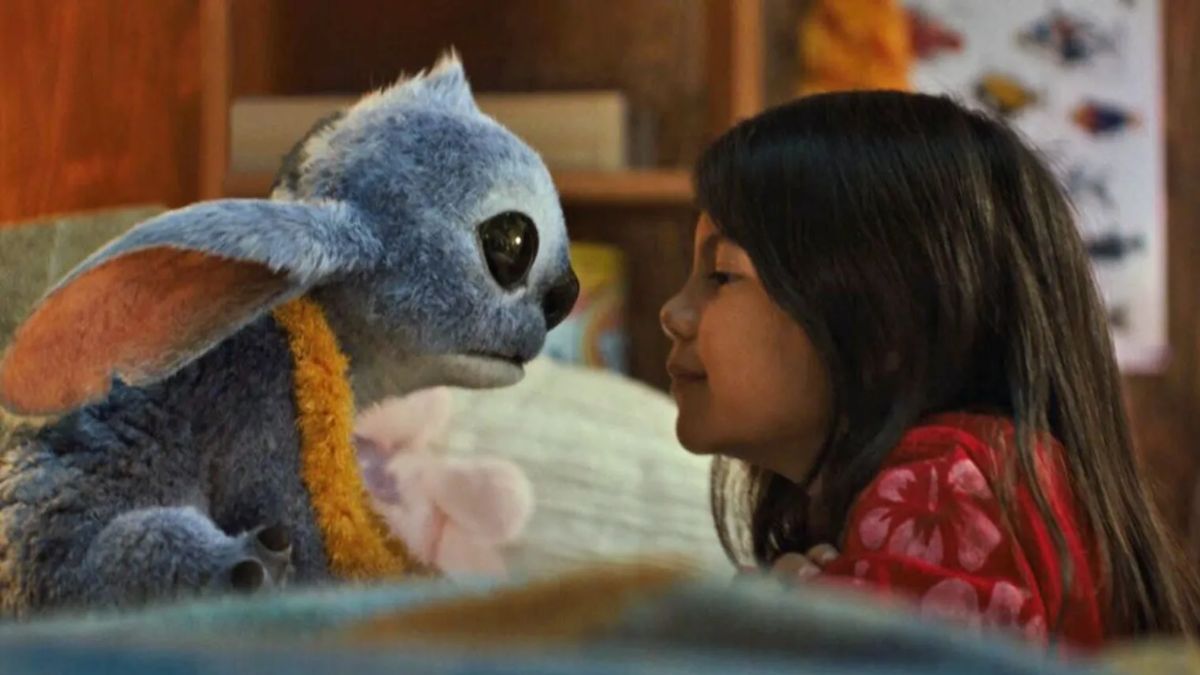
Disney’s live-action Lilo and Stitch remake and Tom Cruise’s supposedly final Mission: Impossible outing have opened as two of the biggest films of the year in a record-breaking weekend at the box office.

Lilo and Stitch, which revisits the 2002 animated family favourite, exceeded expectations with takings of $341m (£252m) around the world.

That made it the second highest opening of 2025 so far after A Minecraft Movie, Variety reported, and broke the record for the Memorial Day weekend in the US.

Mission: Impossible – The Final Reckoning, the eighth film in the franchise, also proved a hit with $190m (£140m) in ticket sales.

Cruise has been playing agent Ethan Hunt since 1996, and seemingly confirmed The Final Reckoning would be the last instalment by telling the Hollywood Reporter: “It’s the final! It’s not called ‘final’ for nothing.”

But some have doubts about whether it will really turn out to be the end.

The blockbuster has had some rave reviews, with the Guardian calling it a “wildly entertaining adventure” in a five-star review, and Vanity Fair describing it as “a worthy send-off”.

However, not everyone was blown away, with the Hollywood Reporter saying it’s “a disappointing farewell”, and Mashable saying the series risked going out with the “fizzled whimper of a message self-destructing in a tape deck”.

Meanwhile, Lilo and Stitch is the latest in a long line of live-action remakes of beloved Disney animations, and achieved the third-best box office opening behind 2019’s The Lion King and 2017’s Beauty and the Beast, Variety said.

The new version stars Courtney B Vance and Zach Galifianakis alongside eight-year-old Maia Kealoha and a computer-generated cuddly runaway alien.

It has also had mixed reviews, being described as “jovial, zany, and sweet” by the Daily Beast, but a “mind-numbing abomination” by the Times.

(BBC News)

Continue Reading

Entertainment

Anudi shines in Head-to-Head & Talent rounds

Published

on

By

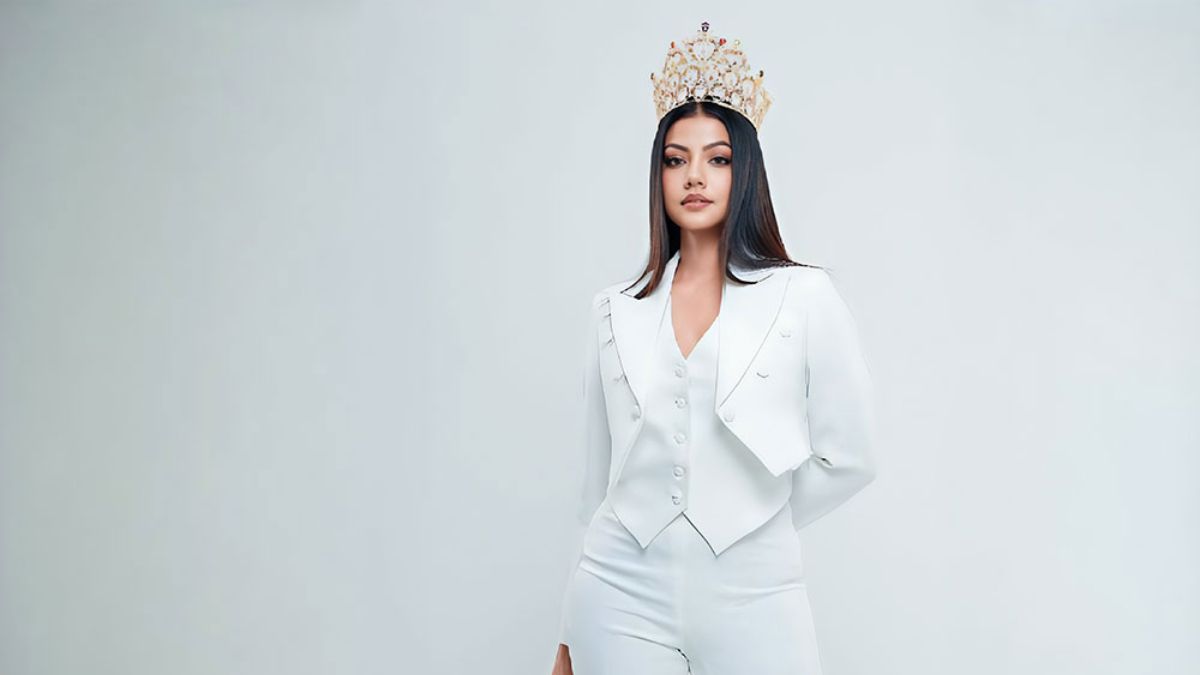
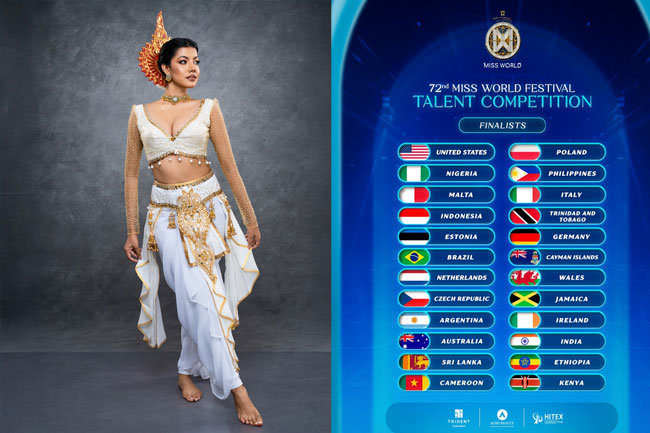
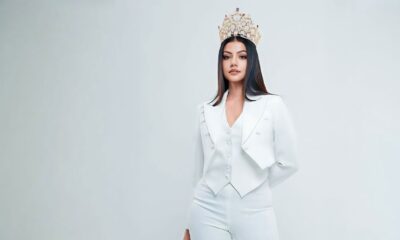
Anudi Gunasekara has been selected into the Top 5 from Asia in the Head-to-Head Challenge at the 72nd Miss World pageant.

She is the first Sri Lankan to reach the finalist stage in this segment.

She has also set another milestone by becoming the only contestant from Asia to qualify as a finalist in both the Head-to-Head and Talent rounds this year.

Continue Reading

Entertainment

India’s Banu Mushtaq scripts history with International Booker win

Published

on

By

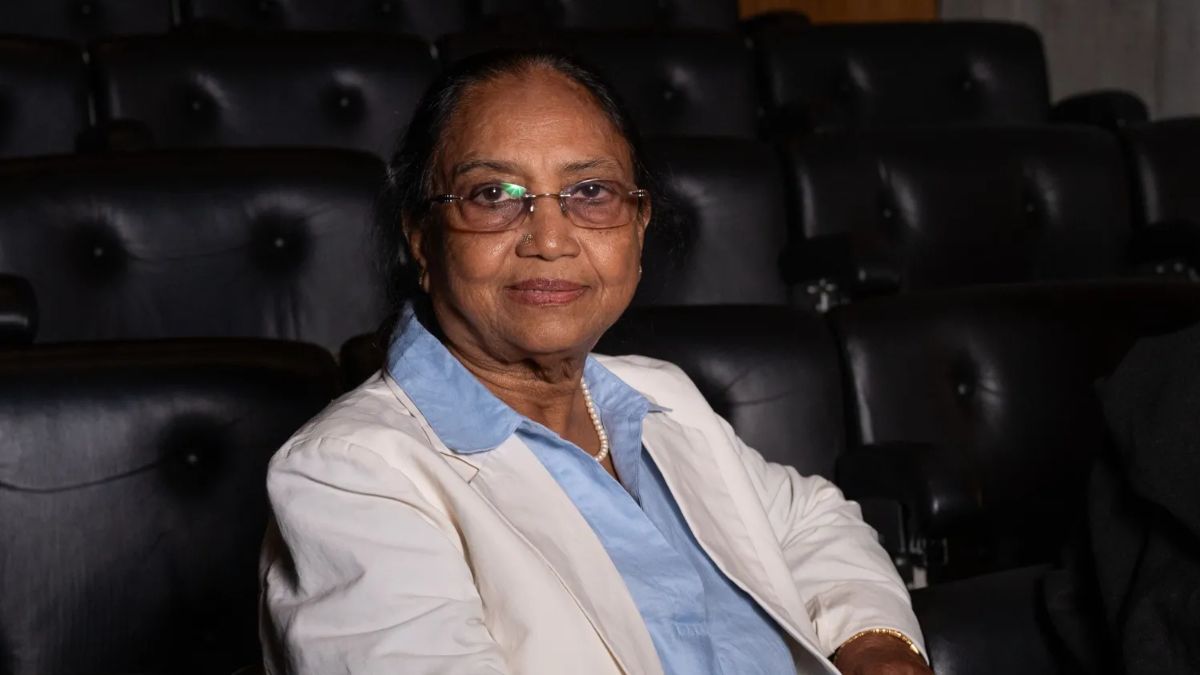
Indian writer-lawyer-activist Banu Mushtaq has scripted history by winning the International Booker prize for the short story anthology, Heart Lamp.

It is the first book written in the Kannada language, which is spoken in the southern Indian state of Karnataka, to win the prestigious prize.

The stories in Heart Lamp were translated into English by Deepa Bhasthi.

Featuring 12 short stories written by Mushtaq over three decades from 1990 to 2023, Heart Lamp poignantly captures the hardships of Muslim women living in southern India.

Mushtaq’s win comes off the back of Geetanjali Shree’s Tomb of Sand – translated from Hindi by Daisy Rockwell – winning the prize in 2022.

Her body of work is well-known among book lovers, but the Booker International win has shone a bigger spotlight on her life and literary oeuvre, which mirrors many of the challenges the women in her stories face, brought on by religious conservatism and a deeply patriarchal society.

It is this self-awareness that has, perhaps, helped Mushtaq craft some of the most nuanced characters and plot-lines.

“In a literary culture that rewards spectacle, Heart Lamp insists on the value of attention — to lives lived at the edges, to unnoticed choices, to the strength it takes simply to persist. That is Banu Mushtaq’s quiet power,” a review in the Indian Express newspaper says about the book.

Mushtaq grew up in a small town in the southern state of Karnataka in a Muslim neighbourhood and like most girls around her, studied the Quran in the Urdu language at school.

But her father, a government employee, wanted more for her and at the age of eight, enrolled her in a convent school where the medium of instruction was the state’s official language – Kannada.

Mushtaq worked hard to become fluent in Kannada, but this alien tongue would become the language she chose for her literary expression.

She began writing while still in school and chose to go to college even as her peers were getting married and raising children.

It would take several years before Mushtaq was published and it happened during a particularly challenging phase in her life.

Her short story appeared in a local magazine a year after she had married a man of her choosing at the age of 26, but her early marital years were also marked by conflict and strife – something she openly spoke of, in several interviews.

In an interview with Vogue magazine, she said, “I had always wanted to write but had nothing to write (about) because suddenly, after a love marriage, I was told to wear a burqa and dedicate myself to domestic work. I became a mother suffering from postpartum depression at 29”.

In the another interview to The Week magazine, she spoke of how she was forced to live a life confined within the four walls of her house.

Then, a shocking act of defiance set her free.

“Once, in a fit of despair, I poured white petrol on myself, intending to set myself on fire. Thankfully, he [the husband] sensed it in time, hugged me, and took away the matchbox. He pleaded with me, placing our baby at my feet saying, ‘Don’t abandon us’,” she told the magazine.

In Heart Lamp, her female characters mirror this spirit of resistance and resilience.

“In mainstream Indian literature, Muslim women are often flattened into metaphors — silent sufferers or tropes in someone else’s moral argument. Mushtaq refuses both. Her characters endure, negotiate, and occasionally push back — not in ways that claim headlines, but in ways that matter to their lives,” according to a review of the book in The Indian Express newspaper.

Mushtaq went on to work as a reporter in a prominent local tabloid and also associated with the Bandaya movement – which focussed on addressing social and economic injustices through literature and activism.

After leaving journalism a decade later, she took up work as a lawyer to support her family.

In a storied career spanning several decades, she has published a copious amount of work; including six short story collections, an essay collection and a novel.

But her incisive writing has also made her a target of hate.

In an interview to The Hindu newspaper, she spoke about how in the year 2000, she received threatening phone calls after she expressed her opinion supporting women’s right to offer prayer in mosques.

A fatwa – a legal ruling as per Islamic law – was issued against her and a man tried to attack her with a knife before he was overpowered by her husband.

But these incidents did not faze Mushtaq, who continued to write with fierce honesty.

“I have consistently challenged chauvinistic religious interpretations. These issues are central to my writing even now. Society has changed a lot, but the core issues remain the same. Even though the context evolves, the basic struggles of women and marginalised communities continue,” she told The Week magazine.

Over the years Mushtaq’s writings have won numerous prestigious local and national awards including the Karnataka Sahitya Academy Award and the Daana Chintamani Attimabbe Award.

In 2024, the translated English compilation of Mushtaq’s five short story collections published between 1990 and 2012 – Haseena and Other Stories – won the PEN Translation Prize.

(BBC News)

Continue Reading

Trending

Copyright © 2024 Sri Lanka Mirror. All Rights Reserved