Connect with us

World

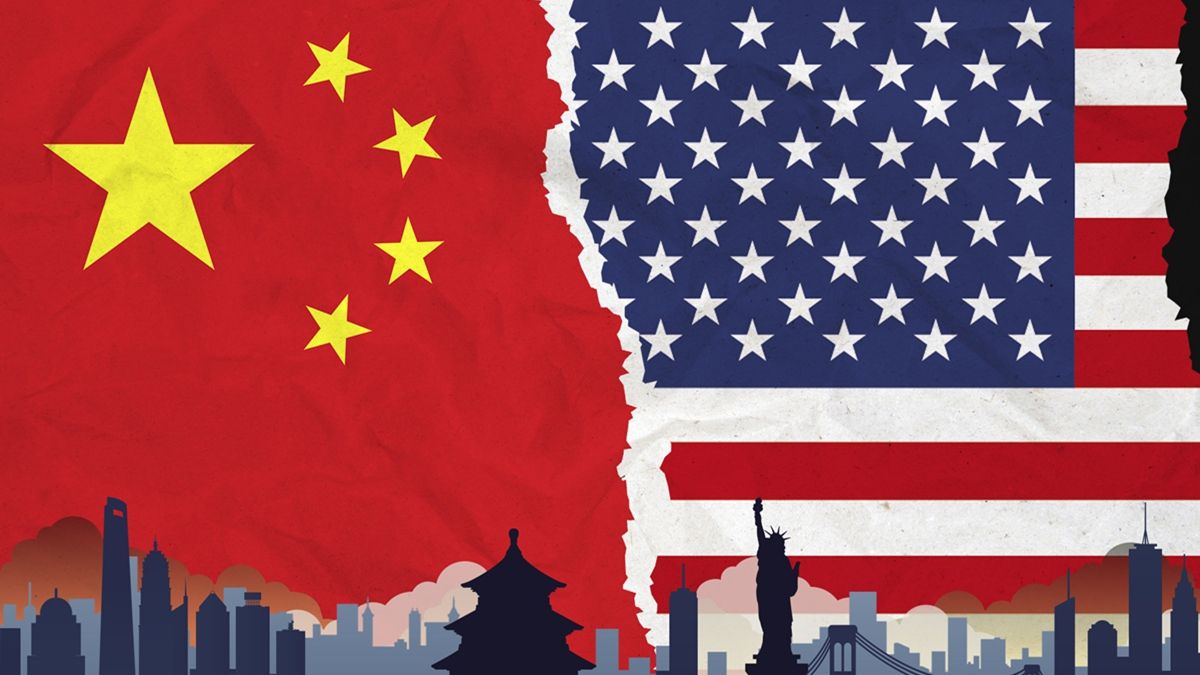
Tariffs on China set to rise to at least 104%

Published

on

President Donald Trump is set to impose an astounding 104% in levies across all Chinese imports on Wednesday, White House Press Secretary Karoline Leavitt announced on Tuesday. This comes on top of Chinese tariffs that were in place prior to Trump’s second term.

China was already set to see tariffs increase by 34% on Wednesday as part of Trump’s “reciprocal” tariffs package. But the president tacked on another 50% after Beijing didn’t back off on its promise to impose 34% retaliatory tariffs on US goods by noon Tuesday, adding an additional 84% in duties.

Earlier Tuesday, China’s Commerce Ministry said it “firmly opposes” the additional 50% tariffs on Chinese imports, calling it “a mistake upon a mistake.” The ministry vowed to escalate its retaliation on US exports.

US stocks, which soared Tuesday morning, began moving lower following Leavitt’s comments. Markets ultimately ended the day markedly lower. The Dow fell 320 points, or 0.84%. The broader S&P 500 fell 1.57%. The tech-heavy Nasdaq Composite slid 2.15%.

“Countries like China, who have chosen to retaliate and try to double down on their mistreatment of American workers, are making a mistake,” Leavitt told reporters on Tuesday. “President Trump has a spine of steel, and he will not break.”

“The Chinese want to make a deal, they just don’t know how to do it,” she added. She declined to share what, if any, terms Trump would consider to lower tariffs on China.

Asian markets largely tracked Wall Street’s losses, with Japan’s Nikkei 225 opening about 3% lower on Wednesday. Hong Kong’s Hang Seng also fell 3%. South Korea’s Kopsi and Australia’s benchmark ASX 200 index were each down about 1%.

Along with increasing China’s overall tariff rate, President Trump also signed an executive order Tuesday night tripling tariffs on goods worth less than $800 from the country. As it stands, packages under $800 have been exempt from tariffs through the so-called “de minimus” exemption.

Initially, those goods were set to face tariffs of 30% come May 2. But Trump’s latest executive order hiked the rates to 90%. This will impact Americans who order from sites like Shein, Temu and AliExpress, likely leading to higher prices of the goods.

In February, Trump had initially imposed a 10% tariff on all Chinese goods, with no exceptions, tying it to the country’s alleged role in aiding illegal immigration and getting fentanyl into the US. Last month, he doubled those rates.

China was America’s second largest source of imports last year, shipping a total of $439 billion worth of goods to the US, while the US exported $144 billion worth of goods to China. The mutual tariffs threaten to hurt domestic industries and are poised to result in layoffs.

When Trump’s first term ended, the US charged an average tariff rate of 19.3% on Chinese goods, according to a Peterson Institute for International Economic analysis. The Biden administration kept most of Trump’s tariffs in place while also adding additional ones, bringing the average rate to 20.8%.

Come Wednesday, the total average tariff on Chinese exports to the US will soar to nearly 125%.

Potential countermeasures
China’s state media and social media users have struck a defiant tone to Trump’s threat of additional tariffs. Two influential commentators with links to Beijing shared an identical list of possible countermeasures China could hit back with, citing unnamed sources.

The potential measures include significantly increasing tariffs on US agricultural products such as soybeans and sorghum, banning the import of US poultry, suspending cooperation on fentanyl, limiting market access for services such as legal consultancies, further restricting or banning outright the import of US films and investigating how much American companies earned from their intellectual property in China.

“China does not provoke trouble, but it is not afraid of it either,” wrote Liu Hong, a senior editor at China’s official state news agency Xinhua, who shared the list on his social media account.

The set of measures were also shared by a separate account run by Ren Yi, the Harvard University-educated grandson of the late senior Communist Party official Ren Zhongyi.

While previous rounds of Chinese tariffs caused more American businesses to look to other foreign countries like Mexico and Vietnam to manufacture goods, China remained the top foreign source of many items.

That includes, among others, toys, communication equipment such as smartphones, computers and a wide range of other consumer electronics. All these goods are likely to cost US consumers substantially more soon.

Dozens of other countries as well as the European Union also face a midnight deadline for new tariff rates. Those rates, which Trump laid out last week, range from 11% to 50%.

Leavitt told reporters that despite several conversations with world leaders aiming to negotiate lower tariff rates, Trump has little appetite to delay his plans.

Having spoken with Trump earlier on Tuesday, Leavitt said, “He expects that these tariffs are going to go into effect.”

At the same time, she said Trump instructed his trade team to make “tailor-made” deals with countries that want to negotiate. Pressed further on whether the president had any timeline or deadline for the trade deals, Leavitt again reiterated that they won’t be “off-the-rack deals.”

(CNN)

World

Trump calls Putin ‘crazy’ after largest Russian attack on Ukraine

Published

on

By

US President Donald Trump has said he is “not happy” with his Russian counterpart Vladimir Putin, following Moscow’s largest aerial attack yet on Ukraine.In a rare rebuke, Trump said: “What the hell happened to him? He’s killing a lot of people.” He later called Putin “absolutely crazy”.

Ukrainian President Volodymyr Zelensky earlier said Washington’s “silence” over recent Russian attacks was encouraging Putin, urging “strong pressure” – including tougher sanctions – on Moscow.

At least 12 people were killed and dozens injured in Ukraine overnight Sunday after Russia fired 367 drones and missiles – the highest number in a single night since Putin launched a full-scale invasion in 2022.

Air sirens warning of incoming drones and missiles sounded again in many regions of Ukraine early on Monday.

At least three people, including a child, were injured in the north-eastern city of Kharkiv, Mayor Ihor Terekhov said.

In the southern Zaporizhzhia region, two people were injured, said regional head Ivan Fedorov.

In Russia, Moscow Mayor Sergei Sobyanin said two Ukrainian drones heading towards the capital were destroyed by air defence units. No injuries were reported.

Speaking to reporters in New Jersey late on Sunday, Trump said of Putin: “I’ve known him a long time, always gotten along with him, but he’s sending rockets into cities and killing people, and I don’t like it at all.”

Asked about whether he was considering increasing US sanctions on Russia, Trump replied: “Absolutely.” The US president has repeatedly threatened to do this before – but is yet to implement any restrictions against Moscow.

Shortly afterwards, Trump wrote in a post on Truth Social that Putin “has gone absolutely crazy”.

“I’ve always said that he wants all of Ukraine, not just a piece of it, and maybe that’s proving to be right, but if he does, it will lead to the downfall of Russia!”

But the US president also had strong words for Zelensky, saying that he “is doing his country no favours by talking the way he does”.

“Everything out of his mouth causes problems, I don’t like it, and it better stop,” Trump wrote of Zelensky.

Despite Kyiv’s European allies preparing further sanctions for Russia, the US has said it will either continue trying to broker these peace talks, or “walk away” if progress does not follow.

Last week, Trump and Putin had a two-hour phone call to discuss a US-proposed ceasefire deal to halt the fighting.

The US president said he believed the call had gone “very well”, adding that Russia and Ukraine would “immediately start” negotiations toward a ceasefire and “an end to the war”.

Ukraine has publicly agreed to a 30-day ceasefire.

Putin has only said Russia will work with Ukraine to craft a “memorandum” on a “possible future peace” – a move described by Kyiv and its European allies as delaying tactics.

The first direct Ukrainian-Russian talks since 2022 were held on 16 May in Istanbul, Turkey.

Aside from a major prisoner of war swap last week, there was little or no progress on bringing a pausing in fighting closer.

Russia currently controls about 20% of Ukrainian territory. This includes Crimea – Ukraine’s southern peninsula annexed by Moscow in 2014.

(BBC News)

Continue Reading

World

Israeli embassy couple shot dead in Washington

Published

on

By

Shooting suspect Elias Rodriguez has been charged with two counts of first-degree murder after two Israeli embassy staff were killed in Washington DC on Wednesday night.

Sarah Lynn Milgrim and Yaron Lischinsky were leaving an event at the Capital Jewish Museum when they were shot dead.

Rodriguez, a 30-year-old from Chicago, was detained at the scene. More charges could come later, law enforcement officials say, and the FBI is aware of “writings” purported to be from the suspect.

Police say the suspect was in town for a work conference, and shouted “free Palestine” after being taken into custody.

US President Trump says the attack is “so sad” and “based obviously on antisemitism”, while DC Mayor Muriel Bowser says “this crime will not be tolerated in our city”.

Israel’s Prime Minister Benjamin Netanyahu has linked the shooting to the 7 October 2023 attack and says security will be increased at Israeli embassies worldwide.

(BBC News)

Continue Reading

World

‘Shrinking Nemo’: Smaller clownfish sound alarm on ocean heat

Published

on

By

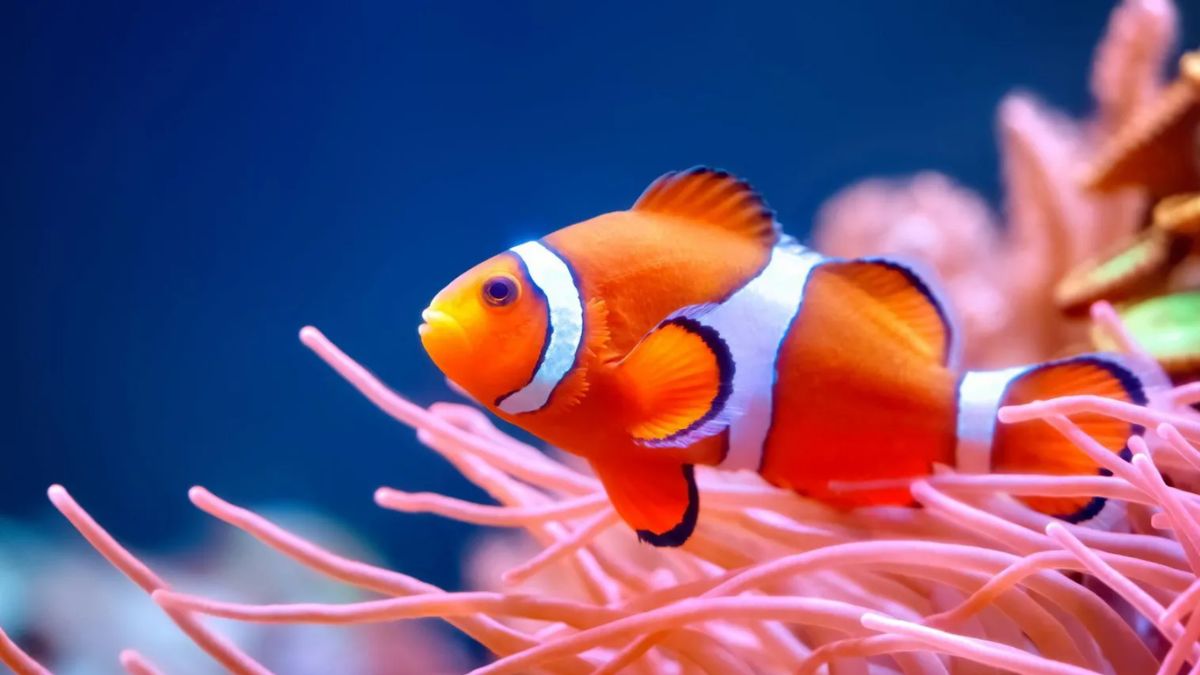
Fish similar to those made famous by the movie Finding Nemo are shrinking to cope with marine heatwaves, a study has found.

The research recorded clownfish living on coral reefs slimmed down drastically when ocean temperatures rocketed in 2023.

Scientists say the discovery was a big surprise and could help explain the rapidly declining size of other fish in the world’s oceans.

A growing body of evidence suggests animals are shape shifting to cope with climate change, including birds, lizards and insects.

“Nemos can shrink, and they do it to survive these heat stress events,” said Dr Theresa Rueger, senior lecturer in Tropical Marine Sciences at Newcastle University.

The researchers studied pairs of clownfish living in reefs off Kimbe Bay in Papua New Guinea, a hot spot of marine biodiversity

The wild clownfish are almost identical to the ones depicted in the movie Finding Nemo, in which a timid clownfish living off the Great Barrier Reef goes in search of his son.

The scientific study took place in the summer of 2023, when temperatures shot up in the oceans, leading to large swathes of coral turning white.

The scientists took multiple measurements of individual clownfish coping with the heat.

They found the tiny fish didn’t just lose weight but got shorter by several millimetres. And it wasn’t a one-off – 75% of fish shrunk at least once during the heatwave.

Dr Rueger explained: “It’s not just them going on a diet and losing lots of weight, but they’re actively changing their size and making themselves into a smaller individual that needs less food and is more efficient with oxygen.”

The fish may be absorbing fat and bone, as has been seen in other animals, such as marine iguanas, although this needs to be confirmed through laboratory studies.

Dr Rueger joked that a little bit of movie rewriting might be necessary, with a new chapter ahead for Nemo.

“The movie told a really good story, but the next chapter of the story surely is, how does Nemo deal with ongoing environmental change?” she told BBC News.

Global warming is a big challenge for warm-blooded animals, which must maintain a constant body temperature to prevent their bodies from overheating.

Animals are responding in various ways: moving to cooler areas or higher ground, changing the timing of key life events such as breeding and migration, or switching their body size.

The research is published in the journal, Science Advances.

(BBC News)

Continue Reading

Trending

Copyright © 2024 Sri Lanka Mirror. All Rights Reserved