Connect with us

World

Telescope finds promising hints of life on distant planet

Published

on

Scientists have found new but tentative evidence that a faraway world orbiting another star may be home to life.

A Cambridge team studying the atmosphere of a planet called K2-18b has detected signs of molecules which on Earth are only produced by simple organisms.

This is the second, and more promising, time chemicals associated with life have been detected in the planet’s atmosphere by Nasa’s James Webb Space Telescope (JWST).

But the team and independent astronomers stress that more data is needed to confirm these results.

The lead researcher, Prof Nikku Madhusudhan, told me at his lab at Cambridge University’s Institute of Astronomy that he hopes to obtain the clinching evidence soon.

“This is the strongest evidence yet there is possibly life out there. I can realistically say that we can confirm this signal within one to two years.”

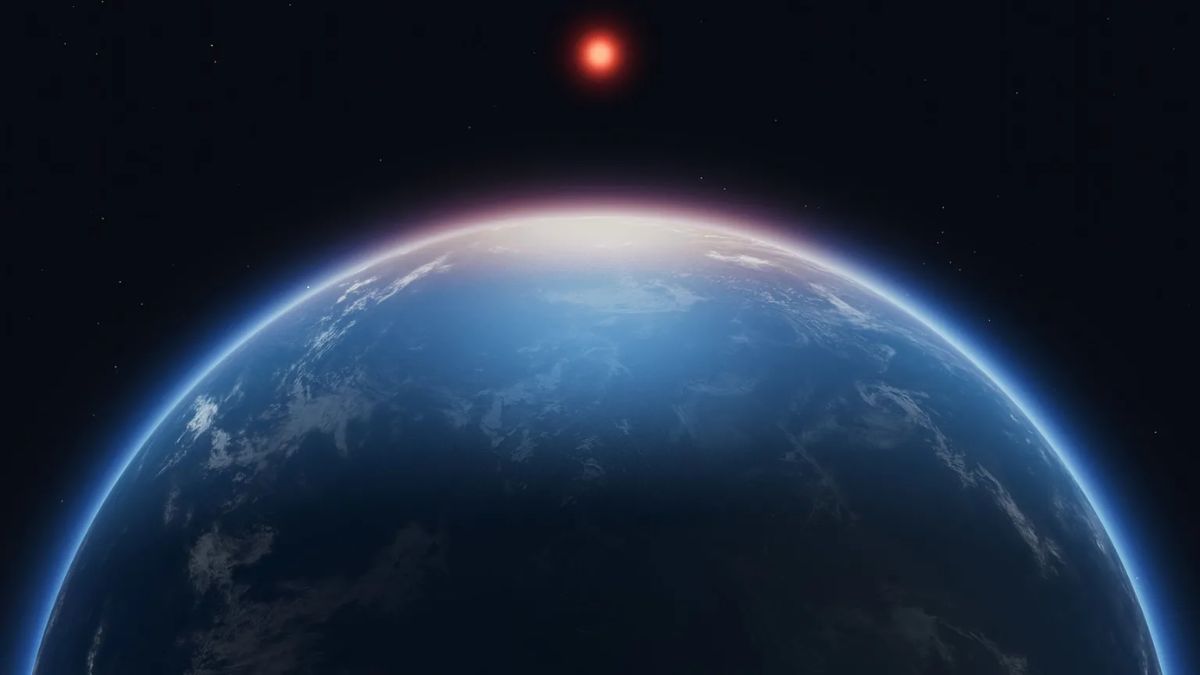
K2-18b is two and a half times the size of Earth and is seven hundred trillion miles away from us.

JWST is so powerful that it can analyse the chemical composition of the planet’s atmosphere from the light that passes through from the small red Sun it orbits.

The Cambridge group has found that the atmosphere seems to contain the chemical signature of at least one of two molecules that are associated with life: dimethyl sulphide (DMS) and dimethyl disulphide (DMDS). On Earth, these gases are produced by marine phytoplankton and bacteria.

Prof Madhusudhan said he was surprised by how much gas was apparently detected during a single observation window.

“The amount we estimate of this gas in the atmosphere is thousands of times higher than what we have on Earth,” he said.

“So, if the association with life is real, then this planet will be teeming with life,” he told me.

Prof Madhusudhan went further: “If we confirm that there is life on k2-18b it should basically confirm that life is very common in the galaxy”.

There are lots of “ifs” and “buts” at this stage, as Prof Madhusudhan’s team freely admits.

Firstly, this latest detection is not at the standard required to claim a discovery.

For that, the researchers need to be about 99.99999% sure that their results are correct and not a fluke reading. In scientific jargon that is a five sigma result.

These latest results are only three sigma, 99.7%. Which sounds a lot, but it is not enough to convince the scientific community. But it is much more than the one sigma result of 68% the team obtained 18 months ago,, which was greeted with much scepticism at the time.

But even if the Cambridge team obtains a five sigma result, that won’t be conclusive proof that life exists on the planet, according to Prof Catherine Heymans of Edinburgh University and Scotland’s Astronomer Royal, who is independent of the research team.

“Even with that certainty, there is still the question of what is the origin of this gas,” she told BBC News.

“On Earth it is produced by microorganisms in the ocean, but even with perfect data we can’t say for sure that this is of a biological origin on an alien world because loads of strange things happen in in the Universe and we don’t know what other geological activity could be happening on this planet that might produce the molecules.”

That view is one the Cambridge team agree with; they are working with other groups to see if DMS and DMDS can be produced by non-living means in the lab.

Other research groups have put forward alternative, lifeless, explanations for the data obtained from K2-18b. There is a strong scientific debate not only about whether DMS and DMDS are present but also the planet’s composition.

The reason many researchers infer that the planet has a vast liquid ocean is the absence of the gas amonia in K2-18b’s atmosphere. Their theory is that the ammonia is absorbed by a vast body of water below . But it could equally be explained by an ocean of molten rock, which would preclude life, according to Prof Oliver Shorttle of Cambridge University.

“Everything we know about planets orbiting other stars comes from the tiny amounts of light that glance off their atmospheres. So it is an incredibly tenuous signal that we are having to read, not only for signs of life, but everything else.

“With K2-18b part of the scientific debate is still about the structure of the planet,” he said.

Dr Nicolas Wogan at Nasa’s Ames Research Center has yet another interpretation of the data. He published research suggesting that K2-18b is a mini gas giant with no surface.

Both these alternative interpretations have also been challenged by other groups on the grounds that they are inconsistent with the data from JWST, which highlights the strong scientific debate surrounding K2-18b.

Prof Madhusudhan acknowledges that there is still a scientific mountain to climb if he is to answer one of the biggest questions in science. But he believes he and his team are on the right track.

“Decades from now, we may look back at this point in time and recognise it was when the living universe came within reach,” he said.

“This could be the tipping point, where suddenly the fundamental question of whether we’re alone in the universe is one we’re capable of answering.”

The research has been published in The Astrophysical Journal Letters.

(BBC News)

World

Trump calls Putin ‘crazy’ after largest Russian attack on Ukraine

Published

on

By

US President Donald Trump has said he is “not happy” with his Russian counterpart Vladimir Putin, following Moscow’s largest aerial attack yet on Ukraine.In a rare rebuke, Trump said: “What the hell happened to him? He’s killing a lot of people.” He later called Putin “absolutely crazy”.

Ukrainian President Volodymyr Zelensky earlier said Washington’s “silence” over recent Russian attacks was encouraging Putin, urging “strong pressure” – including tougher sanctions – on Moscow.

At least 12 people were killed and dozens injured in Ukraine overnight Sunday after Russia fired 367 drones and missiles – the highest number in a single night since Putin launched a full-scale invasion in 2022.

Air sirens warning of incoming drones and missiles sounded again in many regions of Ukraine early on Monday.

At least three people, including a child, were injured in the north-eastern city of Kharkiv, Mayor Ihor Terekhov said.

In the southern Zaporizhzhia region, two people were injured, said regional head Ivan Fedorov.

In Russia, Moscow Mayor Sergei Sobyanin said two Ukrainian drones heading towards the capital were destroyed by air defence units. No injuries were reported.

Speaking to reporters in New Jersey late on Sunday, Trump said of Putin: “I’ve known him a long time, always gotten along with him, but he’s sending rockets into cities and killing people, and I don’t like it at all.”

Asked about whether he was considering increasing US sanctions on Russia, Trump replied: “Absolutely.” The US president has repeatedly threatened to do this before – but is yet to implement any restrictions against Moscow.

Shortly afterwards, Trump wrote in a post on Truth Social that Putin “has gone absolutely crazy”.

“I’ve always said that he wants all of Ukraine, not just a piece of it, and maybe that’s proving to be right, but if he does, it will lead to the downfall of Russia!”

But the US president also had strong words for Zelensky, saying that he “is doing his country no favours by talking the way he does”.

“Everything out of his mouth causes problems, I don’t like it, and it better stop,” Trump wrote of Zelensky.

Despite Kyiv’s European allies preparing further sanctions for Russia, the US has said it will either continue trying to broker these peace talks, or “walk away” if progress does not follow.

Last week, Trump and Putin had a two-hour phone call to discuss a US-proposed ceasefire deal to halt the fighting.

The US president said he believed the call had gone “very well”, adding that Russia and Ukraine would “immediately start” negotiations toward a ceasefire and “an end to the war”.

Ukraine has publicly agreed to a 30-day ceasefire.

Putin has only said Russia will work with Ukraine to craft a “memorandum” on a “possible future peace” – a move described by Kyiv and its European allies as delaying tactics.

The first direct Ukrainian-Russian talks since 2022 were held on 16 May in Istanbul, Turkey.

Aside from a major prisoner of war swap last week, there was little or no progress on bringing a pausing in fighting closer.

Russia currently controls about 20% of Ukrainian territory. This includes Crimea – Ukraine’s southern peninsula annexed by Moscow in 2014.

(BBC News)

Continue Reading

World

Israeli embassy couple shot dead in Washington

Published

on

By

Shooting suspect Elias Rodriguez has been charged with two counts of first-degree murder after two Israeli embassy staff were killed in Washington DC on Wednesday night.

Sarah Lynn Milgrim and Yaron Lischinsky were leaving an event at the Capital Jewish Museum when they were shot dead.

Rodriguez, a 30-year-old from Chicago, was detained at the scene. More charges could come later, law enforcement officials say, and the FBI is aware of “writings” purported to be from the suspect.

Police say the suspect was in town for a work conference, and shouted “free Palestine” after being taken into custody.

US President Trump says the attack is “so sad” and “based obviously on antisemitism”, while DC Mayor Muriel Bowser says “this crime will not be tolerated in our city”.

Israel’s Prime Minister Benjamin Netanyahu has linked the shooting to the 7 October 2023 attack and says security will be increased at Israeli embassies worldwide.

(BBC News)

Continue Reading

World

‘Shrinking Nemo’: Smaller clownfish sound alarm on ocean heat

Published

on

By

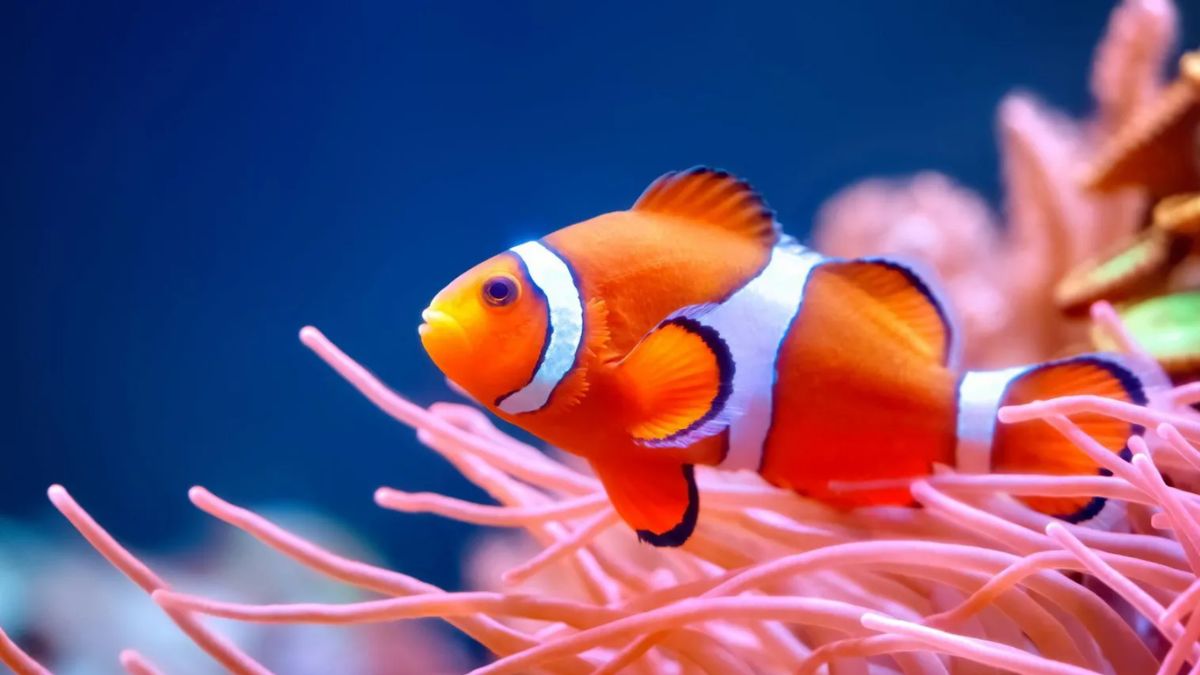
Fish similar to those made famous by the movie Finding Nemo are shrinking to cope with marine heatwaves, a study has found.

The research recorded clownfish living on coral reefs slimmed down drastically when ocean temperatures rocketed in 2023.

Scientists say the discovery was a big surprise and could help explain the rapidly declining size of other fish in the world’s oceans.

A growing body of evidence suggests animals are shape shifting to cope with climate change, including birds, lizards and insects.

“Nemos can shrink, and they do it to survive these heat stress events,” said Dr Theresa Rueger, senior lecturer in Tropical Marine Sciences at Newcastle University.

The researchers studied pairs of clownfish living in reefs off Kimbe Bay in Papua New Guinea, a hot spot of marine biodiversity

The wild clownfish are almost identical to the ones depicted in the movie Finding Nemo, in which a timid clownfish living off the Great Barrier Reef goes in search of his son.

The scientific study took place in the summer of 2023, when temperatures shot up in the oceans, leading to large swathes of coral turning white.

The scientists took multiple measurements of individual clownfish coping with the heat.

They found the tiny fish didn’t just lose weight but got shorter by several millimetres. And it wasn’t a one-off – 75% of fish shrunk at least once during the heatwave.

Dr Rueger explained: “It’s not just them going on a diet and losing lots of weight, but they’re actively changing their size and making themselves into a smaller individual that needs less food and is more efficient with oxygen.”

The fish may be absorbing fat and bone, as has been seen in other animals, such as marine iguanas, although this needs to be confirmed through laboratory studies.

Dr Rueger joked that a little bit of movie rewriting might be necessary, with a new chapter ahead for Nemo.

“The movie told a really good story, but the next chapter of the story surely is, how does Nemo deal with ongoing environmental change?” she told BBC News.

Global warming is a big challenge for warm-blooded animals, which must maintain a constant body temperature to prevent their bodies from overheating.

Animals are responding in various ways: moving to cooler areas or higher ground, changing the timing of key life events such as breeding and migration, or switching their body size.

The research is published in the journal, Science Advances.

(BBC News)

Continue Reading

Trending

Copyright © 2024 Sri Lanka Mirror. All Rights Reserved