
FEATURES
The European towns that give away free chickens
(Credit: Getty Images)
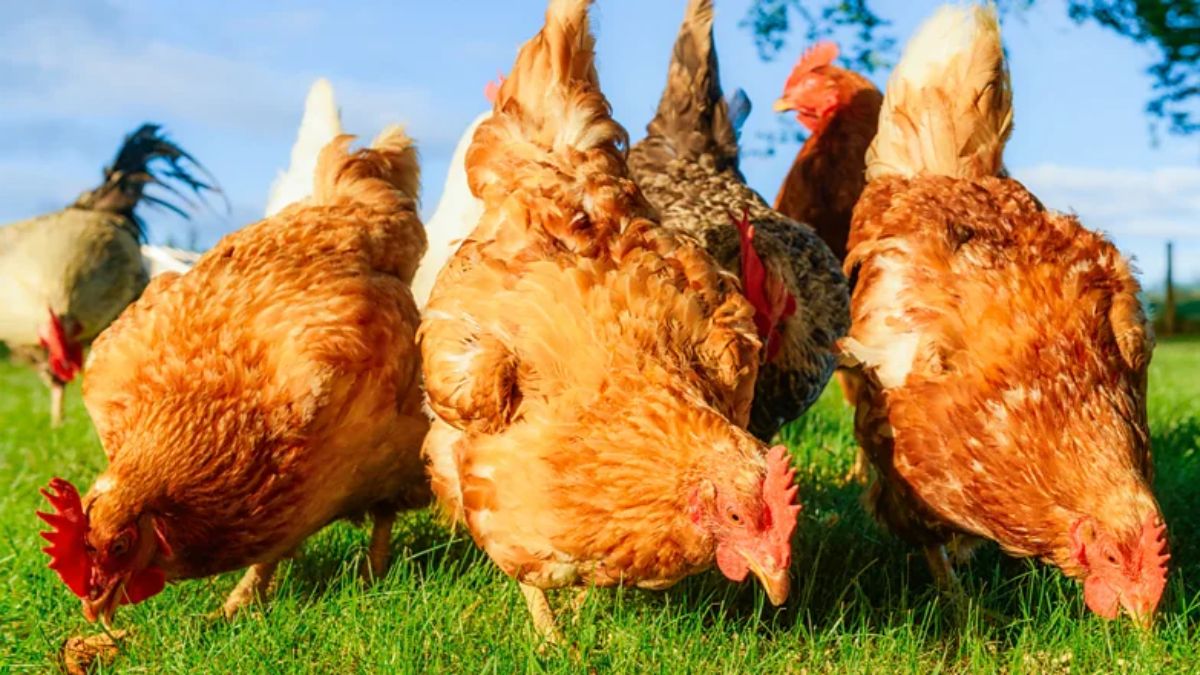
Towns in France and Belgium have been giving out free chickens for years to combat food waste – could the idea catch on elsewhere?
Around Easter in 2015, the small French village of Colmar started handing out free chickens to its residents. The aim of this experimental new scheme, launched by the waste collection department in the small village in north eastern France, was to reduce food waste.
The project had been in the works for some time. The then-president of Colmar Agglomération (a role similar to a mayor), Gilbert Meyer, had been reelected in 2014 with the slogan “one family, one hen”, which aimed to encourage residents to adopt a chicken. The following year the operation was launched, in partnership with two nearby chicken farms. Residents were encouraged to think of the free eggs – the effort put into raising a chicken would pay off quickly.
More than 200 homes in four municipalities signed up and were given two chickens each – either red chickens (Poulet Rouge) or Alsace chickens, an old and local breed.
Each household signed a pledge committing to raising the chickens, with the understanding that the waste department could conduct welfare spot checks on the animals at any time. Henhouses were not provided; it was up to the residents to build or buy their own. The department ensured that each home had enough space for the hens – between 8 and 10 sq m (86 and 108 sq ft).
The scheme was a success – and is still underway. “Over the years, other municipalities have joined and since 2022 all 20 municipalities of the agglomération have participated,” says Eric Straumann, current president of the Colmar Agglomération.
To date, 5,282 hens have been distributed to local residents, and applications are currently open for the next round of distribution in June 2025. Not only have the residents received a plentiful supply of free eggs, but food waste has also been averted from landfill as chickens are fed kitchen scraps which would otherwise be thrown away.
“Considering that a hen has a life expectancy of four years on average and that she consumes 150g (5.3oz) of bio-waste per day, we estimate that we have avoided 273.35 tonnes of bio-waste [since 2015],” says Straumann.
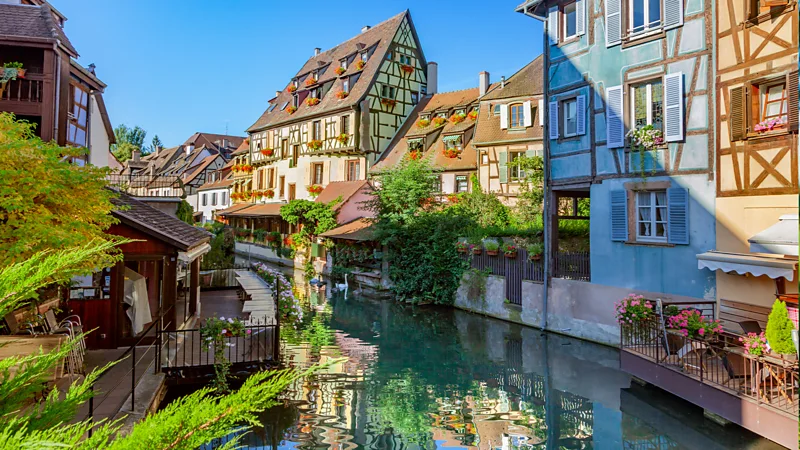
The small French village of Colmar has been handing out free chickens to its residents since 2015 (Credit: Getty Images)
Food waste contributes more methane emissions to the atmosphere than any other landfilled materials, due to its quick decay rate. In the US, around 58% of methane emissions released into the atmosphere from waste landfills are from food waste. Although shorter-lived in the atmosphere than carbon dioxide (CO2), methane has a global warming impact more than 80 times higher than CO2 over a 20-year period.
Around one third of food produced for humans is lost or wasted globally, amounting to 1.3 billion tonnes per year. Food loss and waste account for 8-10% of annual global greenhouse gas emissions – which is nearly five times the total emissions from the aviation sector.
Even though chicken owners in the UK have been advised to avoid to feeding the birds kitchen scraps due to concerns about spreading disease, it’s perfectly legal to do so elsewhere in the world, and it can have a meaningful impact on reducing food waste – and kickstart a cycle that benefits everyone.
“Proposed with the aim of reducing food waste, chickens make it possible to promote traditional circular economy practices that are still relevant today, particularly in villages, and which are now developing even in urban areas: chickens fed on our food waste in return provide us with fresh eggs,” says Straumann.
An additional benefit is that the chickens can teach children in Colmar about animals and the importance of protecting the natural world, he adds.
Colmar is not the only town to hand out free birds – nor was it the first to do so. In 2012 in another a small north-western French town called Pincé, two chickens were offered to each household to help them cut down on organic waste. “To begin with it was a joke, but then we realised it was a very good idea,” Lydie Pasteau, the mayor of Pincé, told local media at the time. A total of 31 families were given chickens, along with a bag of feed, with Pasteau calling the scheme a “surprising” success.
In Belgium, chickens have been handed out in the cities of Mouscron and Antwerp and the province of Limburg, although residents had to sign an agreement not to eat the chickens for at least two years. More than 2,500 families adopted hens in one year alone in Limburg, according to some reports, while in Mouscron, 50 pairs of chickens were given out in the second round of the scheme, after the initial giveaway was a success. Residents, who had to prove they had sufficient space in their gardens to keep the birds, were given basic instructions on chicken keeping.
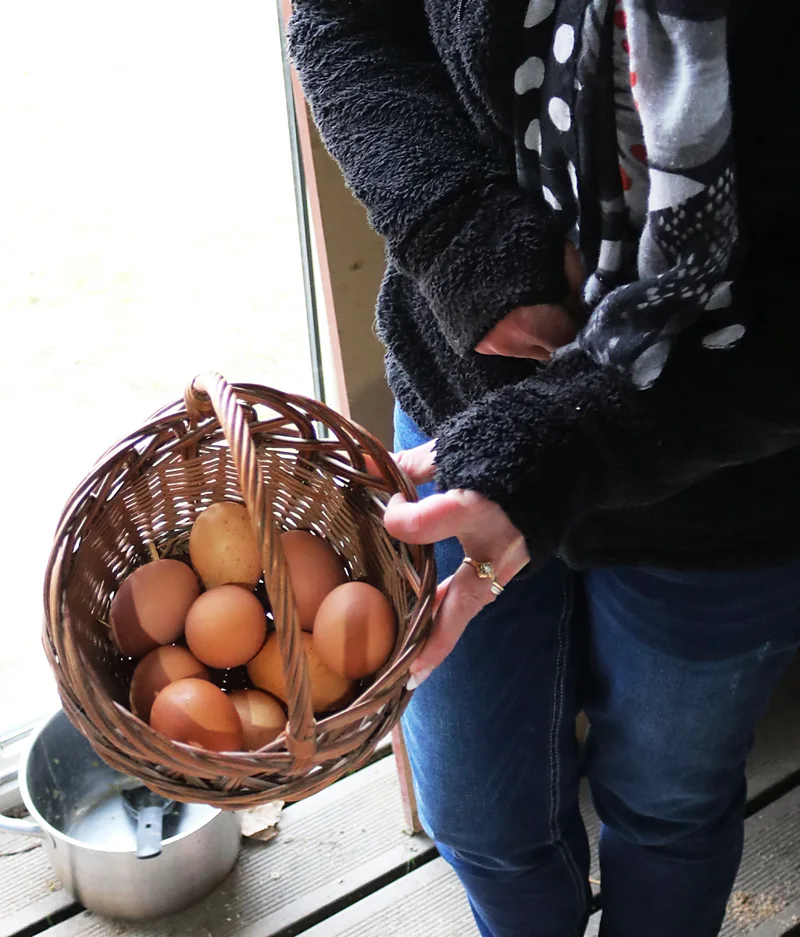
Colmar residents have been left with a plentiful supply of eggs since 2015 (Credit: Alamy)
In theory, the scheme seems like a good idea, especially in parts of the world where eggs are either in shortage or very expensive. In California or New York, for example, a dozen eggs cost around $9 (£7). As some chicken breeds can lay up to 300 eggs every year, one chicken could lay up to $225 (£178) worth of eggs each year.
In practice though, Paul Behrens, a professor at the University of Oxford focusing on food systems, says there are some hurdles in the way: “I’m sure it could be done in the UK but I’m not sure it’s a good idea,” he says. “Bird flu is an ever-present worry. Current regulations mean you have to keep birds in fenced areas or indoors – this may again be a problem for animal welfare, or even disease spread if people don’t do this.”
The idea wouldn’t work well in the US either, says Mark Bomford, director of Yale University’s sustainable food programme. “I love chickens, but I don’t love the sound of this, especially in the US,” Bomford says.
The US is currently experiencing an egg shortage due to an outbreak of bird flu – and as a result egg prices have skyrocketed 36% compared to 2023 – but handing out free chickens would not be an “appropriate” response, Bomford says.
“Economically, steep inflation for a basic grocery item like eggs hurts the poor far more than it hurts the rich. To care for chickens you need feed, water, housing, space and free time,” he says. “Most people with lower incomes don’t have access to these things. By the time you have factored in all these costs, chickens are rarely ‘free’ and few people realise any net cost savings on eggs.”
One couple, however, did come up with a unique solution – renting chickens. Christine and Brian Templeton of Rent The Chicken in New Hampshire provide hens, feed and support for six months, allowing customers to collect fresh eggs at home. Business, the couple reports, is booming.
It’s important to temper egg expectations though, warns Behrens – industrial birds lay far more eggs than a home-kept healthy bird would. “Common and modern egg-laying birds are often in huge pain their entire lives, partly due to their genetics which are centred on providing as much ‘output’ as possible,” he says. “If you use older breeds and allow them to live a long, healthy life then you can avoid many of the most egregious animal welfare issues.”
“But people should then understand the tradeoff and expectations around that, you are having a much healthier bird in return for fewer eggs,” he says.
And from a food waste perspective, the ideal thing is to simply not waste the food in the first place – some researchers believe that composting can actually increase food waste.
“They think ‘oh, it’s okay as we compost’,” says Behrens. “Which is better than nothing but much worse than not wasting things in the first place. It could be even worse with chickens because you are getting eggs from them. People might waste even more than if they composted.”
But one unexpected benefit that was observed in Colmar – that had nothing to do with eggs or food waste – was the community the chickens created. Residents would bond over raising the chickens and would work with neighbours to care for the chickens when they went on holiday. “Residents have welcomed this operation since its launch,” says Straumann. “And that’s why all the municipalities in Colmar still participate in our programme today.”
– Lucy Sherriff
(BBC News)








FEATURES
Why the mighty Himalayas are getting harder and harder to see
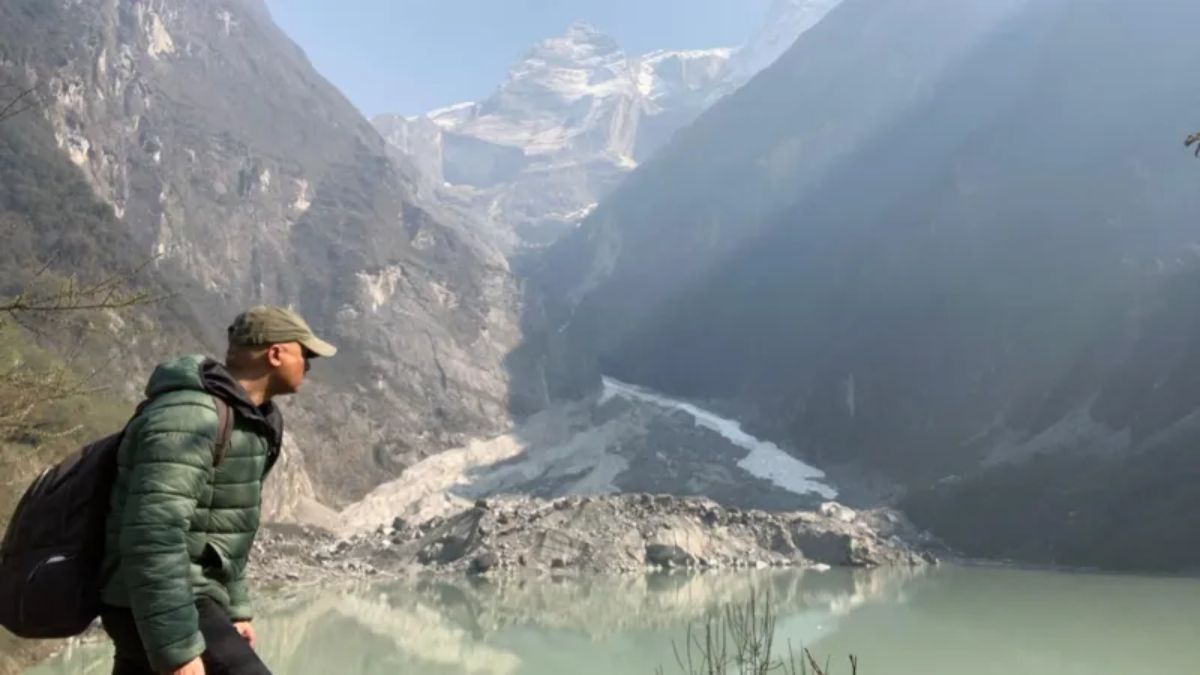
Trekking in Nepal’s Annapurna region, where haze obscures visibility of the epic mountains even at close range
I grew up in Nepal’s capital watching the Himalayas. Ever since I left, I’ve missed sweeping, panoramic views of some of the highest mountain peaks on Earth.
Each time I visit Kathmandu, I hope to catch a glimpse of the dramatic mountain range. But these days, there’s usually no luck.
The main culprit is severe air pollution that hangs as haze above the region.
And it’s happening even during the spring and autumn months, which once offered clear skies.
Just last April, the international flight I was in had to circle in the sky nearly 20 times before landing in Kathmandu, because of the hazy weather impacting visibility at the airport.
The hotel I checked in at was at a reasonable height from which mountains are visible on a clear day – but there was no such day during my two-week stay.
Even from the major vantage point of Nagarkot, just outside Kathmandu, all that could be seen was haze, as if the mountains did not exist.
“I no longer brand the place for views of ‘sunrise, sunset and Himalayas’ as I did in the past,” said Yogendra Shakya, who has been operating a hotel at Nagarkot since 1996.
“Since you can’t have those things mostly now because of the haze, I have rebranded it with history and culture as there are those tourism products as well here.”
During an earlier trip a year ago, I was hopeful I would be able to see the mighty Himalayan peaks on a trek in the mesmerising Annapurna region – but had hardly any luck there either.
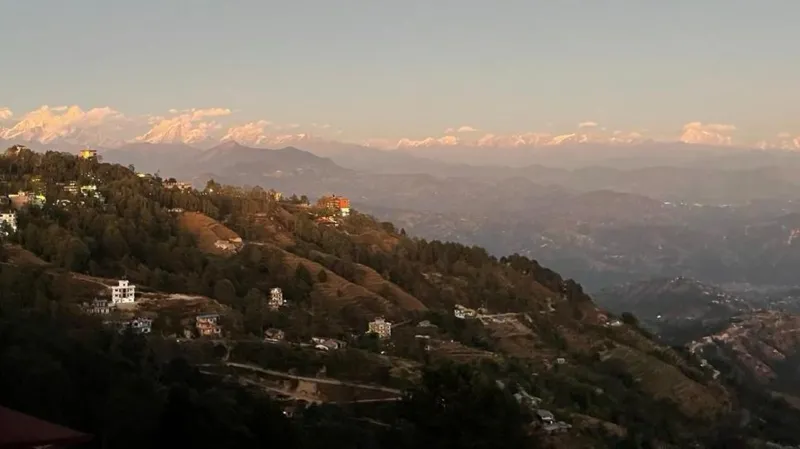
View of the Himalayas on an increasingly rare clear day from the Nagarkot vantage point
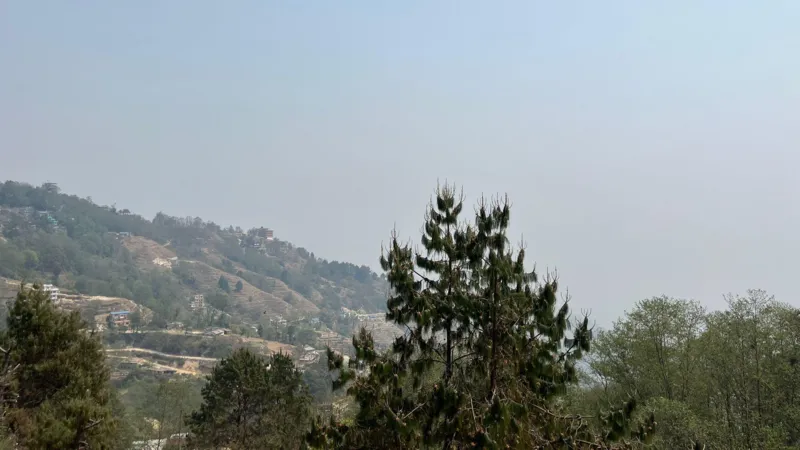
The hazy view from the same vantage point during my most recent visit
Scientists say hazy conditions in the region are becoming increasingly intense and lasting longer, reducing visibility significantly.
Haze is formed by a combination of pollutants like dust and smoke particles from fires, reducing visibility to less than 5,000m (16,400ft). It remains stagnant in the sky during the dry season – which now lasts longer due to climate change.
June to September is the region’s rainy season, when Monsoon clouds rather than haze keep the mountains covered and visibility low.
Traditionally, March to May and October to November were the best times for business because that was when skies remained clear and visibility was best.
But with rising temperatures and a lack of rain, and worsening air pollution, the spring months are now seeing thick haze with low visibility. Those conditions are beginning as early as December.
‘No sighting means no business’
Lucky Chhetri, a pioneering female trekking guide in Nepal, said hazy conditions had led to a 40% decrease in business.
“In one case last year, we had to compensate a group of trekkers as our guides could not show them the Himalayas due to the hazy conditions,” she added
An Australian tourist who has visited Nepal more than a dozen times since 1986 described not seeing the mountains as a “major let-down”.
“It wasn’t like this 10 years ago but now the haze seems to have taken over and it is extraordinarily disappointing for visitors like me,” said John Carrol.
Krishna Acharya, the provincial chair of the Trekking Agents Association of Nepal in the western Gandaki province, says the trekking industry is in deep trouble.
“Our member trekking operators are getting depressed because no sighting of the Himalayas means no business. Many of them are even considering changing professions,” he told the BBC.
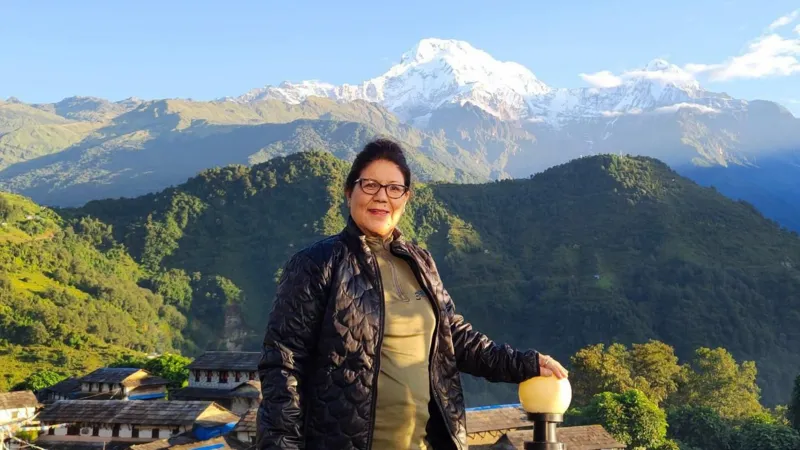
Trekking guide Lucky Chhetri says business is down because of the hazy condition
On the Indian side, near the central Himalayas, hoteliers and tour operators say haze is now denser and returns quicker than before.
“We have long dry spells and then a heavy downpour, unlike in the past. So with infrequent rain the haze persists for much longer,” said Malika Virdi, who heads a community-run tourism business in the state of Uttarakhand.
However, Ms Virdi says tourists are persistent – with many who didn’t catch the mountain range returning to try their luck again.
The western Himalayas in Pakistan have been relatively less affected by the haze because the mountains are relatively far from cities.
But locals say that even the ranges that were once easily visible from places like Peshawar and Gilgit are often no longer seen.
“The sheet of haze remains hanging for a longer period and we don’t see the mountains that we could in the past,” said Asif Shuja, the former head of Pakistan’s environmental protection agency.
Hazes and dust storms increasing
South Asian cities regularly top lists of places with highest levels of air pollution in the world.
Public health across the region has been badly impacted by the toxic air, which frequently causes travel disruption and school closures.
Vehicular and industrial emissions, dust from infrastructure construction and dry gravel roads as well as the open burning of waste are major sources of air pollution year-round.
This is compounded by soot from massive forest fires – which are increasing due to a longer dry season – and the burning of crop residues after the harvest by farmers in northern India, Pakistan and Nepal.
Weather conditions keeping warmer air above cooler air trap these pollutants and limit vertical air movement – preventing pollution from dispersing.
“Hazes and dust storms are increasing in South Asia, and this trend is projected to continue due to climate change and other factors,” Dr Someshwor Das from the South Asia Meteorological Association told the BBC.
In 2024, the number of hazy days recorded at the airport in Pokhara, a major tourism hub in western Nepal, was 168 – up from 23 in 2020 and 84 in 2021, according to Nepal’s department of hydrology and meteorology.
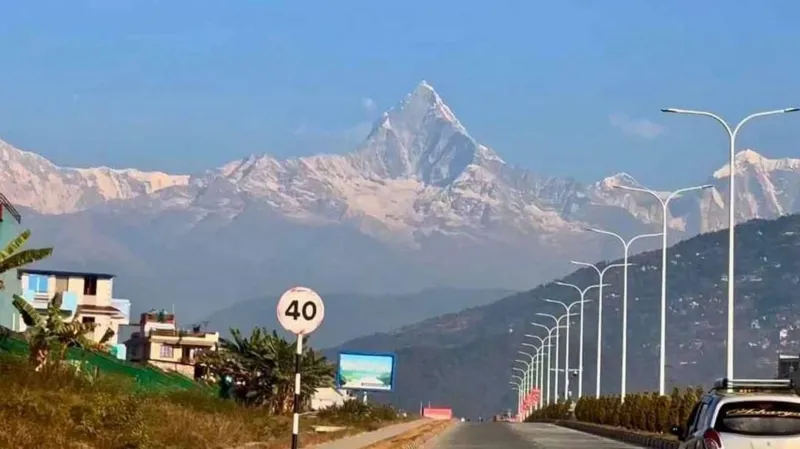
The Fishtail mountain in Nepal on a clear day
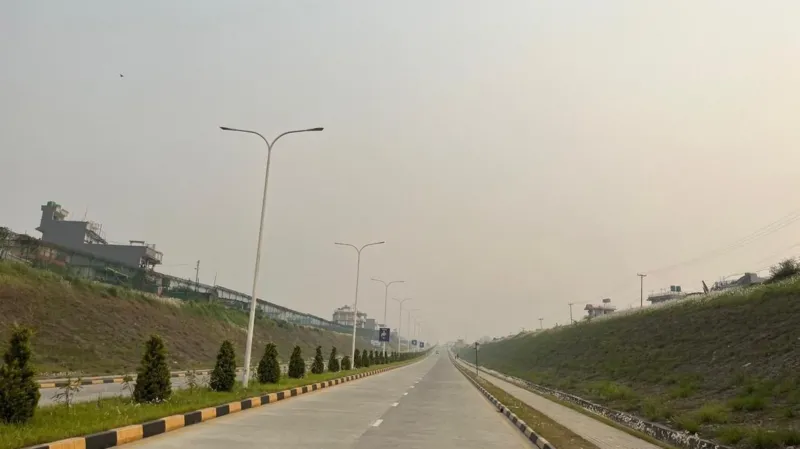
The same mountain range covered in haze, taken from roughly the same location
Experts believe the Himalayas are probably the worst affected mountain range in the world given their location in a populous and polluted region.
This could mean the scintillating view of the Himalayas could now largely be limited to photographs, paintings and postcards.
“We are left to do business with guilt when we are unable to show our clients the mountains that they pay us for,” said trekking leader Ms Chhetri.
“And there is nothing we can do about the haze.”
– Navin Singh Khadka
(Environment correspondent, BBC World Service)
FEATURES
Jewels linked to Buddha remains go to auction, sparking ethical debate
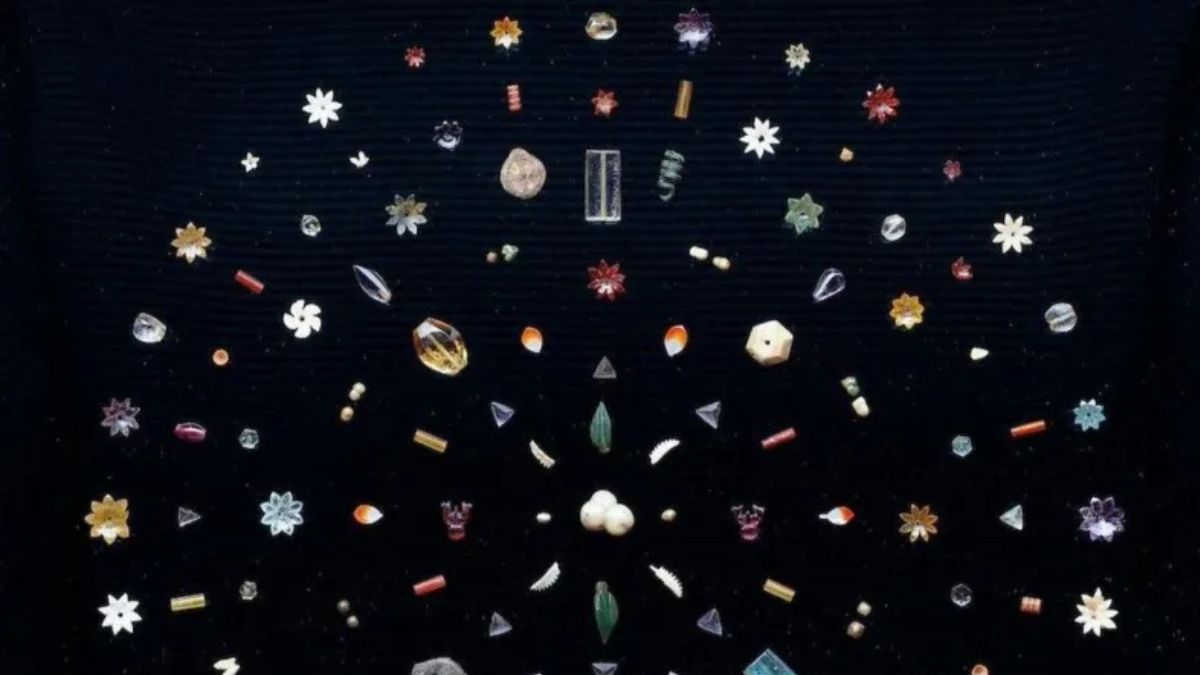
The jewels comprise nearly 1,800 pearls, rubies, sapphires, and patterned gold sheets
On Wednesday, a cache of dazzling jewels linked to the Buddha’s mortal remains, which have been hailed as one of the most astonishing archaeological finds of the modern era, will go under the hammer at Sotheby’s in Hong Kong.
For over a century these relics, unearthed from a dusty mound in northern India in 1898, have sat largely unseen, cradled by a private British collection.
Now, as the gems prepare to leave the custody of their keepers, they are stirring not just collectors’ appetites but also some unease.
They come from a glittering hoard of nearly 1,800 pearls, rubies, topaz, sapphires, and patterned gold sheets, first glimpsed deep inside a brick chamber in present-day Uttar Pradesh in India, near the Buddha’s birthplace.
Their discovery – alongside bone fragments identified by an inscribed urn as belonging to the Buddha himself – reverberated through the world of archaeology. Nicolas Chow, chairman of Sotheby’s Asia and worldwide head of Asian Art, believes this is “among the most extraordinary archaeological discoveries of all time”.
Yet as these relics now face the glare of the auction room, experts tell the BBC that a question hangs heavy: can the sale of treasures so intimately woven into India’s sacred past be considered ethical?
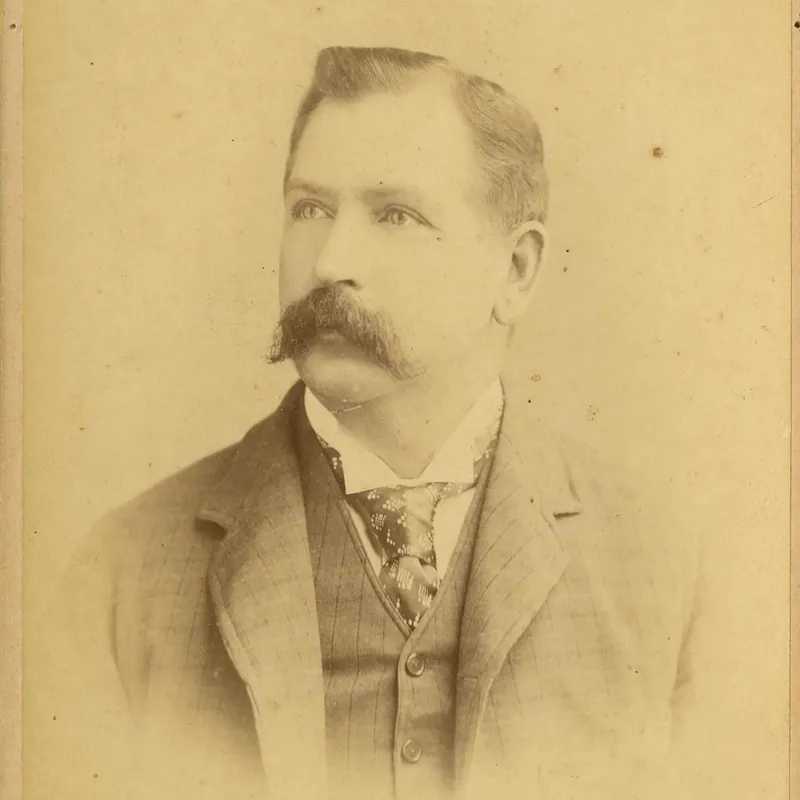
William Claxton Peppé, an English estate manager, excavated the stupa and found the jewels
In 1898, William Claxton Peppé, an English estate manager, excavated a stupa at Piprahwa, just south of Lumbini, where the Buddha is believed to have been born. He uncovered relics inscribed and consecrated nearly 2,000 years ago.
Historians agree these relics, intact until then, are the heritage of both the Buddha’s Sakya clan descendants and Buddhists worldwide. The bone relics have since been distributed to countries such as Thailand, Sri Lanka and Myanmar, where they continue to be venerated.
“Are the relics of the Buddha a commodity that can be treated like a work of art to be sold on the market?” wonders Naman Ahuja, a Delhi-based art historian. “And since they aren’t, how is the seller ethically authorised to auction them?
“Since the seller is termed the ‘custodian’, I would like to ask – custodian on whose behalf? Does custodianship permit them now to sell these relics?”
Chris Peppé, great-grandson of William, told the BBC the family looked into donating the relics, but all options presented problems and an auction seemed the “fairest and most transparent way to transfer these relics to Buddhists”.
Julian King, Sotheby’s international specialist and head of sale, Himalayan Art, New York told the BBC the auction house had made a thorough review of the jewels.
“As is the case with any important items and collectibles that are offered for sale at Sotheby’s, we conducted requisite due diligence, including in relation to authenticity and provenance, legality and other considerations in line with our policies and industry standards for artworks and treasures,” King said.
Ashley Thompson, of Soas University of London, and curator Conan Cheong, both experts in Southeast Asian art, have more questions. In a joint statement they told the BBC: “Other ethical questions raised by the sale are: should human remains be traded? And who gets to decide what are human remains or not? For many Buddhist practitioners around the world, the gems on sale are part and parcel of the bones and ash.”
The sale of the relics has also sparked concern among Buddhist leaders.
“The Buddha teaches us not to take other people’s possessions without permission,” Amal Abeyawardene of London-based British MahaBodhi Society, told the BBC. “Historical records indicate that the Sakyamuni clan were granted custody of these relics, as the Buddha emanated from their community. Their wish was for these relics to be preserved alongside adornments, such as these gems, so that they may be venerated in perpetuity by the Buddha’s followers.”
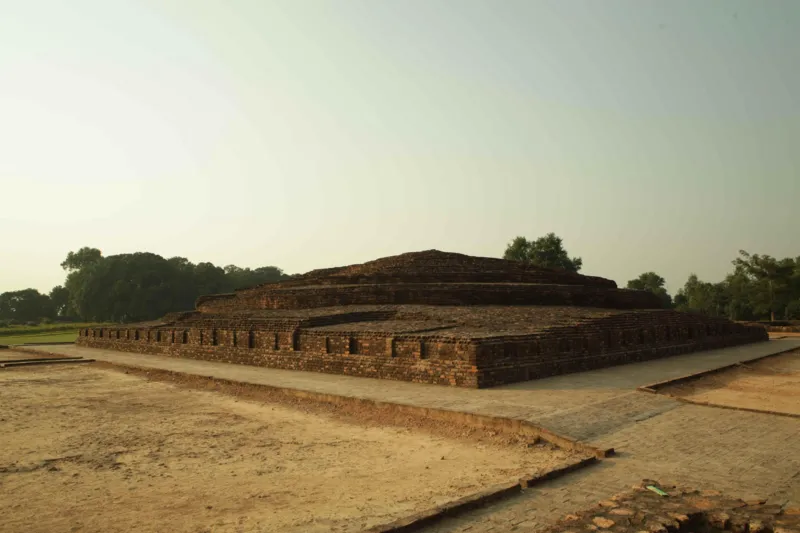
The jewels were unearthed from this stupa in Piprahwa, northern India in 1898
Chris Peppé has written that the jewels passed from his great-uncle to his cousin, and in 2013 came to him and two other cousins. That’s when he began researching their discovery by his great-grandfather.
The Los Angeles-based television director and film editor wrote he had found 1898 newspaper reports – from Reuters to the New York Tribune – announcing the find of Buddha’s remains.
“The colonisation of India by the British had been a source of some cultural shame for me [and continues to be] but, amidst the treasure hunters who hauled their finds back to England, there had also been people focused on the pursuit of knowledge,” Chris Peppé writes.
He noted his research revealed a lot about his ancestors who he had dismissed as “prejudiced Victorians from a bygone era”.
“I learned that Willie Peppé’s first wife chose to travel around India for her honeymoon and loved the country and its culture. Sadly, she died from an unspecified illness. I learned that my grandmother was outraged at the land laws that applied to Indian women.
“And I learned that the excavation of the stupa was an attempt by Willie Peppé to provide work for his tenant farmers who had fallen victim to the famine of 1897.”
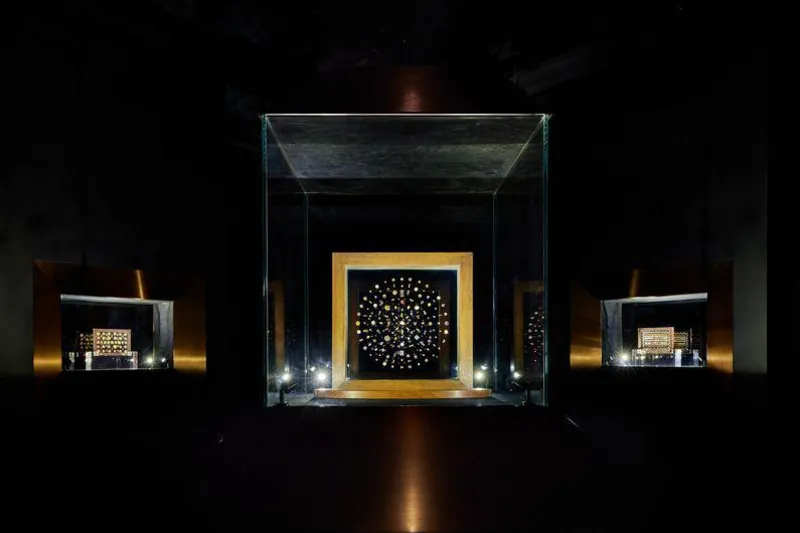
The jewels are considered among the most extraordinary archaeological finds of all time
He writes his great-grandfather’s “technical diagrams of ramps and pulleys suggest that he was also a trained engineer who couldn’t resist a project”.
William Peppé handed the gems, relics and reliquaries to the colonial Indian government: the bone relics went to the Buddhist King of Siam (Rama V). Five relic urns, a stone chest and most other relics were sent to the Indian Museum in Kolkata – then the Imperial Museum of Calcutta.
Only a small “portion of duplicates”, which he was allowed to keep, remained in the Peppé family, he notes. (Sotheby’s notes say Peppé was allowed to keep approximately one-fifth of the discovery.)
Sources told the BBC the auction house considers the “duplicates” to be original items considered surplus to those donated, which the “Indian government permitted Peppé to retain”.
Over the past six years years, the gems have featured in major exhibitions, including one at The Met in 2023. The Peppé family has also launched a website to “share our research”.
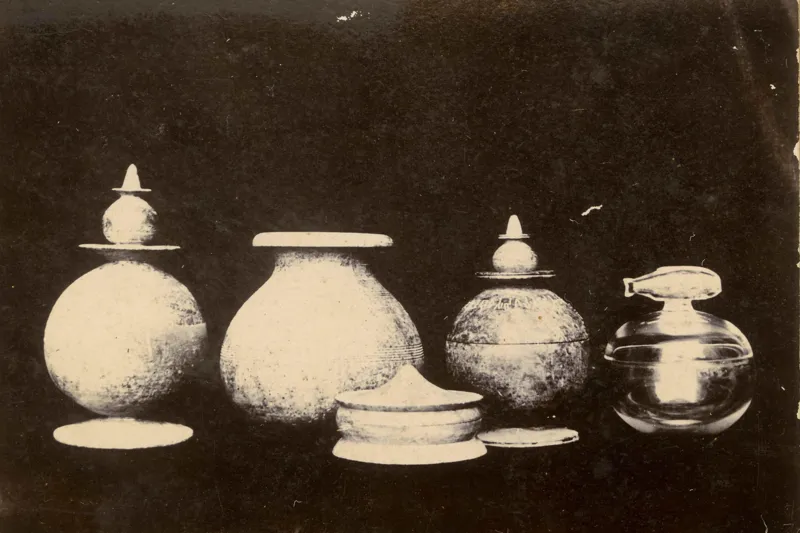
Four containers made of steatite (a type of stone) and one made of rock crystal were found inside a sandstone box at the Piprahwa stupa
Some scholars argue Buddha relics should never be treated as market commodities.
“The Sotheby’s auction transforms these highly sacred materials into saleable objects, in continuation of acts of colonial violence which extracted them from a stupa and called them ‘gems’ and ‘objects of interest to Europeans’, creating a false division with the ash and bone fragments they were consecrated with,” say Thompson and Cheong.
Chris Peppé told the BBC that in all the monasteries he had visited “no Buddhists regard these as corporeal relics”.
“A few Buddhist academics at western universities have recently offered a convoluted, fact-defying logic whereby they may be regarded as such. It’s an academic construct that is not shared by Buddhists in general who are familiar with the details of the find,” he said.
Peppé said the family “looked into donation [of the relics] to temples and museums and they all presented different problems on closer scrutiny”.
“An auction seems the fairest and most transparent way to transfer these relics to Buddhists and we are confident that Sotheby’s will achieve that.”
Some also point to The Koh-i-Noor, seized by the British East India Company and now part of the Crown Jewels, with many Indians viewing it as stolen. Should the Buddha’s jewels be next?
“Repatriation, I believe, is seldom necessary,” says Ahuja. “Such rare and sacred relics that are unique and which define a land’s cultural history, however, deserve the government’s exceptional attention.”
– Soutik Biswas
(India correspondent – BBC News)
FEATURES
What has Sri Lanka gained from EU GSP “Plus” since 2007?

President Dissanayake pays last respects to cinema legend Malini Fonseka

Last rites of Malini Fonseka with state honours today