Connect with us

Entertainment

Child damages €50m Rothko painting in Dutch museum

Published

on

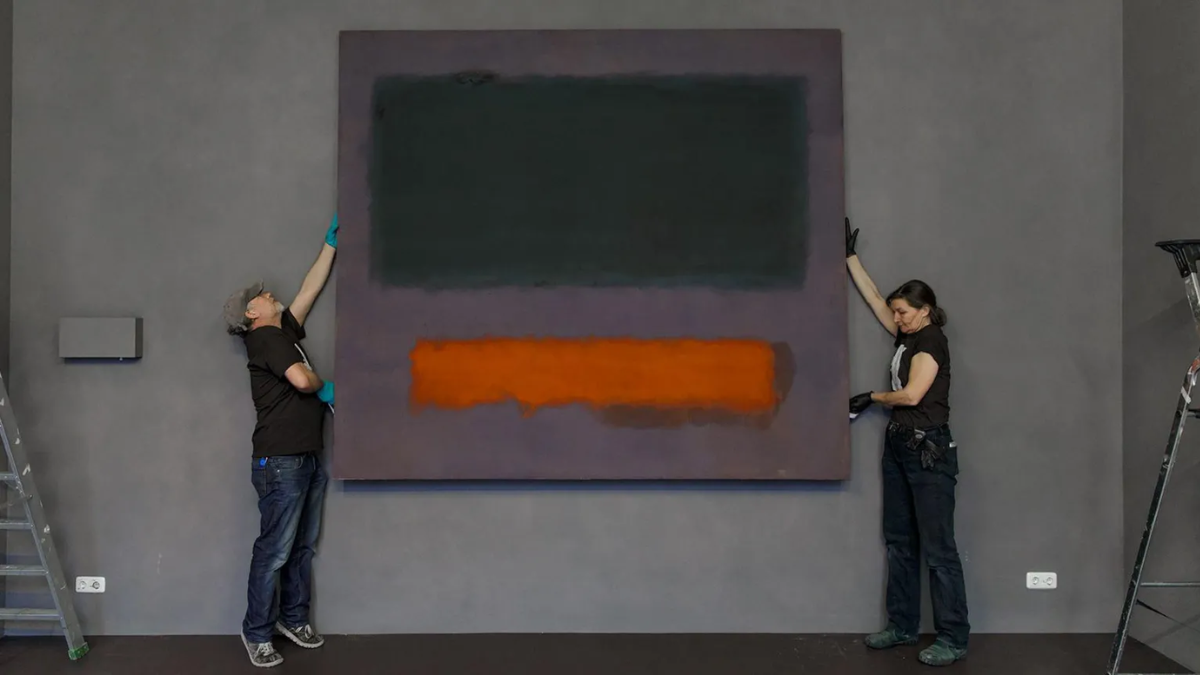
A child has damaged a painting worth millions of pounds by the American artist Mark Rothko at a museum in Rotterdam.

A spokesperson for the Museum Boijmans Van Beuningen said it was considering the “next steps” for the treatment of Rothko’s Grey, Orange on Maroon, No. 8.

The damage occurred during an “unguarded moment”, a museum spokesperson told the Dutch media outlet Algemeen Dagblad (AD) last week.

A spokesperson for the museum told the BBC the damage was “superficial”, adding: “Small scratches are visible in the unvarnished paint layer in the lower part of the painting”.

The abstract painting is estimated to be worth up to €50m (£42.5m), according to newspaper AD.

“Conservation expertise has been sought in the Netherlands and abroad. We are currently researching the next steps for the treatment of the painting”, the museum spokesperson told the BBC.

“We expect that the work will be able to be shown again in the future,” they added.

Sophie McAloone, the conservation manager at the Fine Art Restoration Company, said that “modern unvarnished” paintings like Rothko’s Grey, Orange on Maroon, No. 8 are “particularly susceptible to damage”.

This is “owing to a combination of their complex modern materials, lack of a traditional coating layer, and intensity of flat colour fields, which make even the smallest areas of damage instantly perceptible,” she said.

“In this case, scratching of the upper paint layers can have a significant impact on the viewing experience of the piece,” Ms McAloone said.

The Rothko painting was hanging in the museum’s Depot – a publicly accessible storage facility beside the main museum – as part of an exhibition displaying a selection of “public favourites” from the gallery’s collection.

Jonny Helm, a marketing manager at the art restoration service Plowden & Smith, said the incident had implications for UK institutions such as V&A East and the British Museum, which are considering “opening up the display of things that would otherwise be obscured in archives.”

“How will this event affect other UK institutions who are opening up their archives in the same way?” Mr Helm said.

Restoring a Rothko painting is a difficult task because “Rothko’s mixture of pigments and resins and glues were quite complex”, Mr Helm said.

He said the fact the painting is unvarnished – meaning it is “open to the environment” – will pose an additional challenge to conservators.

Conservators working to restore the painting will now likely be in the process of documenting the extent of the damage and researching “historic successful treatments” of Rothko paintings.

“Rothko works seem to have terrible luck – this isn’t the first damaged Rothko we’ve heard about,” Mr Helm said.

Rothko’s 1958 work, Black on Maroon, was deliberately vandalised by Wlodzimierz Umaniec at London’s Tate Modern gallery in October 2012.

Umaniec was sent to prison for two years and subsequently apologised for his actions.

During his trial, prosecuting barrister Gregor McKinley said the cost of repairing the work would be about £200,000. It took conservators 18 months to repair the painting.

Rachel Myrtle, Head of Specie and Fine Arts at Aon, a company that offers insurance broking to its clients, said fine art insurance policies typically cover “all risks associated with physical loss and damage to artwork”.

This includes “accidental damage caused by children or visitors, albeit with certain exclusions”, she said.

She said that when an artwork is damaged, a gallery’s insurer will appoint a specialist fine art loss adjuster to visit the museum.

The loss adjustor typically “reviews the damage to the artwork, examines any CCTV footage to determine the exact cause of the loss, and assesses conservation options”, Ms Myrtle said.

The museum did not comment on who will be held liable for the damage to the 1960 painting, which the gallery reportedly bought in the 1970s.

The Museum Boijmans Van Beuningen has previously billed visitors who have caused damage to artworks on display.

In 2011, the museum asked an unsuspecting tourist who stepped on Wim T. Schippers’ peanut butter floor artwork, called Pindakaasvloer, to pay for repairs to the work.

Sharon Cohen, a spokesperson for the museum at the time, was quoted by AD as saying: “It is normal procedure for people to pay if they damage art.”

The Rothko painting is described by the museum as an example of colour field painting, a term used to describe art characterised by large blocks of flat, solid colour spread across a canvas.

Rothko’s Grey, Orange on Maroon, No. 8 painting is one of several works of modern art that have been damaged in the Netherlands in recent years.

In November 2024, multiple screen prints by the US pop artist Andy Warhol were damaged by thieves during an attempted robbery of the MPV art gallery in the town of Oisterwijk.

In another incident, a Dutch town hall admitted it “most likely” disposed of 46 artworks by accident – including an Andy Warhol print of the former Dutch queen – during renovation works last year.

Museums have different policies when responding to damage caused by children.

In August last year, a four-year-old boy accidentally smashed a 3,500-year-old jar into pieces at the Hecht Museum in Israel.

At the time, Hecht Museum worker Lihi Laszlo told the BBC the museum would not treat the incident “with severity” because “the jar was accidentally damaged by a young child”.

The family were invited back to the exhibition with his family for an organised tour shortly after the incident occurred.

(BBC News)

Entertainment

Anudi shines in Head-to-Head & Talent rounds

Published

on

By

Anudi Gunasekara has been selected into the Top 5 from Asia in the Head-to-Head Challenge at the 72nd Miss World pageant.

She is the first Sri Lankan to reach the finalist stage in this segment.

She has also set another milestone by becoming the only contestant from Asia to qualify as a finalist in both the Head-to-Head and Talent rounds this year.

Continue Reading

Entertainment

India’s Banu Mushtaq scripts history with International Booker win

Published

on

By

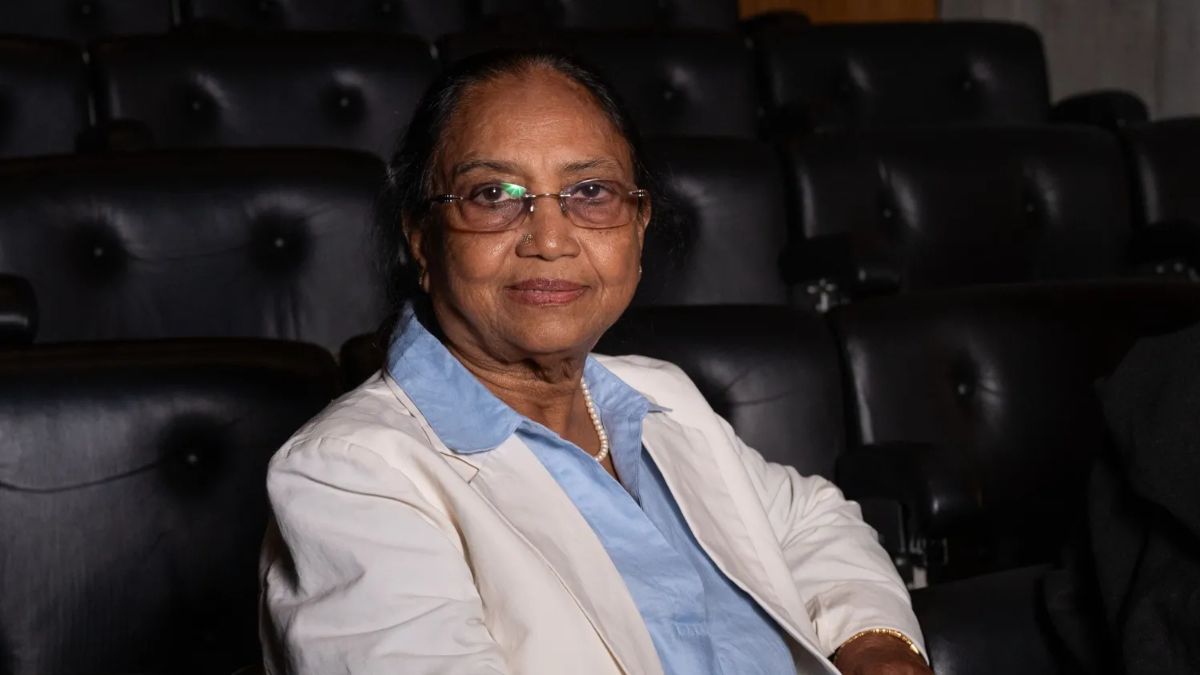
Indian writer-lawyer-activist Banu Mushtaq has scripted history by winning the International Booker prize for the short story anthology, Heart Lamp.

It is the first book written in the Kannada language, which is spoken in the southern Indian state of Karnataka, to win the prestigious prize.

The stories in Heart Lamp were translated into English by Deepa Bhasthi.

Featuring 12 short stories written by Mushtaq over three decades from 1990 to 2023, Heart Lamp poignantly captures the hardships of Muslim women living in southern India.

Mushtaq’s win comes off the back of Geetanjali Shree’s Tomb of Sand – translated from Hindi by Daisy Rockwell – winning the prize in 2022.

Her body of work is well-known among book lovers, but the Booker International win has shone a bigger spotlight on her life and literary oeuvre, which mirrors many of the challenges the women in her stories face, brought on by religious conservatism and a deeply patriarchal society.

It is this self-awareness that has, perhaps, helped Mushtaq craft some of the most nuanced characters and plot-lines.

“In a literary culture that rewards spectacle, Heart Lamp insists on the value of attention — to lives lived at the edges, to unnoticed choices, to the strength it takes simply to persist. That is Banu Mushtaq’s quiet power,” a review in the Indian Express newspaper says about the book.

Mushtaq grew up in a small town in the southern state of Karnataka in a Muslim neighbourhood and like most girls around her, studied the Quran in the Urdu language at school.

But her father, a government employee, wanted more for her and at the age of eight, enrolled her in a convent school where the medium of instruction was the state’s official language – Kannada.

Mushtaq worked hard to become fluent in Kannada, but this alien tongue would become the language she chose for her literary expression.

She began writing while still in school and chose to go to college even as her peers were getting married and raising children.

It would take several years before Mushtaq was published and it happened during a particularly challenging phase in her life.

Her short story appeared in a local magazine a year after she had married a man of her choosing at the age of 26, but her early marital years were also marked by conflict and strife – something she openly spoke of, in several interviews.

In an interview with Vogue magazine, she said, “I had always wanted to write but had nothing to write (about) because suddenly, after a love marriage, I was told to wear a burqa and dedicate myself to domestic work. I became a mother suffering from postpartum depression at 29”.

In the another interview to The Week magazine, she spoke of how she was forced to live a life confined within the four walls of her house.

Then, a shocking act of defiance set her free.

“Once, in a fit of despair, I poured white petrol on myself, intending to set myself on fire. Thankfully, he [the husband] sensed it in time, hugged me, and took away the matchbox. He pleaded with me, placing our baby at my feet saying, ‘Don’t abandon us’,” she told the magazine.

In Heart Lamp, her female characters mirror this spirit of resistance and resilience.

“In mainstream Indian literature, Muslim women are often flattened into metaphors — silent sufferers or tropes in someone else’s moral argument. Mushtaq refuses both. Her characters endure, negotiate, and occasionally push back — not in ways that claim headlines, but in ways that matter to their lives,” according to a review of the book in The Indian Express newspaper.

Mushtaq went on to work as a reporter in a prominent local tabloid and also associated with the Bandaya movement – which focussed on addressing social and economic injustices through literature and activism.

After leaving journalism a decade later, she took up work as a lawyer to support her family.

In a storied career spanning several decades, she has published a copious amount of work; including six short story collections, an essay collection and a novel.

But her incisive writing has also made her a target of hate.

In an interview to The Hindu newspaper, she spoke about how in the year 2000, she received threatening phone calls after she expressed her opinion supporting women’s right to offer prayer in mosques.

A fatwa – a legal ruling as per Islamic law – was issued against her and a man tried to attack her with a knife before he was overpowered by her husband.

But these incidents did not faze Mushtaq, who continued to write with fierce honesty.

“I have consistently challenged chauvinistic religious interpretations. These issues are central to my writing even now. Society has changed a lot, but the core issues remain the same. Even though the context evolves, the basic struggles of women and marginalised communities continue,” she told The Week magazine.

Over the years Mushtaq’s writings have won numerous prestigious local and national awards including the Karnataka Sahitya Academy Award and the Daana Chintamani Attimabbe Award.

In 2024, the translated English compilation of Mushtaq’s five short story collections published between 1990 and 2012 – Haseena and Other Stories – won the PEN Translation Prize.

(BBC News)

Continue Reading

Entertainment

Little Mermaid star gets restraining order against ‘abusive’ ex

Published

on

By

Actress and singer Halle Bailey has been granted a restraining order against rapper and YouTube star DDG, her former boyfriend and the father of their one-year-old son.

The Little Mermaid star alleges he was repeatedly violent with her and made her fear for herself and their child.

On Tuesday, a Los Angeles judge ordered DDG, whose full name is Darryl Dwayne Granberry Jr, to stay away from Bailey and their son until a hearing on 6 June.

Bailey, 25, alleged there had been “multiple acts of physical violence” from Granberry since their split in October. BBC News has asked representatives for Granberry for comment.

In documents requesting the order, reported by the Associated Press, Bailey said: “Throughout our relationship, Darryl has been and continues to be physically, verbally, emotionally, and financially abusive towards me.

“I am seeking orders to protect myself and our son Halo from his ongoing abuse.”

Bailey and Granberry, 27, were in a relationship from 2022 until last year.

In the documents, the actress claims “things got physical between us” after Granberry repeatedly insulted her as she strapped the baby into a seat in his car in January.

“We fought each other, wrestling and tussling,” she said. “At one point, Darryl was pulling my hair. He then slammed my face on the steering wheel, causing my tooth to get chipped. I then stopped fighting back as I was in a lot of pain.”

Bailey included photos of her tooth and bruises on her arms in her filing, which have since been published by some US media outlets.

Two months after the alleged altercation, Bailey alleges that Granberry entered her house when she wasn’t home and texted her a photo of her bed along with a threatening message suggesting she was having sex with other men.

A few days later, she claimed, Granberry berated her when she did not want to send their unwell baby on a visit with him, then smashed the Ring doorbell camera on her porch when he realised it was recording their confrontation.

She further alleged that, when she called a relative for help, he took her phone and slammed a car door on her as she was holding the baby. Bailey filed a police report over the incident.

As part of the restraining order, Granberry was also instructed not to possess any weapons. The judge can extend the order for up to five years at the 6 June hearing.

Bailey also requested that Granberry be ordered to stop using his social media platforms to continue “bad mouthing me to his several millions of fans”.

“He claims I am withholding our son and that I am with other men. As a result, I then receive threats and hate on social media,” she said in the documents.

Bailey shot to fame as part of Chloe x Halle, a pop duo with her sister, and later released music as a solo artist. She has been nominated for five Grammy Awards.

As an actress, she appeared in sitcom Grown-ish from 2018 to 2022. Her biggest role to date, however, was playing the titular character in Disney’s 2023 live-action remake of The Little Mermaid.

DDG rose to fame in the mid-2010s by posting videos on YouTube, and signed a record deal in 2018. He has released four studio albums.

(BBC News)

Continue Reading

Trending

Copyright © 2024 Sri Lanka Mirror. All Rights Reserved