
News
Workshop on Indian cinema inaugurated
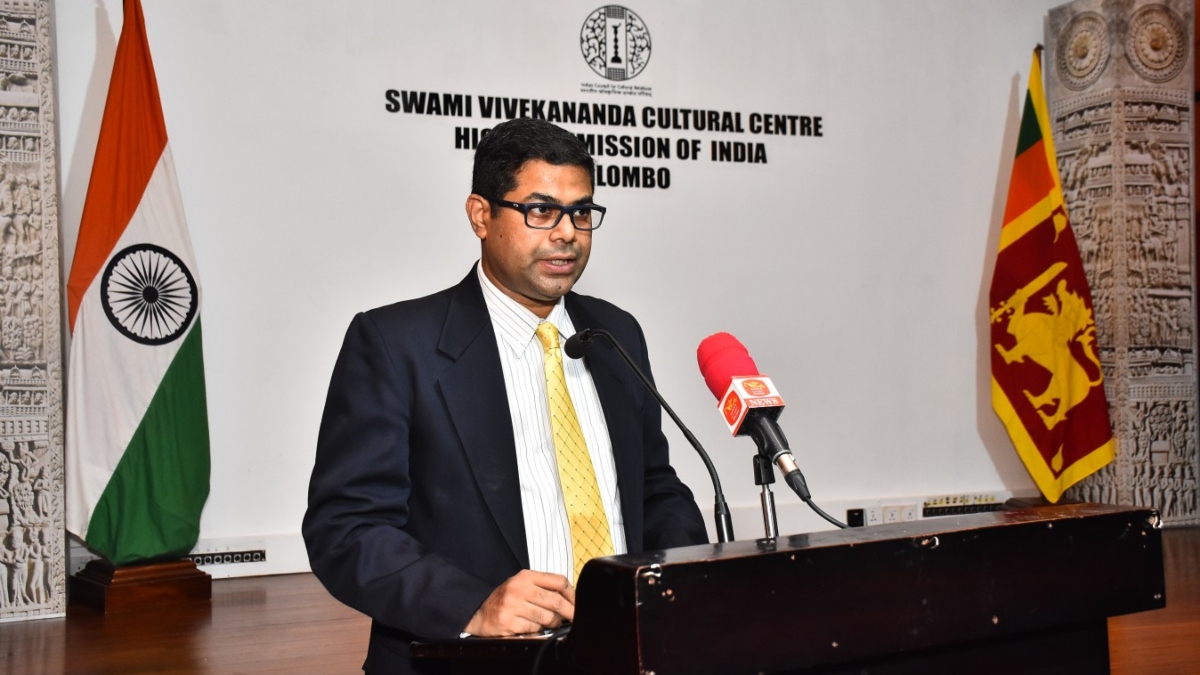
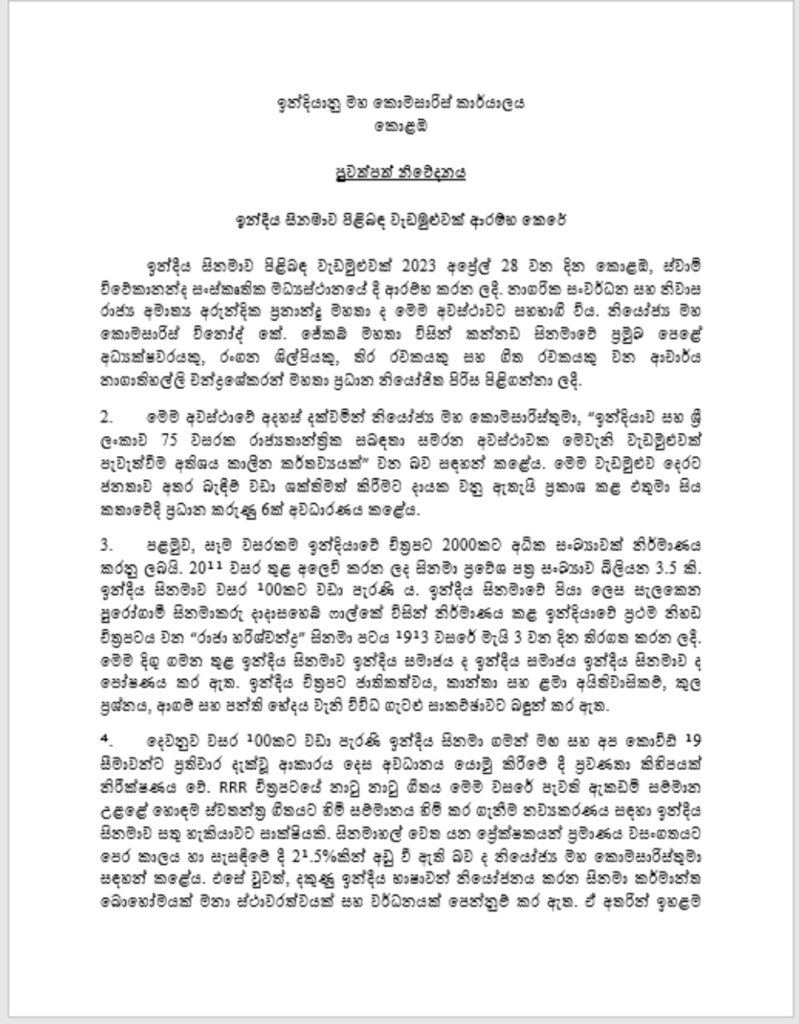
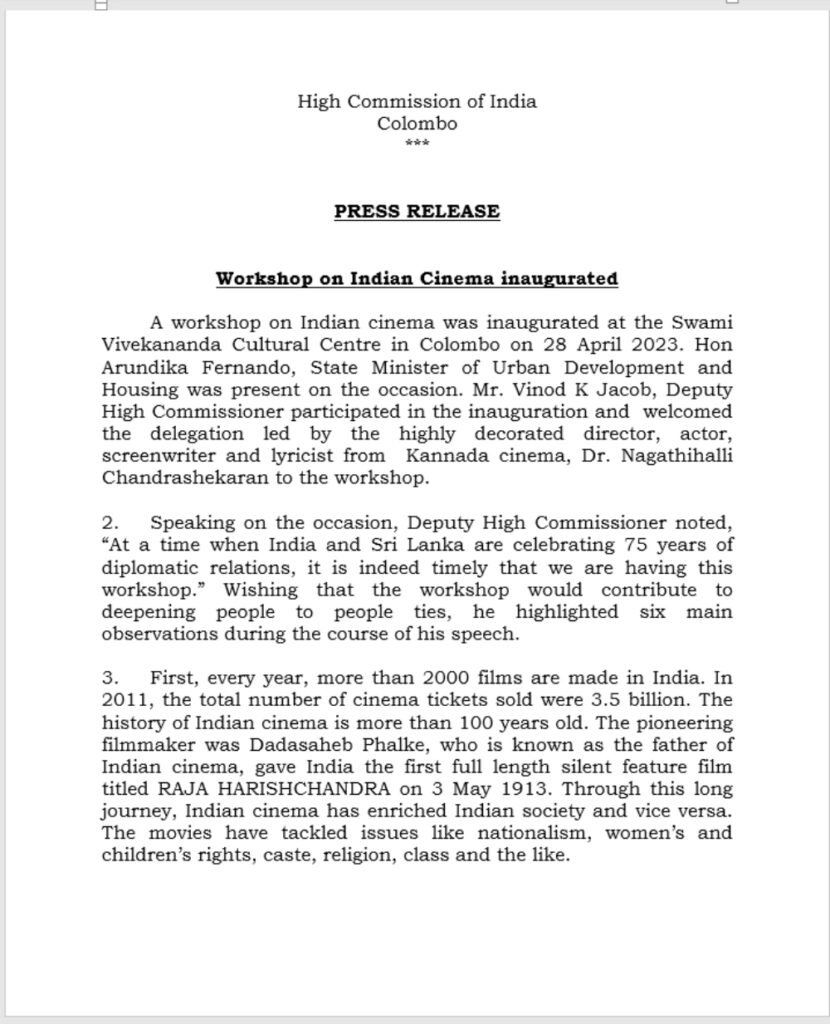
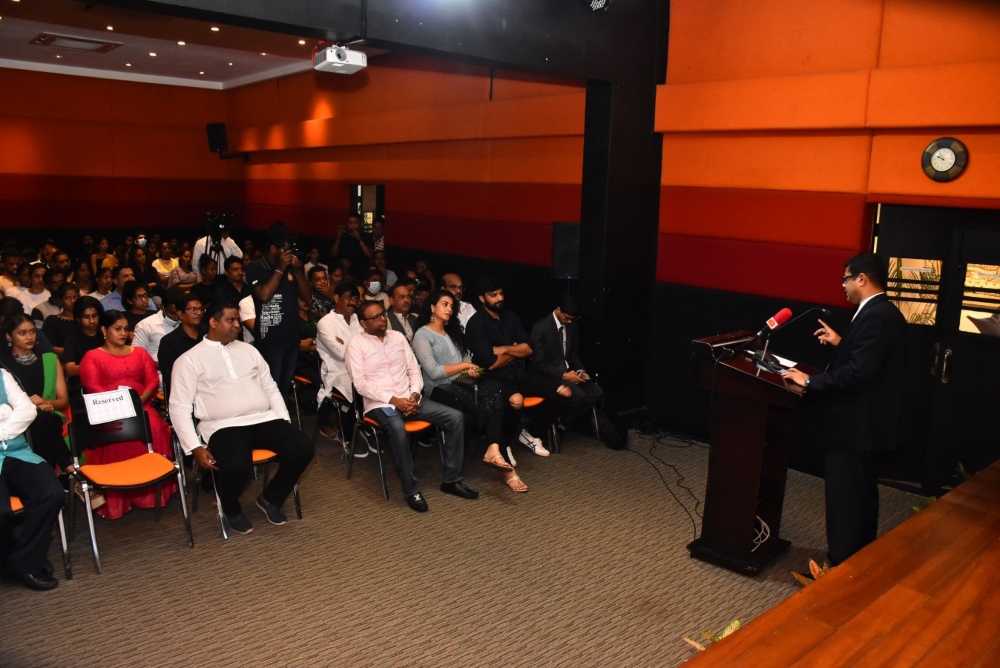
A workshop on Indian cinema was inaugurated at the Swami Vivekananda Cultural Centre in Colombo on April 28.
State Minister of Urban Development and Housing – Arundika Fernando was present on the occasion.
Mr. Vinod K Jacob, Deputy High Commissioner participated in the inauguration and welcomed the delegation led by the highly decorated director, actor, screenwriter and lyricist from Kannada cinema, Dr. Nagathihalli Chandrashekaran to the workshop.
Speaking on the occasion, Deputy High Commissioner noted, “At a time when India and Sri Lanka are celebrating 75 years of diplomatic relations, it is indeed timely that we are having this workshop.” Wishing that the workshop would contribute to deepening people to people ties, he highlighted six main observations during the course of his speech.
First, every year, more than 2000 films are made in India. In 2011, the total number of cinema tickets sold were 3.5 billion. The history of Indian cinema is more than 100 years old. The pioneering filmmaker was Dadasaheb Phalke, who is known as the father of Indian cinema, gave India the first full length silent feature film titled RAJA HARISHCHANDRA on 3 May 1913. Through this long journey, Indian cinema has enriched Indian society and vice versa. The movies have tackled issues like nationalism, women’s and children’s rights, caste, religion, class and the like.
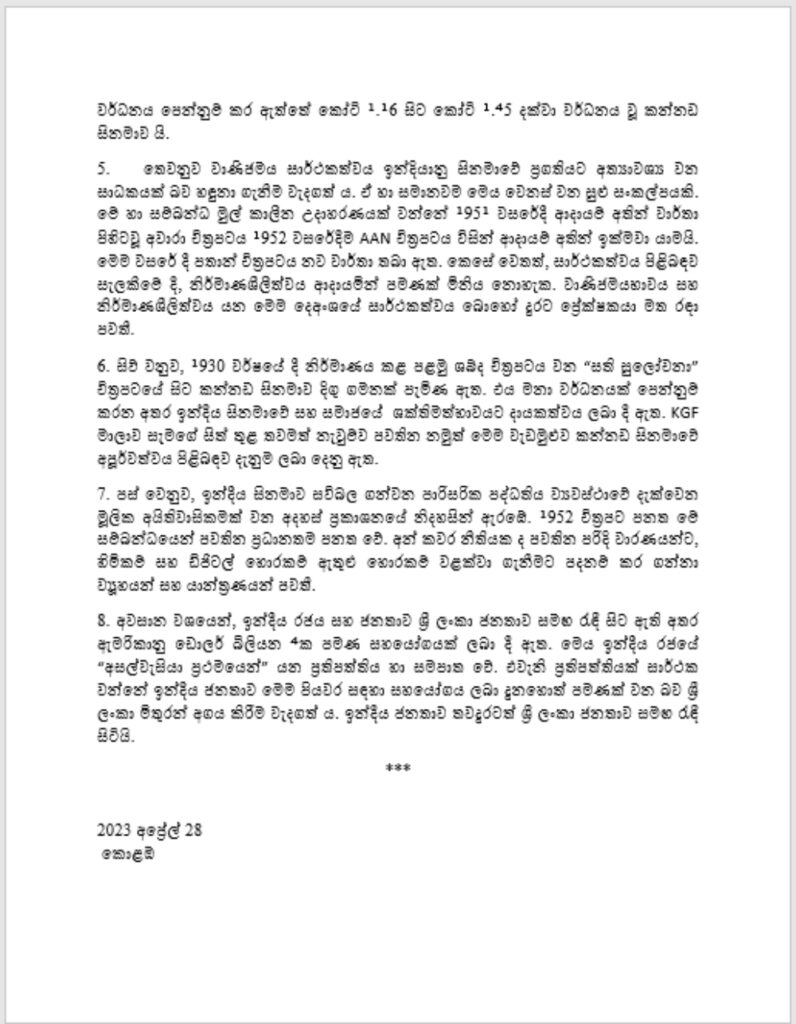
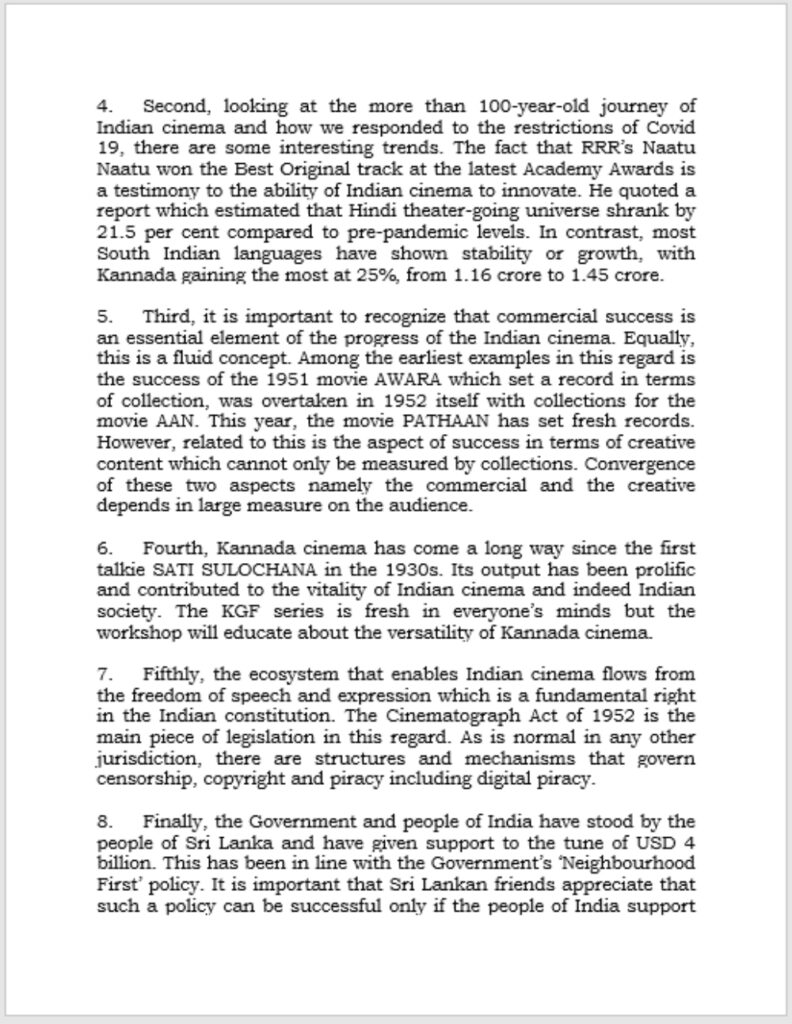
Second, looking at the more than 100-year-old journey of Indian cinema and how we responded to the restrictions of Covid 19, there are some interesting trends. The fact that RRR’s Naatu Naatu won the Best Original track at the latest Academy Awards is a testimony to the ability of Indian cinema to innovate. He quoted a report which estimated that Hindi theater-going universe shrank by 21.5 per cent compared to pre-pandemic levels. In contrast, most South Indian languages have shown stability or growth, with Kannada gaining the most at 25%, from 1.16 crore to 1.45 crore.
Third, it is important to recognize that commercial success is an essential element of the progress of the Indian cinema. Equally, this is a fluid concept. Among the earliest examples in this regard is the success of the 1951 movie AWARA which set a record in terms of collection, was overtaken in 1952 itself with collections for the movie AAN. This year, the movie PATHAAN has set fresh records. However, related to this is the aspect of success in terms of creative content which cannot only be measured by collections. Convergence of these two aspects namely the commercial and the creative depends in large measure on the audience.
Fourth, Kannada cinema has come a long way since the first talkie SATI SULOCHANA in the 1930s. Its output has been prolific and contributed to the vitality of Indian cinema and indeed Indian society. The KGF series is fresh in everyone’s minds but the workshop will educate about the versatility of Kannada cinema.
Fifthly, the ecosystem that enables Indian cinema flows from the freedom of speech and expression which is a fundamental right in the Indian constitution. The Cinematograph Act of 1952 is the main piece of legislation in this regard. As is normal in any other jurisdiction, there are structures and mechanisms that govern censorship, copyright and piracy including digital piracy.
Finally, the Government and people of India have stood by the people of Sri Lanka and have given support to the tune of USD 4 billion. This has been in line with the Government’s ‘Neighbourhood First’ policy. It is important that Sri Lankan friends appreciate that such a policy can be successful only if the people of India support these initiatives. The Indian people continue to stand in solidarity with the people of Sri Lanka.







Probe launched over student death at Wayamba National College of Education

Trump calls Putin ‘crazy’ after largest Russian attack on Ukraine