Connect with us

Entertainment

India puts blockbuster Pakistani film on hold

Published

on


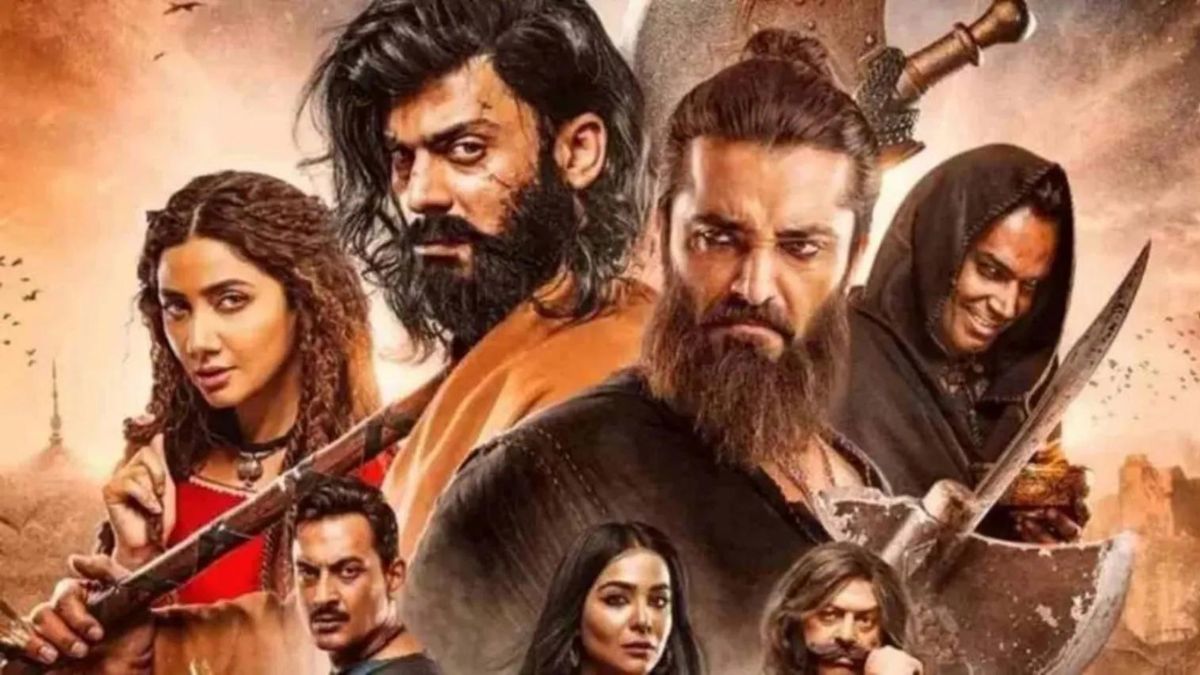
The release of a blockbuster Pakistani film has been put on hold in India after officials in Delhi refused to give permission for its screening, the BBC has learnt.

A remake of a 1979 Punjabi film, The Legend of Maula Jatt, is the highest ever grossing film in Pakistan.

The movie was set to release in the northern Indian state of Punjab on Wednesday, which would have made it the first Pakistani film to hit Indian screens in more than a decade.

The South Asian neighbours share a frosty relationship and tensions often affect cultural exchanges between them.

On Wednesday, a source close to Zee Studios – the film’s distributor in India – confirmed to the BBC that its release had been stalled indefinitely, after the information and broadcasting ministry denied them permission.

It’s not immediately clear why the film was put on hold. The BBC has contacted the ministry for comment.

Starring Pakistan’s biggest stars Fawad Khan and Mahira Khan, the 2022 film tells the story of a local folk hero who takes on the leader of a rival clan.

The film was initially supposed to release in India in 2022, but its screening was postponed indefinitely – until last month when its maker Bilal Lashari announced it would hit Indian theatres soon.

“Two years in, and still house full on weekends in Pakistan! Now, I can’t wait for our Punjabi audience in India to experience the magic of this labour of love!” he wrote on Instagram.

However, the news sparked protests in the western Indian state of Maharashtra, where the regional Maharashtra Navnirman Sena political party said it would not allow the film’s release “under any circumstances”. Mumbai, which is located in the state, is home to Bollywood, India’s largest film industry.

Following tensions, Zee Studios decided to limit the film’s release to Punjab state, which shares a border and language with Pakistan’s Punjab province.

Despite tense relations, Indian and Pakistan have always shared an affinity for each other’s art and culture.

Movies and web series made in India and Pakistan travel widely across the border. India’s Bollywood and Punjabi movies are particularly popular in Pakistan, while Pakistani series enjoy a large viewership in India.

Performers in both the countries also have a history of cross-border collaborations, working together on film and music projects.

But such collaborations came to a halt when Bollywood dropped Pakistani actors in 2016 and Pakistan banned Indian movies in 2019, over military tensions between the countries.

A few Punjabi movies from India have been screened in Pakistan in recent months.

In 2023, India’s Supreme Court dismissed a petition that sought a complete ban on performers from Pakistan, asking the petitioners to not to be “so narrow minded”.

Encouraged by this mild thaw in relations and Maula Jatt’s global success, its makers had hoped the folk drama would attract audiences in India.

The leading actors of Maula Jatt are well-known in India for starring in popular Pakistani dramas. They have also previously appeared in big-budget Bollywood films.

(BBC News)

Entertainment

Lilo and Stitch beat Tom Cruise in box office bonanza

Published

on

By

Disney’s live-action Lilo and Stitch remake and Tom Cruise’s supposedly final Mission: Impossible outing have opened as two of the biggest films of the year in a record-breaking weekend at the box office.

Lilo and Stitch, which revisits the 2002 animated family favourite, exceeded expectations with takings of $341m (£252m) around the world.

That made it the second highest opening of 2025 so far after A Minecraft Movie, Variety reported, and broke the record for the Memorial Day weekend in the US.

Mission: Impossible – The Final Reckoning, the eighth film in the franchise, also proved a hit with $190m (£140m) in ticket sales.

Cruise has been playing agent Ethan Hunt since 1996, and seemingly confirmed The Final Reckoning would be the last instalment by telling the Hollywood Reporter: “It’s the final! It’s not called ‘final’ for nothing.”

But some have doubts about whether it will really turn out to be the end.

The blockbuster has had some rave reviews, with the Guardian calling it a “wildly entertaining adventure” in a five-star review, and Vanity Fair describing it as “a worthy send-off”.

However, not everyone was blown away, with the Hollywood Reporter saying it’s “a disappointing farewell”, and Mashable saying the series risked going out with the “fizzled whimper of a message self-destructing in a tape deck”.

Meanwhile, Lilo and Stitch is the latest in a long line of live-action remakes of beloved Disney animations, and achieved the third-best box office opening behind 2019’s The Lion King and 2017’s Beauty and the Beast, Variety said.

The new version stars Courtney B Vance and Zach Galifianakis alongside eight-year-old Maia Kealoha and a computer-generated cuddly runaway alien.

It has also had mixed reviews, being described as “jovial, zany, and sweet” by the Daily Beast, but a “mind-numbing abomination” by the Times.

(BBC News)

Continue Reading

Entertainment

Anudi shines in Head-to-Head & Talent rounds

Published

on

By

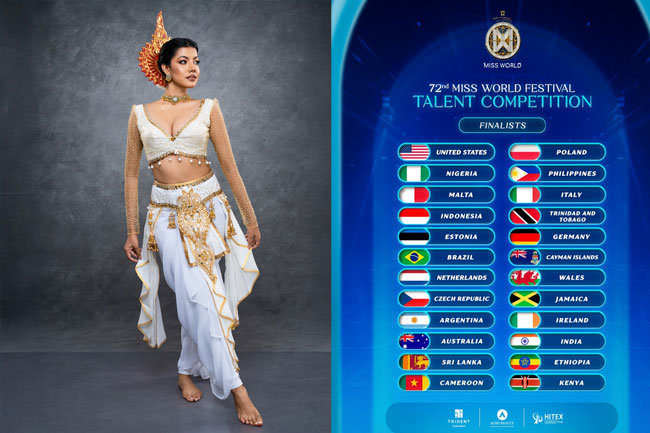
Anudi Gunasekara has been selected into the Top 5 from Asia in the Head-to-Head Challenge at the 72nd Miss World pageant.

She is the first Sri Lankan to reach the finalist stage in this segment.

She has also set another milestone by becoming the only contestant from Asia to qualify as a finalist in both the Head-to-Head and Talent rounds this year.

Continue Reading

Entertainment

India’s Banu Mushtaq scripts history with International Booker win

Published

on

By

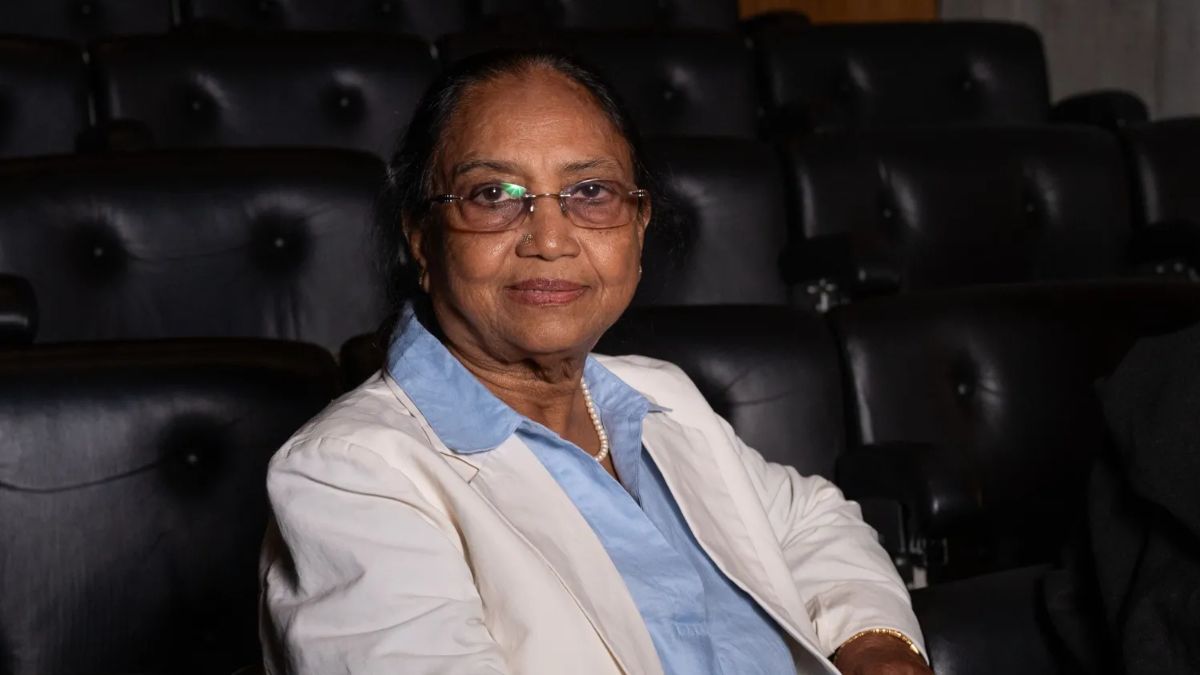
Indian writer-lawyer-activist Banu Mushtaq has scripted history by winning the International Booker prize for the short story anthology, Heart Lamp.

It is the first book written in the Kannada language, which is spoken in the southern Indian state of Karnataka, to win the prestigious prize.

The stories in Heart Lamp were translated into English by Deepa Bhasthi.

Featuring 12 short stories written by Mushtaq over three decades from 1990 to 2023, Heart Lamp poignantly captures the hardships of Muslim women living in southern India.

Mushtaq’s win comes off the back of Geetanjali Shree’s Tomb of Sand – translated from Hindi by Daisy Rockwell – winning the prize in 2022.

Her body of work is well-known among book lovers, but the Booker International win has shone a bigger spotlight on her life and literary oeuvre, which mirrors many of the challenges the women in her stories face, brought on by religious conservatism and a deeply patriarchal society.

It is this self-awareness that has, perhaps, helped Mushtaq craft some of the most nuanced characters and plot-lines.

“In a literary culture that rewards spectacle, Heart Lamp insists on the value of attention — to lives lived at the edges, to unnoticed choices, to the strength it takes simply to persist. That is Banu Mushtaq’s quiet power,” a review in the Indian Express newspaper says about the book.

Mushtaq grew up in a small town in the southern state of Karnataka in a Muslim neighbourhood and like most girls around her, studied the Quran in the Urdu language at school.

But her father, a government employee, wanted more for her and at the age of eight, enrolled her in a convent school where the medium of instruction was the state’s official language – Kannada.

Mushtaq worked hard to become fluent in Kannada, but this alien tongue would become the language she chose for her literary expression.

She began writing while still in school and chose to go to college even as her peers were getting married and raising children.

It would take several years before Mushtaq was published and it happened during a particularly challenging phase in her life.

Her short story appeared in a local magazine a year after she had married a man of her choosing at the age of 26, but her early marital years were also marked by conflict and strife – something she openly spoke of, in several interviews.

In an interview with Vogue magazine, she said, “I had always wanted to write but had nothing to write (about) because suddenly, after a love marriage, I was told to wear a burqa and dedicate myself to domestic work. I became a mother suffering from postpartum depression at 29”.

In the another interview to The Week magazine, she spoke of how she was forced to live a life confined within the four walls of her house.

Then, a shocking act of defiance set her free.

“Once, in a fit of despair, I poured white petrol on myself, intending to set myself on fire. Thankfully, he [the husband] sensed it in time, hugged me, and took away the matchbox. He pleaded with me, placing our baby at my feet saying, ‘Don’t abandon us’,” she told the magazine.

In Heart Lamp, her female characters mirror this spirit of resistance and resilience.

“In mainstream Indian literature, Muslim women are often flattened into metaphors — silent sufferers or tropes in someone else’s moral argument. Mushtaq refuses both. Her characters endure, negotiate, and occasionally push back — not in ways that claim headlines, but in ways that matter to their lives,” according to a review of the book in The Indian Express newspaper.

Mushtaq went on to work as a reporter in a prominent local tabloid and also associated with the Bandaya movement – which focussed on addressing social and economic injustices through literature and activism.

After leaving journalism a decade later, she took up work as a lawyer to support her family.

In a storied career spanning several decades, she has published a copious amount of work; including six short story collections, an essay collection and a novel.

But her incisive writing has also made her a target of hate.

In an interview to The Hindu newspaper, she spoke about how in the year 2000, she received threatening phone calls after she expressed her opinion supporting women’s right to offer prayer in mosques.

A fatwa – a legal ruling as per Islamic law – was issued against her and a man tried to attack her with a knife before he was overpowered by her husband.

But these incidents did not faze Mushtaq, who continued to write with fierce honesty.

“I have consistently challenged chauvinistic religious interpretations. These issues are central to my writing even now. Society has changed a lot, but the core issues remain the same. Even though the context evolves, the basic struggles of women and marginalised communities continue,” she told The Week magazine.

Over the years Mushtaq’s writings have won numerous prestigious local and national awards including the Karnataka Sahitya Academy Award and the Daana Chintamani Attimabbe Award.

In 2024, the translated English compilation of Mushtaq’s five short story collections published between 1990 and 2012 – Haseena and Other Stories – won the PEN Translation Prize.

(BBC News)

Continue Reading

Trending

Copyright © 2024 Sri Lanka Mirror. All Rights Reserved