Connect with us

World

Auction of gems linked to Buddha postponed

Published

on

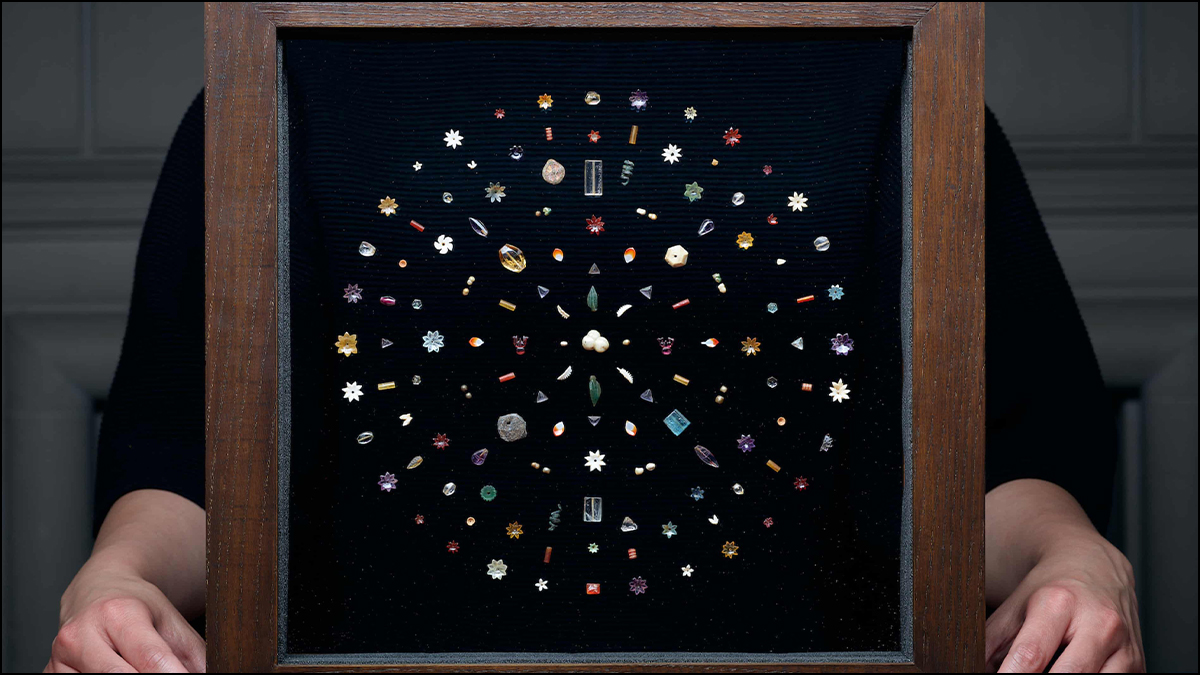
The Indian government is seeking to repatriate ancient gem relics linked to the Buddha’s remains after halting their sale at an auction in Hong Kong.
Sotheby’s postponed the sale of the Piprahwa gems, due on Wednesday, after the ministry of culture threatened to take legal action against the auction house in Indian and Hong Kong courts and through international bodies “for violations of cultural heritage laws”.

In a statement, the ministry said it would discuss repatriation of the gems to India with Sotheby’s and the sellers, three descendants of William Claxton Peppé, a British colonial landowner who, in 1898, excavated the gems on his estate in northern India.

In a legal notice issued to Sotheby’s on Monday, India’s ministry of culture told the auction house that the gems should be treated as the sacred body of the Buddha and it would be “participating in continued colonial exploitation” if the sale went ahead.

The letter, posted on the ministry’s social media accounts, added that Peppé’s great-grandson, Chris Peppé, a Los Angeles-based TV director and film editor, lacked the authority to sell the gem relics, which “constitute inalienable religious and cultural heritage of India and the global Buddhist community”.

There has been a growing international outcry against the sale of the gems, which many Buddhists believe are imbued with the presence of the Buddha and should be treated as corporeal remains.

The 334 gems, which were expected to sell for about HK$100m (£9.7m), include amethysts, coral, garnets, pearls, rock crystals, shells and gold, either worked into pendants, beads and other ornaments, or in their natural form.

The gems were originally buried in a dome-shaped funerary monument, called a stupa, in Piprahwa in present-day Uttar Pradesh, India, in about 240-200BC, when they were mixed with some of the cremated remains of the Buddha, who died in about 480BC.

The British crown claimed Peppé’s find under the 1878 Indian Treasure Trove Act, with the bones and ash presented to the Buddhist monarch King Chulalongkorn of Siam. Most of the 1,800 gems went to the colonial museum in Kolkata, while Peppé was permitted to retain approximately a fifth of them.

Legal experts told the Guardian that the Indian government could pursue legal action even if the gems were sold.

Sameer Jain, a managing partner at PSL advocates and solicitors, India, said the auction could well be in breach of Indian laws including the Antiquities and Art Treasures Act 1972, the Ancient Monuments and Archaeological Sites and Remains Act 1958, and the Indian Treasure Trove Act 1878, as the Indian ministry of culture claimed.

Jain said: “These laws vest the ownership of relics in the government of India, whether or not they were exported during the colonialist period. Any export trade without licence is prohibited. The root question would be whether [the gems] were exported out of India legally and whether the Peppés are even owners of these items. It is arguable that the relics were given to the family only for custody.”

Noor Kadhim, an art lawyer at the legal consultancy Kadhims and an independent consultant in Fieldfisher’s art law department, said India could not sue Sotheby’s under The Hague and the Unesco conventions because it was a private auction house rather than a state museum. She added: “If they wish to use these treaties, the more viable path would be to employ them against China, as the host state for Sotheby’s Hong Kong.”

Conan Cheong, a curator and expert in south-east Asian art, welcomed Sotheby’s decision, saying: “This is a rare chance for the Peppés to finally consult with the Buddhist voices raised in protest of the sale in Thailand, Cambodia, Sri Lanka and elsewhere, as well as with the Indian government, to find a truly equitable way to share them with all humanity.”

Chris Peppé has been approached for comment. With regards to his rights and those of his two relatives to sell the gems, he previously told the Guardian: “Legally, the ownership is unchallenged.”

In a statement, Sotheby’s said: “In light of the matters raised by the government of India and with the agreement of the consignors, the auction of the Piprahwa gems of the historical Buddha, scheduled for 7 May, has been postponed. This will allow for discussions between the parties and we look forward to sharing any updates as appropriate.”

(theguardian.com)

World

Trump calls Putin ‘crazy’ after largest Russian attack on Ukraine

Published

on

By

US President Donald Trump has said he is “not happy” with his Russian counterpart Vladimir Putin, following Moscow’s largest aerial attack yet on Ukraine.In a rare rebuke, Trump said: “What the hell happened to him? He’s killing a lot of people.” He later called Putin “absolutely crazy”.

Ukrainian President Volodymyr Zelensky earlier said Washington’s “silence” over recent Russian attacks was encouraging Putin, urging “strong pressure” – including tougher sanctions – on Moscow.

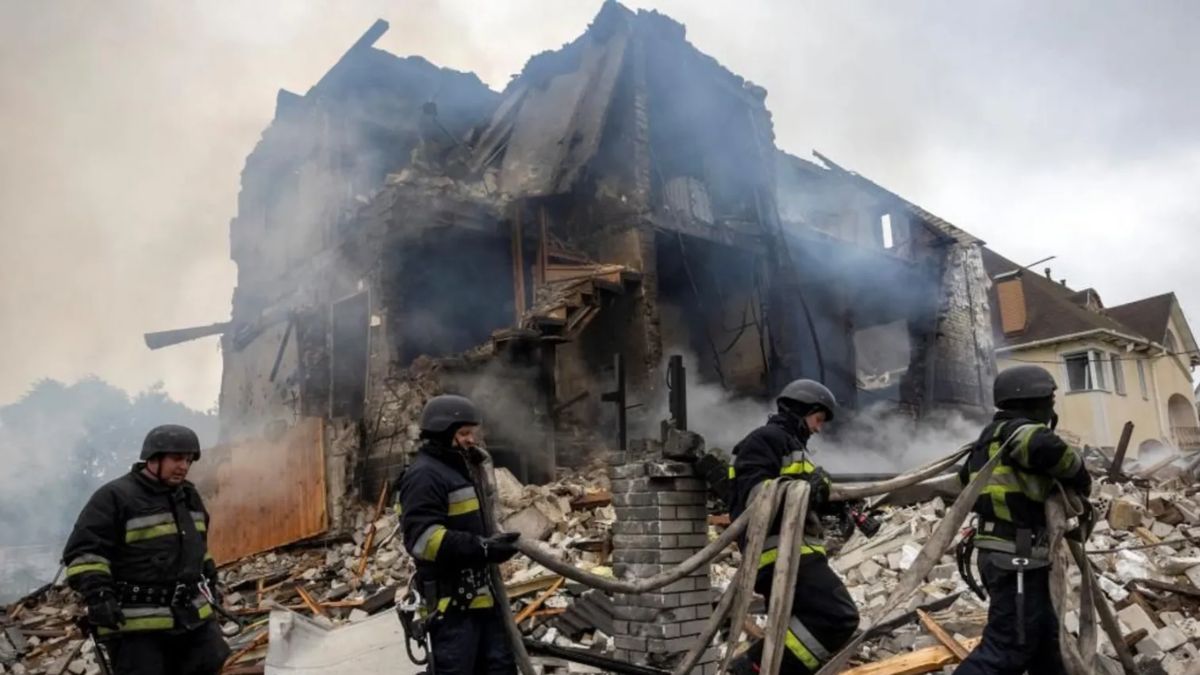
At least 12 people were killed and dozens injured in Ukraine overnight Sunday after Russia fired 367 drones and missiles – the highest number in a single night since Putin launched a full-scale invasion in 2022.

Air sirens warning of incoming drones and missiles sounded again in many regions of Ukraine early on Monday.

At least three people, including a child, were injured in the north-eastern city of Kharkiv, Mayor Ihor Terekhov said.

In the southern Zaporizhzhia region, two people were injured, said regional head Ivan Fedorov.

In Russia, Moscow Mayor Sergei Sobyanin said two Ukrainian drones heading towards the capital were destroyed by air defence units. No injuries were reported.

Speaking to reporters in New Jersey late on Sunday, Trump said of Putin: “I’ve known him a long time, always gotten along with him, but he’s sending rockets into cities and killing people, and I don’t like it at all.”

Asked about whether he was considering increasing US sanctions on Russia, Trump replied: “Absolutely.” The US president has repeatedly threatened to do this before – but is yet to implement any restrictions against Moscow.

Shortly afterwards, Trump wrote in a post on Truth Social that Putin “has gone absolutely crazy”.

“I’ve always said that he wants all of Ukraine, not just a piece of it, and maybe that’s proving to be right, but if he does, it will lead to the downfall of Russia!”

But the US president also had strong words for Zelensky, saying that he “is doing his country no favours by talking the way he does”.

“Everything out of his mouth causes problems, I don’t like it, and it better stop,” Trump wrote of Zelensky.

Despite Kyiv’s European allies preparing further sanctions for Russia, the US has said it will either continue trying to broker these peace talks, or “walk away” if progress does not follow.

Last week, Trump and Putin had a two-hour phone call to discuss a US-proposed ceasefire deal to halt the fighting.

The US president said he believed the call had gone “very well”, adding that Russia and Ukraine would “immediately start” negotiations toward a ceasefire and “an end to the war”.

Ukraine has publicly agreed to a 30-day ceasefire.

Putin has only said Russia will work with Ukraine to craft a “memorandum” on a “possible future peace” – a move described by Kyiv and its European allies as delaying tactics.

The first direct Ukrainian-Russian talks since 2022 were held on 16 May in Istanbul, Turkey.

Aside from a major prisoner of war swap last week, there was little or no progress on bringing a pausing in fighting closer.

Russia currently controls about 20% of Ukrainian territory. This includes Crimea – Ukraine’s southern peninsula annexed by Moscow in 2014.

(BBC News)

Continue Reading

World

Israeli embassy couple shot dead in Washington

Published

on

By

Shooting suspect Elias Rodriguez has been charged with two counts of first-degree murder after two Israeli embassy staff were killed in Washington DC on Wednesday night.

Sarah Lynn Milgrim and Yaron Lischinsky were leaving an event at the Capital Jewish Museum when they were shot dead.

Rodriguez, a 30-year-old from Chicago, was detained at the scene. More charges could come later, law enforcement officials say, and the FBI is aware of “writings” purported to be from the suspect.

Police say the suspect was in town for a work conference, and shouted “free Palestine” after being taken into custody.

US President Trump says the attack is “so sad” and “based obviously on antisemitism”, while DC Mayor Muriel Bowser says “this crime will not be tolerated in our city”.

Israel’s Prime Minister Benjamin Netanyahu has linked the shooting to the 7 October 2023 attack and says security will be increased at Israeli embassies worldwide.

(BBC News)

Continue Reading

World

‘Shrinking Nemo’: Smaller clownfish sound alarm on ocean heat

Published

on

By

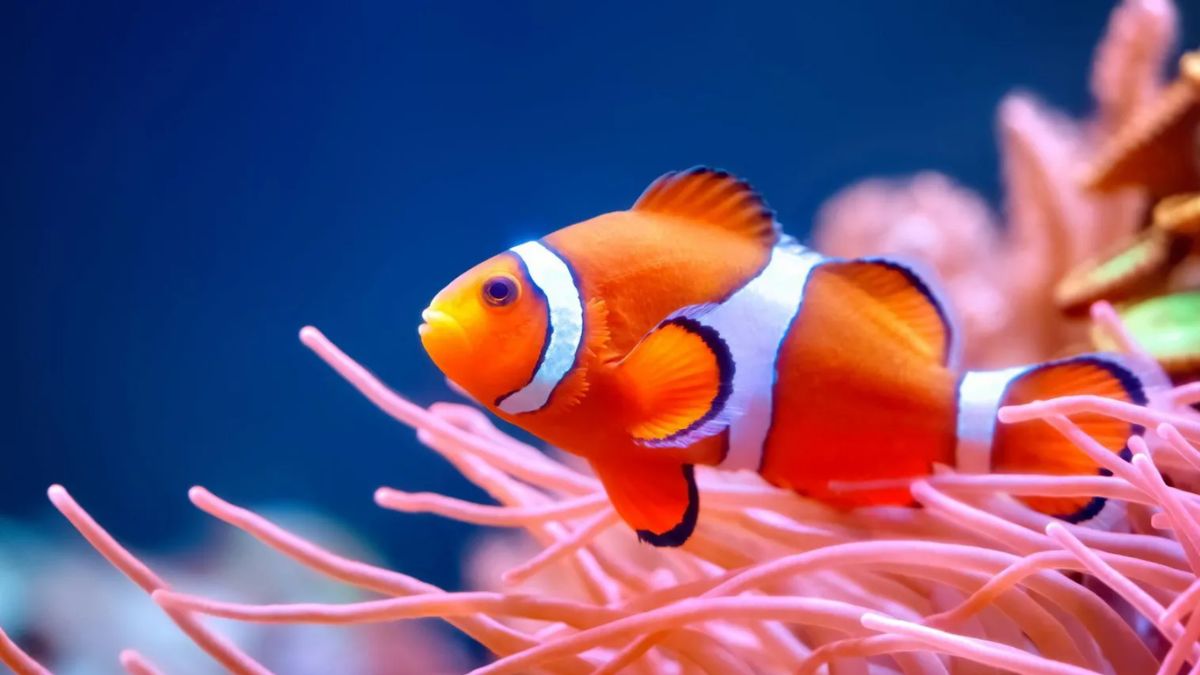
Fish similar to those made famous by the movie Finding Nemo are shrinking to cope with marine heatwaves, a study has found.

The research recorded clownfish living on coral reefs slimmed down drastically when ocean temperatures rocketed in 2023.

Scientists say the discovery was a big surprise and could help explain the rapidly declining size of other fish in the world’s oceans.

A growing body of evidence suggests animals are shape shifting to cope with climate change, including birds, lizards and insects.

“Nemos can shrink, and they do it to survive these heat stress events,” said Dr Theresa Rueger, senior lecturer in Tropical Marine Sciences at Newcastle University.

The researchers studied pairs of clownfish living in reefs off Kimbe Bay in Papua New Guinea, a hot spot of marine biodiversity

The wild clownfish are almost identical to the ones depicted in the movie Finding Nemo, in which a timid clownfish living off the Great Barrier Reef goes in search of his son.

The scientific study took place in the summer of 2023, when temperatures shot up in the oceans, leading to large swathes of coral turning white.

The scientists took multiple measurements of individual clownfish coping with the heat.

They found the tiny fish didn’t just lose weight but got shorter by several millimetres. And it wasn’t a one-off – 75% of fish shrunk at least once during the heatwave.

Dr Rueger explained: “It’s not just them going on a diet and losing lots of weight, but they’re actively changing their size and making themselves into a smaller individual that needs less food and is more efficient with oxygen.”

The fish may be absorbing fat and bone, as has been seen in other animals, such as marine iguanas, although this needs to be confirmed through laboratory studies.

Dr Rueger joked that a little bit of movie rewriting might be necessary, with a new chapter ahead for Nemo.

“The movie told a really good story, but the next chapter of the story surely is, how does Nemo deal with ongoing environmental change?” she told BBC News.

Global warming is a big challenge for warm-blooded animals, which must maintain a constant body temperature to prevent their bodies from overheating.

Animals are responding in various ways: moving to cooler areas or higher ground, changing the timing of key life events such as breeding and migration, or switching their body size.

The research is published in the journal, Science Advances.

(BBC News)

Continue Reading

Trending

Copyright © 2024 Sri Lanka Mirror. All Rights Reserved