

FEATURES
How Japan’s youngest CEO transformed Hello Kitty
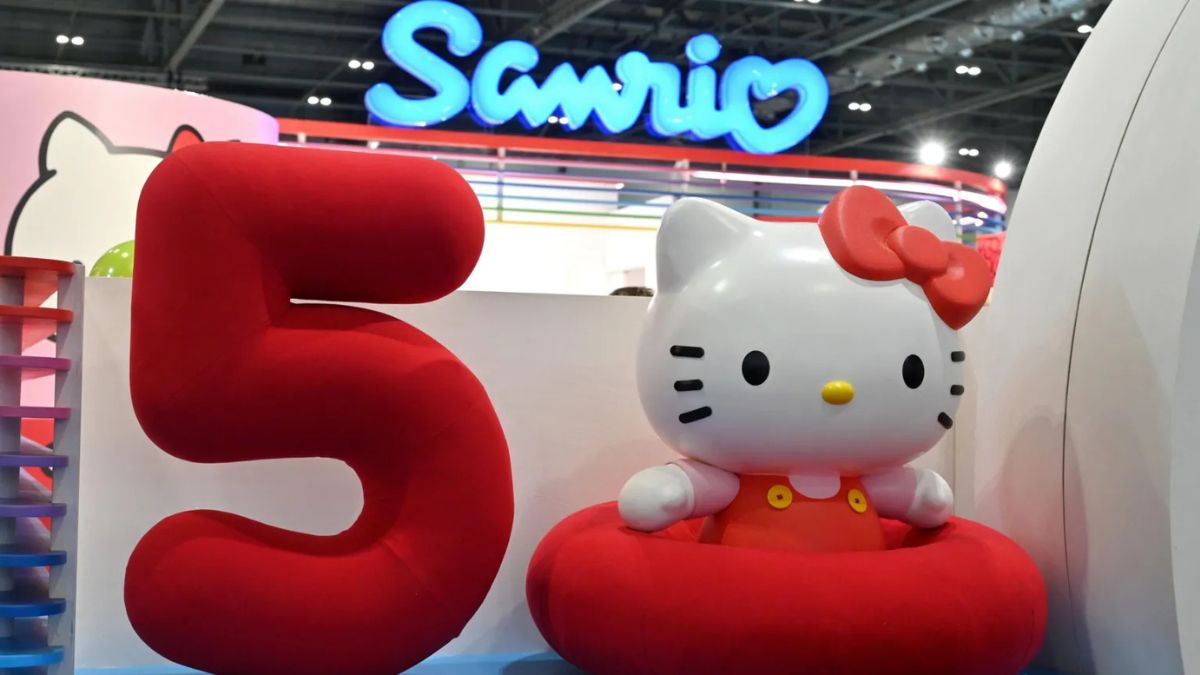
Hello Kitty, arguably Japan’s best loved creation, is celebrating her 50th anniversary.
But all has not always been well at Sanrio, the Japanese company behind the character. The business has been on a spectacular journey of financial peaks and valleys.
Hello Kitty has been ranked the second-highest grossing media franchise in the world behind Pokémon, and ahead of the likes of Mickey Mouse and Star Wars.
Underscoring her global fame, Britain’s King Charles wished her a happy birthday during the state visit to the UK by Japan’s Emperor and Empress in June.
In recent years though Sanrio had been struggling to make money, as interest in Hello Kitty waned.
Two previous surges in Sanrio sales, in 1999 and 2014, were both driven by the character’s popularity. But these jumps in demand for the firm’s products were not sustainable, says Yasuki Yoshioka of investment company SMBC Nikko.
“In the past, its performance had many ups and downs, as if it was on a rollercoaster ride,” Mr Yoshioka says.
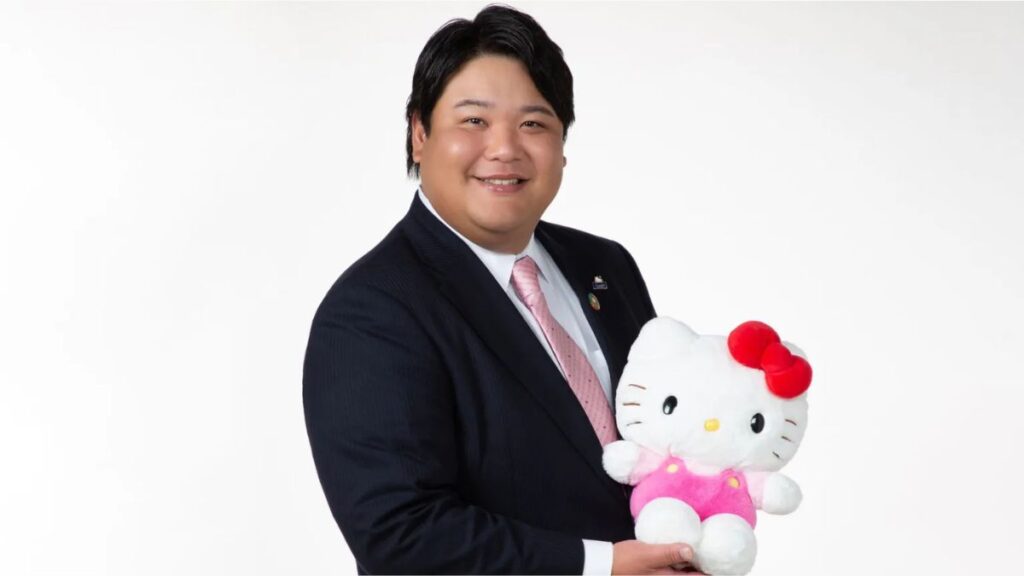
Tomokuni Tsuji took over the top job at Sanrio four years ago
Then, in 2020, Tomokuni Tsuji inherited the role as Sanrio’s boss.
He is the grandson of the firm’s founder, Shintaro Tsuji, and was just 31 at the time, making him the youngest chief executive of a listed Japanese company.
His grandfather then became Sanrio’s chairman.
Under the younger Mr Tsuji’s leadership, Sanrio changed its marketing strategy of its stable of other characters.
“It is not about lowering Hello Kitty’s popularity but it is about boosting others’ recognition,” he says.
This resulted in Hello Kitty losing the position of Sanrio’s most popular character.
According to a poll of customers, that spot is now held by Cinnamoroll – a blue-eyed white puppy with pink cheeks, long ears and a tail that looks like a Cinnamon roll.
Sanrio is also no longer just about cute characters.
If Hello Kitty is Japan’s ambassador of cute, then angry red panda Aggressive Retsuko – or Aggretsuko – channels the frustrations of an ordinary working woman.
The character, which is popular among Gen Zers, first appeared in a cartoon series on Japan’s TBS Television before it became a global hit on Netflix.
Another unconventional character is Gudetama, or “lazy egg”, who is living with depression and fires out cold one-liners that reflect dark realities of life.

Sanrio is also no longer just about cute characters
As well as diversifying its characters, Sanrio boosted its overseas marketing and is now tackling counterfeits more rigorously.
“We are now using artificial intelligence to detect fake products and to make removal requests,” says Mr Tsuji.
For its marketing strategy, collaborations with major brands – including Starbucks, Crocs and the LA Dodgers baseball team – have been key, he added.
“In addition to our own promotion, by collaborating with global brands, we are trying to have our characters in the market throughout the year without many breaks.”
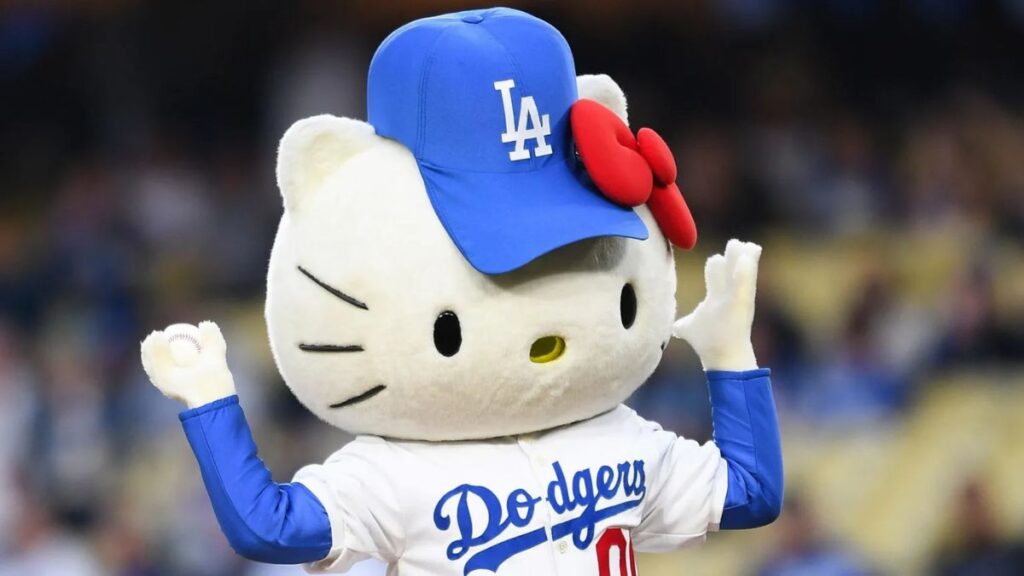
Hello Kitty collaborated with the LA Dodgers, home to Japanese baseball sensation Shohei Ohtani
In a society that puts so much emphasis on seniority, Mr Tsuji’s surname was crucial to his ability to make major changes at Sanrio.
Almost a quarter of listed companies in Japan, like car makers Toyota and Suzuki and camera firm Canon, are managed by members of the family that founded them.
The reason is cultural, according to Professor Hokuto Dazai of Nagoya University of Commerce and Business.
In Japan, home to the world’s oldest continuous monarchy, “there is strong recognition of families and family businesses,” he says.
The master-servant relationship from the samurai period has transitioned into the relationship between founding families and their employees, and “historically commoners never fought over the top job”.
“It is also because Japan has a smaller pool of professional executives to choose from,” says Professor Dazai.
“Firms tend to look for their next boss internally, including founding family members.”
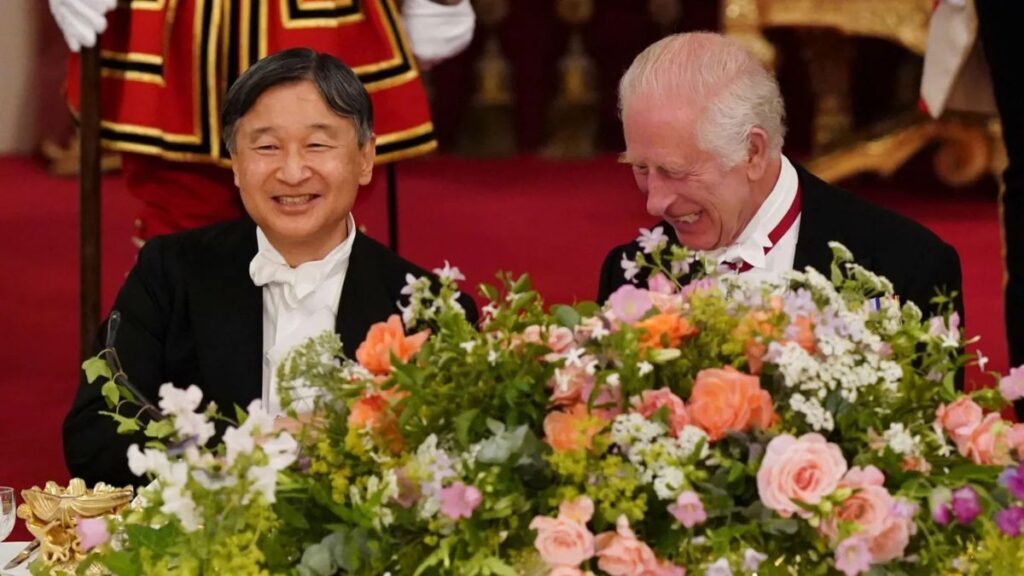
King Charles wished Hello Kitty a happy birthday during the Japanese Emperor’s state visit
Still, “it would be a lie if I said there was no pushback” from other managers and employees in the company, Mr Tsuji says.
He also says he clashed with his grandfather over how to run the company.
“But one day I realised that I was being arrogant, trying to convince someone 60 years senior,” he says.
“After about a year, my grandfather told me to run the company as I see fit – that he will leave it up to me.”
The new boss’s revamp of the business has been paying off so far.
Within two years of the younger Tsuji becoming chief executive, Sanrio was profitable again, in what analyst Mr Yoshioka calls “a beautiful V-shaped recovery”.
Its share price has risen tenfold since 2020 and the company now has a stock market valuation of more than a trillion yen ($6.5bn; £5bn).
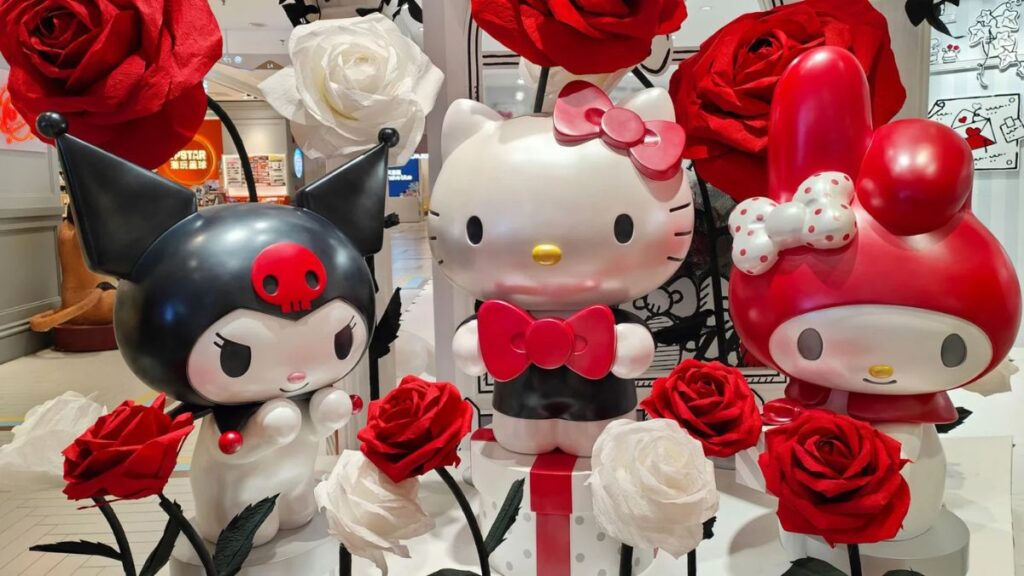
Hello Kitty is no longer the most popular Sanrio character
Away from the boardroom and stock market, there was also an intriguing incident earlier this year.
While Hello Kitty’s true identity is relatively well-known in Japan, some overseas fans were shocked by comments from a Sanrio executive in July.
Speaking on US television, retail business development director Jill Koch told viewers that “Hello Kitty is not a cat” and is in fact a British schoolgirl.
Her comments sparked a flurry of social media posts, with fans expressing their shock and confusion about the revelation.
“Hello Kitty is Hello Kitty and she can be whoever you want her to be – she can be your sister, your mother, it can be another you,” Mr Tsuji says.
Pushed on whether he has any idea why his grandfather decided not to make her Japanese, Mr Tsuji concludes: “London is an amazing city and it was the envy of many Japanese girls, so that may be one of the reasons they decided that she’s from London.”
It may not be the definitive answer her fans are looking for – but after all, Hello Kitty was created 14 years before the younger Tsuji was even born. Half a century since her creation, it is possible that the beloved character’s origin story will continue to be shrouded in mystery for years to come.
– Mariko Oi
(BBC News)






FEATURES
Why the mighty Himalayas are getting harder and harder to see
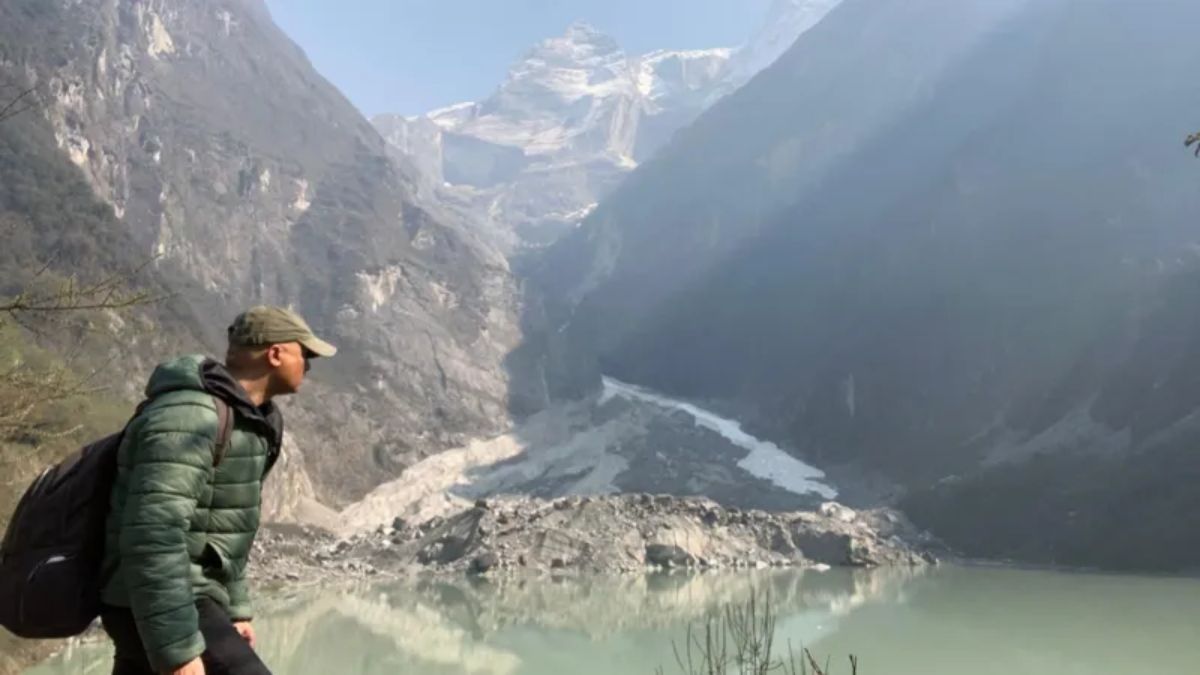
Trekking in Nepal’s Annapurna region, where haze obscures visibility of the epic mountains even at close range
I grew up in Nepal’s capital watching the Himalayas. Ever since I left, I’ve missed sweeping, panoramic views of some of the highest mountain peaks on Earth.
Each time I visit Kathmandu, I hope to catch a glimpse of the dramatic mountain range. But these days, there’s usually no luck.
The main culprit is severe air pollution that hangs as haze above the region.
And it’s happening even during the spring and autumn months, which once offered clear skies.
Just last April, the international flight I was in had to circle in the sky nearly 20 times before landing in Kathmandu, because of the hazy weather impacting visibility at the airport.
The hotel I checked in at was at a reasonable height from which mountains are visible on a clear day – but there was no such day during my two-week stay.
Even from the major vantage point of Nagarkot, just outside Kathmandu, all that could be seen was haze, as if the mountains did not exist.
“I no longer brand the place for views of ‘sunrise, sunset and Himalayas’ as I did in the past,” said Yogendra Shakya, who has been operating a hotel at Nagarkot since 1996.
“Since you can’t have those things mostly now because of the haze, I have rebranded it with history and culture as there are those tourism products as well here.”
During an earlier trip a year ago, I was hopeful I would be able to see the mighty Himalayan peaks on a trek in the mesmerising Annapurna region – but had hardly any luck there either.
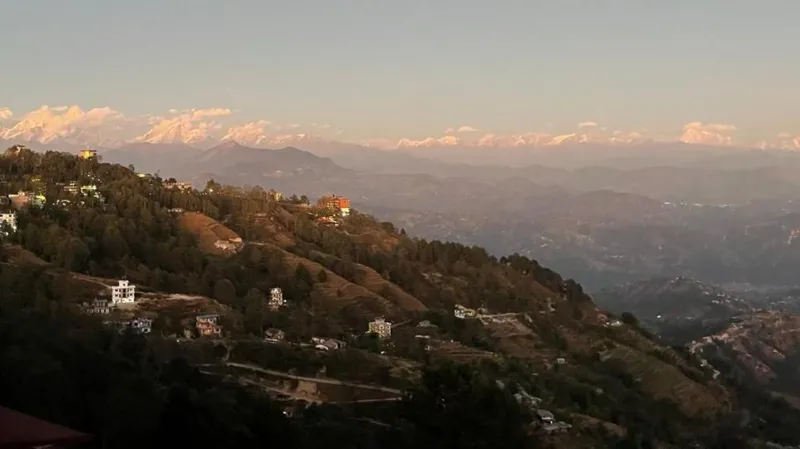
View of the Himalayas on an increasingly rare clear day from the Nagarkot vantage point
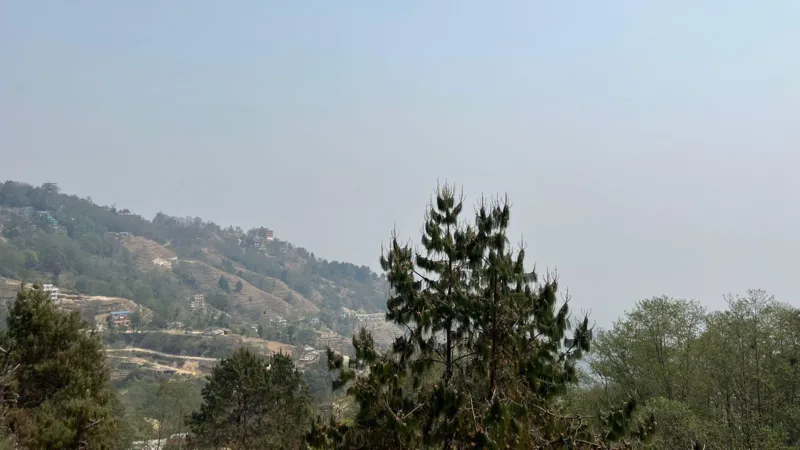
The hazy view from the same vantage point during my most recent visit
Scientists say hazy conditions in the region are becoming increasingly intense and lasting longer, reducing visibility significantly.
Haze is formed by a combination of pollutants like dust and smoke particles from fires, reducing visibility to less than 5,000m (16,400ft). It remains stagnant in the sky during the dry season – which now lasts longer due to climate change.
June to September is the region’s rainy season, when Monsoon clouds rather than haze keep the mountains covered and visibility low.
Traditionally, March to May and October to November were the best times for business because that was when skies remained clear and visibility was best.
But with rising temperatures and a lack of rain, and worsening air pollution, the spring months are now seeing thick haze with low visibility. Those conditions are beginning as early as December.
‘No sighting means no business’
Lucky Chhetri, a pioneering female trekking guide in Nepal, said hazy conditions had led to a 40% decrease in business.
“In one case last year, we had to compensate a group of trekkers as our guides could not show them the Himalayas due to the hazy conditions,” she added
An Australian tourist who has visited Nepal more than a dozen times since 1986 described not seeing the mountains as a “major let-down”.
“It wasn’t like this 10 years ago but now the haze seems to have taken over and it is extraordinarily disappointing for visitors like me,” said John Carrol.
Krishna Acharya, the provincial chair of the Trekking Agents Association of Nepal in the western Gandaki province, says the trekking industry is in deep trouble.
“Our member trekking operators are getting depressed because no sighting of the Himalayas means no business. Many of them are even considering changing professions,” he told the BBC.
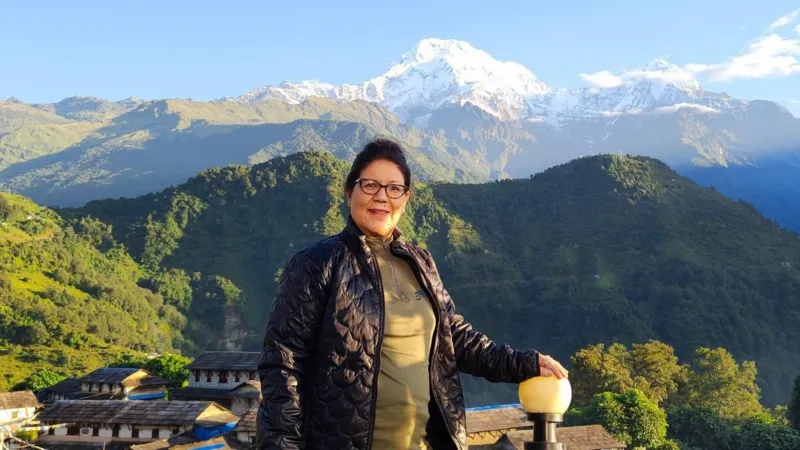
Trekking guide Lucky Chhetri says business is down because of the hazy condition
On the Indian side, near the central Himalayas, hoteliers and tour operators say haze is now denser and returns quicker than before.
“We have long dry spells and then a heavy downpour, unlike in the past. So with infrequent rain the haze persists for much longer,” said Malika Virdi, who heads a community-run tourism business in the state of Uttarakhand.
However, Ms Virdi says tourists are persistent – with many who didn’t catch the mountain range returning to try their luck again.
The western Himalayas in Pakistan have been relatively less affected by the haze because the mountains are relatively far from cities.
But locals say that even the ranges that were once easily visible from places like Peshawar and Gilgit are often no longer seen.
“The sheet of haze remains hanging for a longer period and we don’t see the mountains that we could in the past,” said Asif Shuja, the former head of Pakistan’s environmental protection agency.
Hazes and dust storms increasing
South Asian cities regularly top lists of places with highest levels of air pollution in the world.
Public health across the region has been badly impacted by the toxic air, which frequently causes travel disruption and school closures.
Vehicular and industrial emissions, dust from infrastructure construction and dry gravel roads as well as the open burning of waste are major sources of air pollution year-round.
This is compounded by soot from massive forest fires – which are increasing due to a longer dry season – and the burning of crop residues after the harvest by farmers in northern India, Pakistan and Nepal.
Weather conditions keeping warmer air above cooler air trap these pollutants and limit vertical air movement – preventing pollution from dispersing.
“Hazes and dust storms are increasing in South Asia, and this trend is projected to continue due to climate change and other factors,” Dr Someshwor Das from the South Asia Meteorological Association told the BBC.
In 2024, the number of hazy days recorded at the airport in Pokhara, a major tourism hub in western Nepal, was 168 – up from 23 in 2020 and 84 in 2021, according to Nepal’s department of hydrology and meteorology.
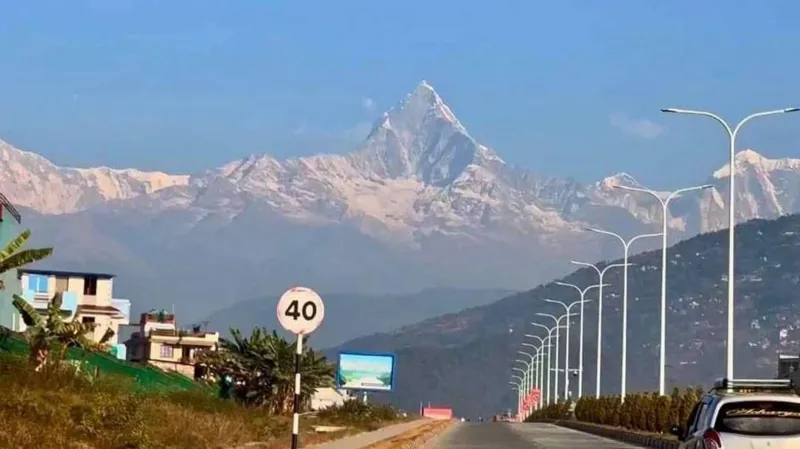
The Fishtail mountain in Nepal on a clear day
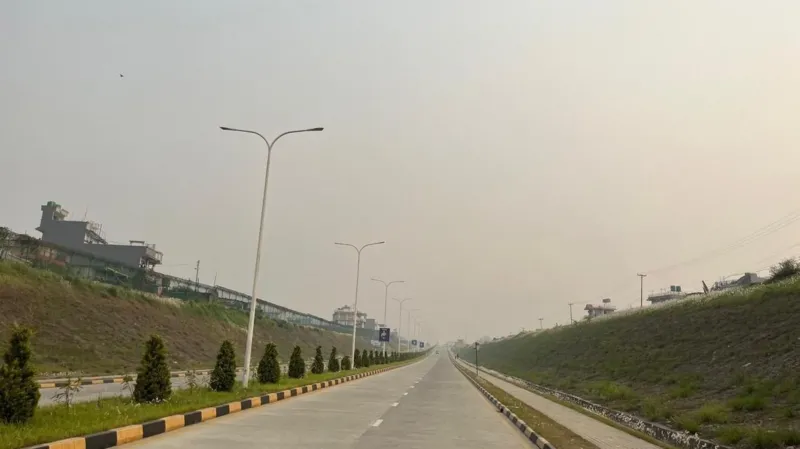
The same mountain range covered in haze, taken from roughly the same location
Experts believe the Himalayas are probably the worst affected mountain range in the world given their location in a populous and polluted region.
This could mean the scintillating view of the Himalayas could now largely be limited to photographs, paintings and postcards.
“We are left to do business with guilt when we are unable to show our clients the mountains that they pay us for,” said trekking leader Ms Chhetri.
“And there is nothing we can do about the haze.”
– Navin Singh Khadka
(Environment correspondent, BBC World Service)
FEATURES
Jewels linked to Buddha remains go to auction, sparking ethical debate
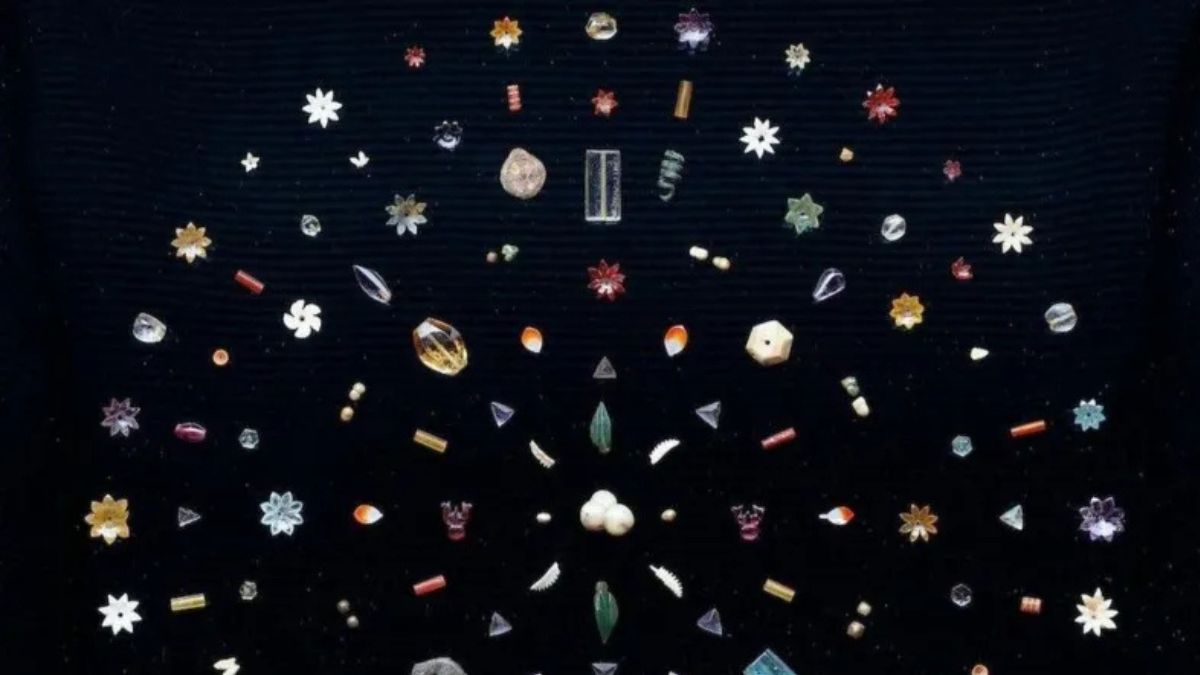
The jewels comprise nearly 1,800 pearls, rubies, sapphires, and patterned gold sheets
On Wednesday, a cache of dazzling jewels linked to the Buddha’s mortal remains, which have been hailed as one of the most astonishing archaeological finds of the modern era, will go under the hammer at Sotheby’s in Hong Kong.
For over a century these relics, unearthed from a dusty mound in northern India in 1898, have sat largely unseen, cradled by a private British collection.
Now, as the gems prepare to leave the custody of their keepers, they are stirring not just collectors’ appetites but also some unease.
They come from a glittering hoard of nearly 1,800 pearls, rubies, topaz, sapphires, and patterned gold sheets, first glimpsed deep inside a brick chamber in present-day Uttar Pradesh in India, near the Buddha’s birthplace.
Their discovery – alongside bone fragments identified by an inscribed urn as belonging to the Buddha himself – reverberated through the world of archaeology. Nicolas Chow, chairman of Sotheby’s Asia and worldwide head of Asian Art, believes this is “among the most extraordinary archaeological discoveries of all time”.
Yet as these relics now face the glare of the auction room, experts tell the BBC that a question hangs heavy: can the sale of treasures so intimately woven into India’s sacred past be considered ethical?
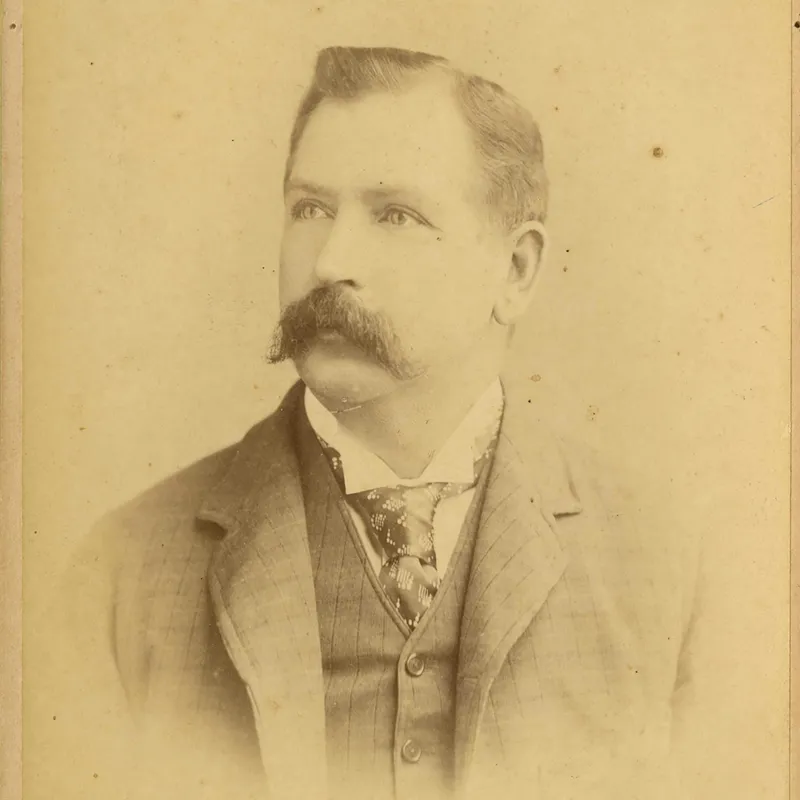
William Claxton Peppé, an English estate manager, excavated the stupa and found the jewels
In 1898, William Claxton Peppé, an English estate manager, excavated a stupa at Piprahwa, just south of Lumbini, where the Buddha is believed to have been born. He uncovered relics inscribed and consecrated nearly 2,000 years ago.
Historians agree these relics, intact until then, are the heritage of both the Buddha’s Sakya clan descendants and Buddhists worldwide. The bone relics have since been distributed to countries such as Thailand, Sri Lanka and Myanmar, where they continue to be venerated.
“Are the relics of the Buddha a commodity that can be treated like a work of art to be sold on the market?” wonders Naman Ahuja, a Delhi-based art historian. “And since they aren’t, how is the seller ethically authorised to auction them?
“Since the seller is termed the ‘custodian’, I would like to ask – custodian on whose behalf? Does custodianship permit them now to sell these relics?”
Chris Peppé, great-grandson of William, told the BBC the family looked into donating the relics, but all options presented problems and an auction seemed the “fairest and most transparent way to transfer these relics to Buddhists”.
Julian King, Sotheby’s international specialist and head of sale, Himalayan Art, New York told the BBC the auction house had made a thorough review of the jewels.
“As is the case with any important items and collectibles that are offered for sale at Sotheby’s, we conducted requisite due diligence, including in relation to authenticity and provenance, legality and other considerations in line with our policies and industry standards for artworks and treasures,” King said.
Ashley Thompson, of Soas University of London, and curator Conan Cheong, both experts in Southeast Asian art, have more questions. In a joint statement they told the BBC: “Other ethical questions raised by the sale are: should human remains be traded? And who gets to decide what are human remains or not? For many Buddhist practitioners around the world, the gems on sale are part and parcel of the bones and ash.”
The sale of the relics has also sparked concern among Buddhist leaders.
“The Buddha teaches us not to take other people’s possessions without permission,” Amal Abeyawardene of London-based British MahaBodhi Society, told the BBC. “Historical records indicate that the Sakyamuni clan were granted custody of these relics, as the Buddha emanated from their community. Their wish was for these relics to be preserved alongside adornments, such as these gems, so that they may be venerated in perpetuity by the Buddha’s followers.”
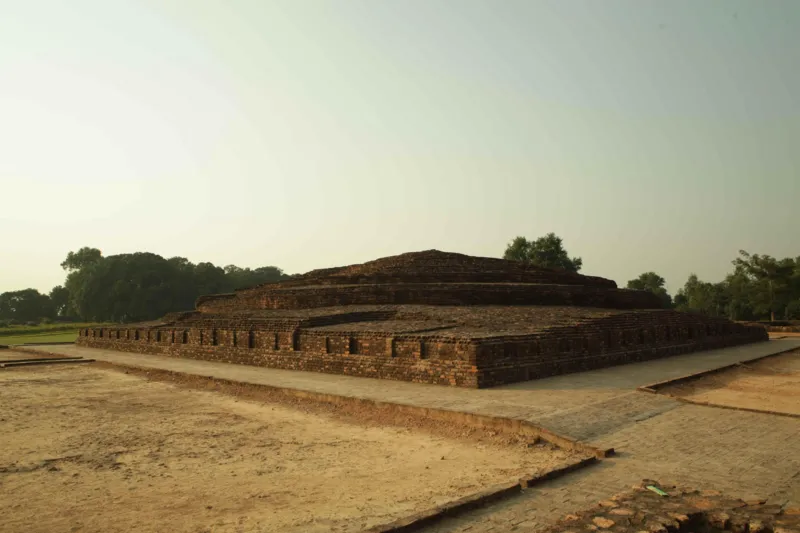
The jewels were unearthed from this stupa in Piprahwa, northern India in 1898
Chris Peppé has written that the jewels passed from his great-uncle to his cousin, and in 2013 came to him and two other cousins. That’s when he began researching their discovery by his great-grandfather.
The Los Angeles-based television director and film editor wrote he had found 1898 newspaper reports – from Reuters to the New York Tribune – announcing the find of Buddha’s remains.
“The colonisation of India by the British had been a source of some cultural shame for me [and continues to be] but, amidst the treasure hunters who hauled their finds back to England, there had also been people focused on the pursuit of knowledge,” Chris Peppé writes.
He noted his research revealed a lot about his ancestors who he had dismissed as “prejudiced Victorians from a bygone era”.
“I learned that Willie Peppé’s first wife chose to travel around India for her honeymoon and loved the country and its culture. Sadly, she died from an unspecified illness. I learned that my grandmother was outraged at the land laws that applied to Indian women.
“And I learned that the excavation of the stupa was an attempt by Willie Peppé to provide work for his tenant farmers who had fallen victim to the famine of 1897.”
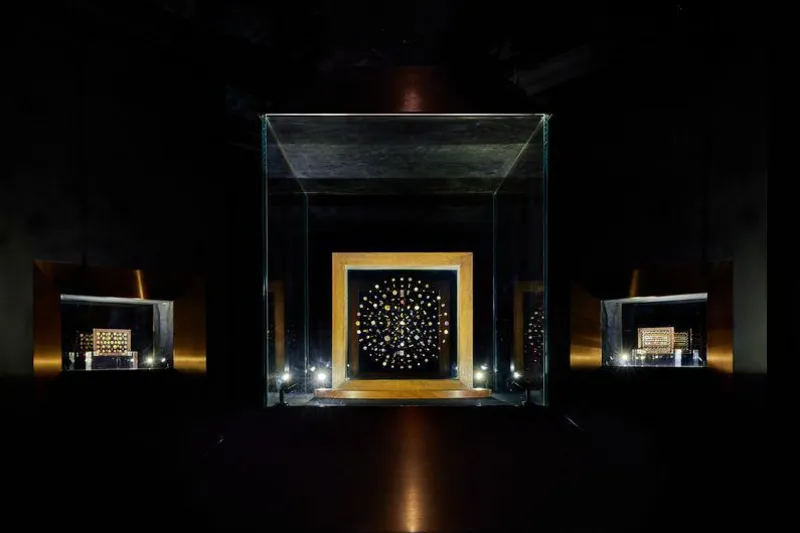
The jewels are considered among the most extraordinary archaeological finds of all time
He writes his great-grandfather’s “technical diagrams of ramps and pulleys suggest that he was also a trained engineer who couldn’t resist a project”.
William Peppé handed the gems, relics and reliquaries to the colonial Indian government: the bone relics went to the Buddhist King of Siam (Rama V). Five relic urns, a stone chest and most other relics were sent to the Indian Museum in Kolkata – then the Imperial Museum of Calcutta.
Only a small “portion of duplicates”, which he was allowed to keep, remained in the Peppé family, he notes. (Sotheby’s notes say Peppé was allowed to keep approximately one-fifth of the discovery.)
Sources told the BBC the auction house considers the “duplicates” to be original items considered surplus to those donated, which the “Indian government permitted Peppé to retain”.
Over the past six years years, the gems have featured in major exhibitions, including one at The Met in 2023. The Peppé family has also launched a website to “share our research”.
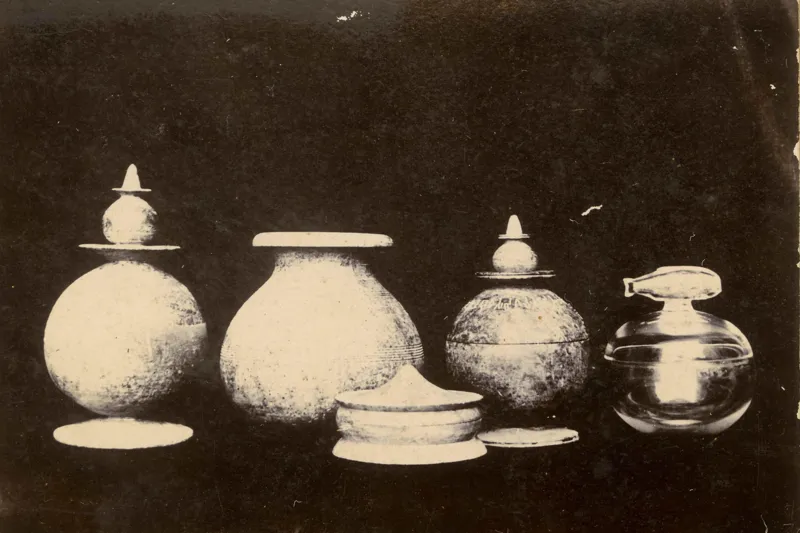
Four containers made of steatite (a type of stone) and one made of rock crystal were found inside a sandstone box at the Piprahwa stupa
Some scholars argue Buddha relics should never be treated as market commodities.
“The Sotheby’s auction transforms these highly sacred materials into saleable objects, in continuation of acts of colonial violence which extracted them from a stupa and called them ‘gems’ and ‘objects of interest to Europeans’, creating a false division with the ash and bone fragments they were consecrated with,” say Thompson and Cheong.
Chris Peppé told the BBC that in all the monasteries he had visited “no Buddhists regard these as corporeal relics”.
“A few Buddhist academics at western universities have recently offered a convoluted, fact-defying logic whereby they may be regarded as such. It’s an academic construct that is not shared by Buddhists in general who are familiar with the details of the find,” he said.
Peppé said the family “looked into donation [of the relics] to temples and museums and they all presented different problems on closer scrutiny”.
“An auction seems the fairest and most transparent way to transfer these relics to Buddhists and we are confident that Sotheby’s will achieve that.”
Some also point to The Koh-i-Noor, seized by the British East India Company and now part of the Crown Jewels, with many Indians viewing it as stolen. Should the Buddha’s jewels be next?
“Repatriation, I believe, is seldom necessary,” says Ahuja. “Such rare and sacred relics that are unique and which define a land’s cultural history, however, deserve the government’s exceptional attention.”
– Soutik Biswas
(India correspondent – BBC News)
FEATURES
What has Sri Lanka gained from EU GSP “Plus” since 2007?


Trump calls Putin ‘crazy’ after largest Russian attack on Ukraine

Lilo and Stitch beat Tom Cruise in box office bonanza