Connect with us

World

UN resolution calling for ceasefire in Gaza, passed

Published

on

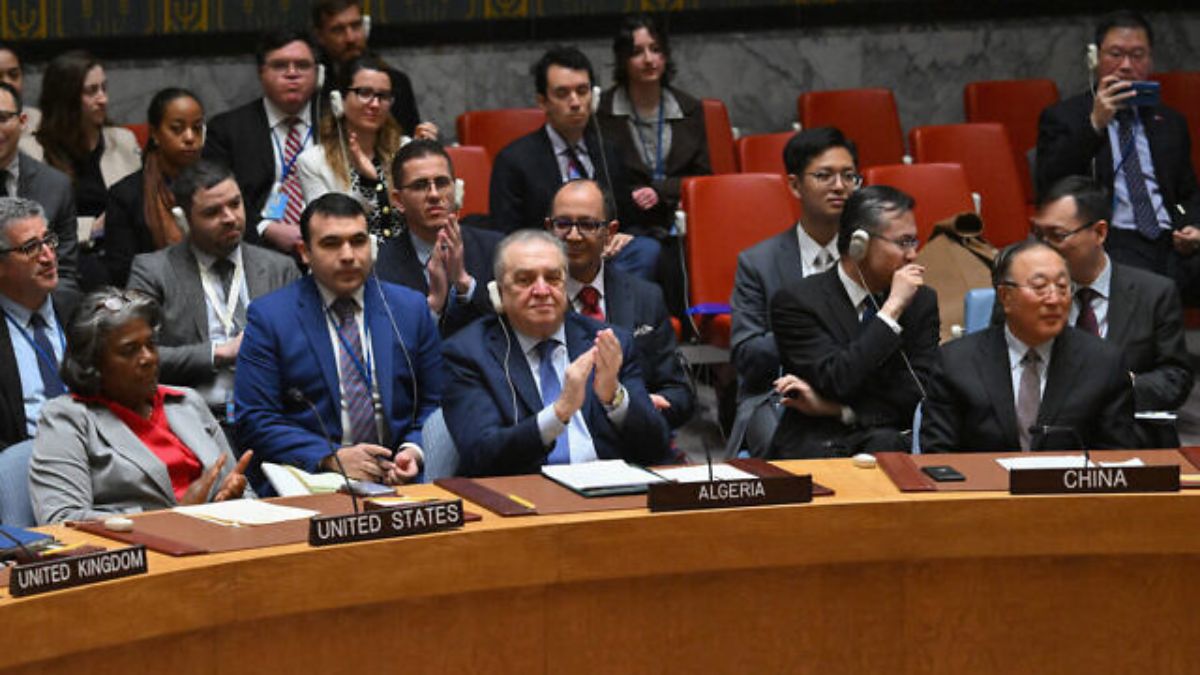
The UN Security Council has called for an immediate ceasefire in Gaza, after the US did not veto the measure in a shift from its previous position.

It also demanded the immediate and unconditional release of all hostages.

It is the first time the council has called for a ceasefire since the war began in October after several failed attempts.

The move by the US signals growing divergence between it and its ally Israel over Israel’s offensive in Gaza.

In an unusually strong rebuke, a statement from Israeli Prime Minister Benjamin Netanyahu’s office said the US had “abandoned” its previous position which had directly linked a ceasefire to a hostage release.

“Regrettably, the United States did not veto the new resolution,” it said.

The statement said this harmed efforts to release hostages by giving Hamas hope it could use international pressure on Israel to achieve a ceasefire without freeing the captives.

It also said Mr Netanyahu had decided to cancel meetings between an Israeli delegation and US officials in Washington that were scheduled for this week.

Israel’s defence minister said Israel would not stop the war in Gaza while hostages were still being held there.

The Palestinian representative to the UN, Riyad Mansour, welcomed the resolution but said it was overdue.

“It has taken six months, over 100,000 Palestinians killed and maimed, two million displaced, and famine, for this council to finally demand an immediate ceasefire,” Mr Mansour said.

Hamas, the Palestinian Islamist group which governs Gaza and which triggered the war with an unprecedented attack on Israel on 7 October, also welcomed the resolution. It said it was ready “to engage in an immediate prisoner exchange process that leads to the release of prisoners on both sides”.

The group has made any hostage release conditional on the release by Israel of Palestinians held in Israeli prisons.

In the Security Council vote on Monday, the US abstained, while the remaining 14 members voted in favour.

The US had previously blocked resolutions calling for a ceasefire, saying such a move would be wrong while delicate negotiations for a truce and hostage releases were continuing between Israel and Hamas.

But on Thursday it tabled its own draft, which for the first time called for a ceasefire, marking a hardening of its stance towards Israel.

US National Security Council spokesman John Kirby said the US’ decision to let the resolution pass did not mean a “shift in our policy”. He said the US backed a ceasefire but did not vote in favour of the resolution because the text did not condemn Hamas.

Speaking at a press briefing after the resolution was passed, Mr Kirby said: “We have been very clear, we have been very consistent in our support for a ceasefire as part of a hostage deal. That’s how the hostage deal is structured, and the resolution acknowledges the ongoing talks.”

UN Secretary General Antonio Guterres said the resolution “must be implemented” to secure a ceasefire and the “immediate and unconditional release of all hostages”.

(BBC News)

World

Trump calls Putin ‘crazy’ after largest Russian attack on Ukraine

Published

on

By

US President Donald Trump has said he is “not happy” with his Russian counterpart Vladimir Putin, following Moscow’s largest aerial attack yet on Ukraine.In a rare rebuke, Trump said: “What the hell happened to him? He’s killing a lot of people.” He later called Putin “absolutely crazy”.

Ukrainian President Volodymyr Zelensky earlier said Washington’s “silence” over recent Russian attacks was encouraging Putin, urging “strong pressure” – including tougher sanctions – on Moscow.

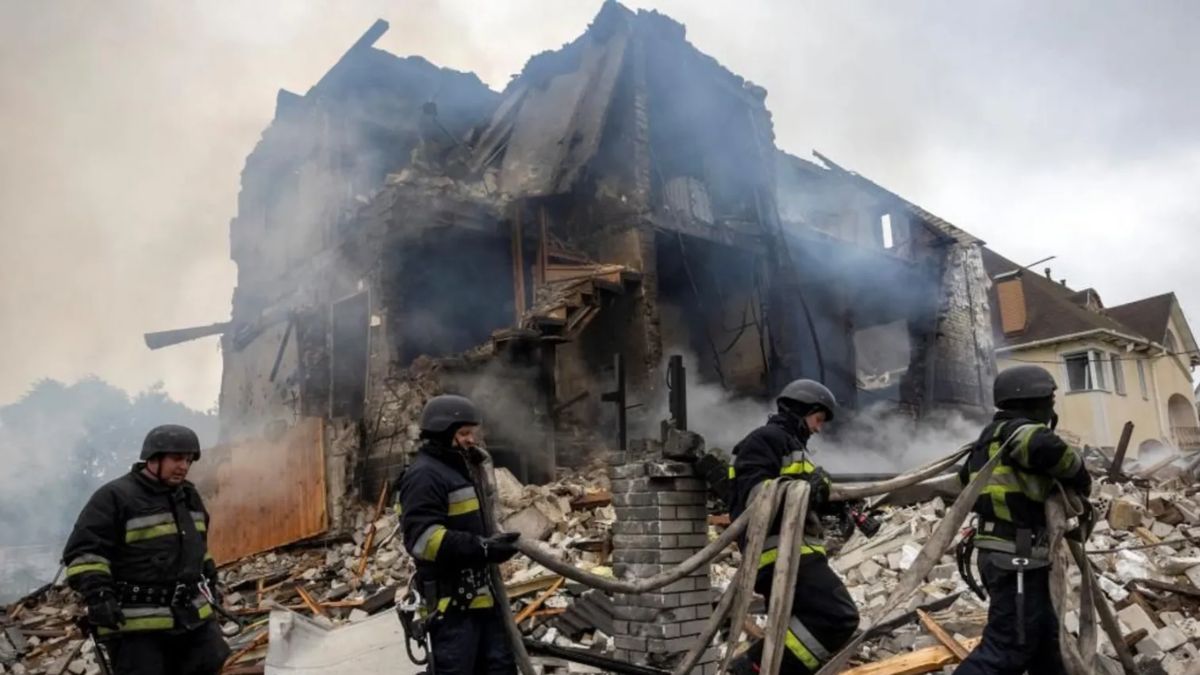
At least 12 people were killed and dozens injured in Ukraine overnight Sunday after Russia fired 367 drones and missiles – the highest number in a single night since Putin launched a full-scale invasion in 2022.

Air sirens warning of incoming drones and missiles sounded again in many regions of Ukraine early on Monday.

At least three people, including a child, were injured in the north-eastern city of Kharkiv, Mayor Ihor Terekhov said.

In the southern Zaporizhzhia region, two people were injured, said regional head Ivan Fedorov.

In Russia, Moscow Mayor Sergei Sobyanin said two Ukrainian drones heading towards the capital were destroyed by air defence units. No injuries were reported.

Speaking to reporters in New Jersey late on Sunday, Trump said of Putin: “I’ve known him a long time, always gotten along with him, but he’s sending rockets into cities and killing people, and I don’t like it at all.”

Asked about whether he was considering increasing US sanctions on Russia, Trump replied: “Absolutely.” The US president has repeatedly threatened to do this before – but is yet to implement any restrictions against Moscow.

Shortly afterwards, Trump wrote in a post on Truth Social that Putin “has gone absolutely crazy”.

“I’ve always said that he wants all of Ukraine, not just a piece of it, and maybe that’s proving to be right, but if he does, it will lead to the downfall of Russia!”

But the US president also had strong words for Zelensky, saying that he “is doing his country no favours by talking the way he does”.

“Everything out of his mouth causes problems, I don’t like it, and it better stop,” Trump wrote of Zelensky.

Despite Kyiv’s European allies preparing further sanctions for Russia, the US has said it will either continue trying to broker these peace talks, or “walk away” if progress does not follow.

Last week, Trump and Putin had a two-hour phone call to discuss a US-proposed ceasefire deal to halt the fighting.

The US president said he believed the call had gone “very well”, adding that Russia and Ukraine would “immediately start” negotiations toward a ceasefire and “an end to the war”.

Ukraine has publicly agreed to a 30-day ceasefire.

Putin has only said Russia will work with Ukraine to craft a “memorandum” on a “possible future peace” – a move described by Kyiv and its European allies as delaying tactics.

The first direct Ukrainian-Russian talks since 2022 were held on 16 May in Istanbul, Turkey.

Aside from a major prisoner of war swap last week, there was little or no progress on bringing a pausing in fighting closer.

Russia currently controls about 20% of Ukrainian territory. This includes Crimea – Ukraine’s southern peninsula annexed by Moscow in 2014.

(BBC News)

Continue Reading

World

Israeli embassy couple shot dead in Washington

Published

on

By

Shooting suspect Elias Rodriguez has been charged with two counts of first-degree murder after two Israeli embassy staff were killed in Washington DC on Wednesday night.

Sarah Lynn Milgrim and Yaron Lischinsky were leaving an event at the Capital Jewish Museum when they were shot dead.

Rodriguez, a 30-year-old from Chicago, was detained at the scene. More charges could come later, law enforcement officials say, and the FBI is aware of “writings” purported to be from the suspect.

Police say the suspect was in town for a work conference, and shouted “free Palestine” after being taken into custody.

US President Trump says the attack is “so sad” and “based obviously on antisemitism”, while DC Mayor Muriel Bowser says “this crime will not be tolerated in our city”.

Israel’s Prime Minister Benjamin Netanyahu has linked the shooting to the 7 October 2023 attack and says security will be increased at Israeli embassies worldwide.

(BBC News)

Continue Reading

World

‘Shrinking Nemo’: Smaller clownfish sound alarm on ocean heat

Published

on

By

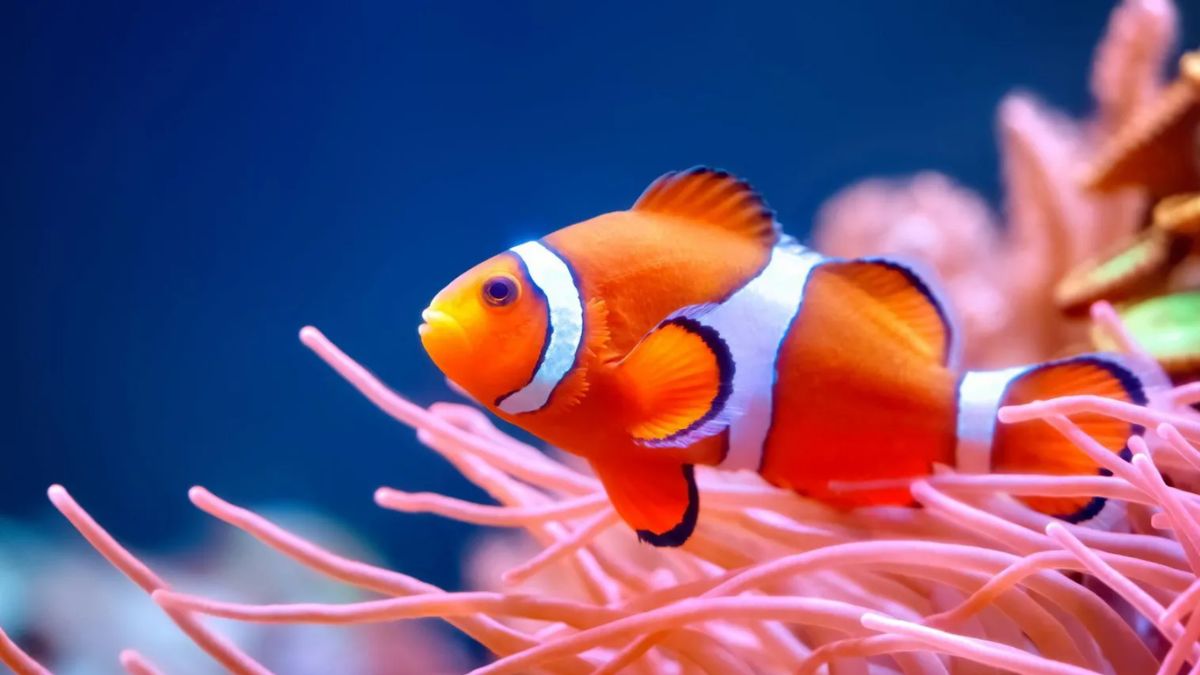
Fish similar to those made famous by the movie Finding Nemo are shrinking to cope with marine heatwaves, a study has found.

The research recorded clownfish living on coral reefs slimmed down drastically when ocean temperatures rocketed in 2023.

Scientists say the discovery was a big surprise and could help explain the rapidly declining size of other fish in the world’s oceans.

A growing body of evidence suggests animals are shape shifting to cope with climate change, including birds, lizards and insects.

“Nemos can shrink, and they do it to survive these heat stress events,” said Dr Theresa Rueger, senior lecturer in Tropical Marine Sciences at Newcastle University.

The researchers studied pairs of clownfish living in reefs off Kimbe Bay in Papua New Guinea, a hot spot of marine biodiversity

The wild clownfish are almost identical to the ones depicted in the movie Finding Nemo, in which a timid clownfish living off the Great Barrier Reef goes in search of his son.

The scientific study took place in the summer of 2023, when temperatures shot up in the oceans, leading to large swathes of coral turning white.

The scientists took multiple measurements of individual clownfish coping with the heat.

They found the tiny fish didn’t just lose weight but got shorter by several millimetres. And it wasn’t a one-off – 75% of fish shrunk at least once during the heatwave.

Dr Rueger explained: “It’s not just them going on a diet and losing lots of weight, but they’re actively changing their size and making themselves into a smaller individual that needs less food and is more efficient with oxygen.”

The fish may be absorbing fat and bone, as has been seen in other animals, such as marine iguanas, although this needs to be confirmed through laboratory studies.

Dr Rueger joked that a little bit of movie rewriting might be necessary, with a new chapter ahead for Nemo.

“The movie told a really good story, but the next chapter of the story surely is, how does Nemo deal with ongoing environmental change?” she told BBC News.

Global warming is a big challenge for warm-blooded animals, which must maintain a constant body temperature to prevent their bodies from overheating.

Animals are responding in various ways: moving to cooler areas or higher ground, changing the timing of key life events such as breeding and migration, or switching their body size.

The research is published in the journal, Science Advances.

(BBC News)

Continue Reading

Trending

Copyright © 2024 Sri Lanka Mirror. All Rights Reserved