
BIZ
Competitive tea industry must be modernised-President
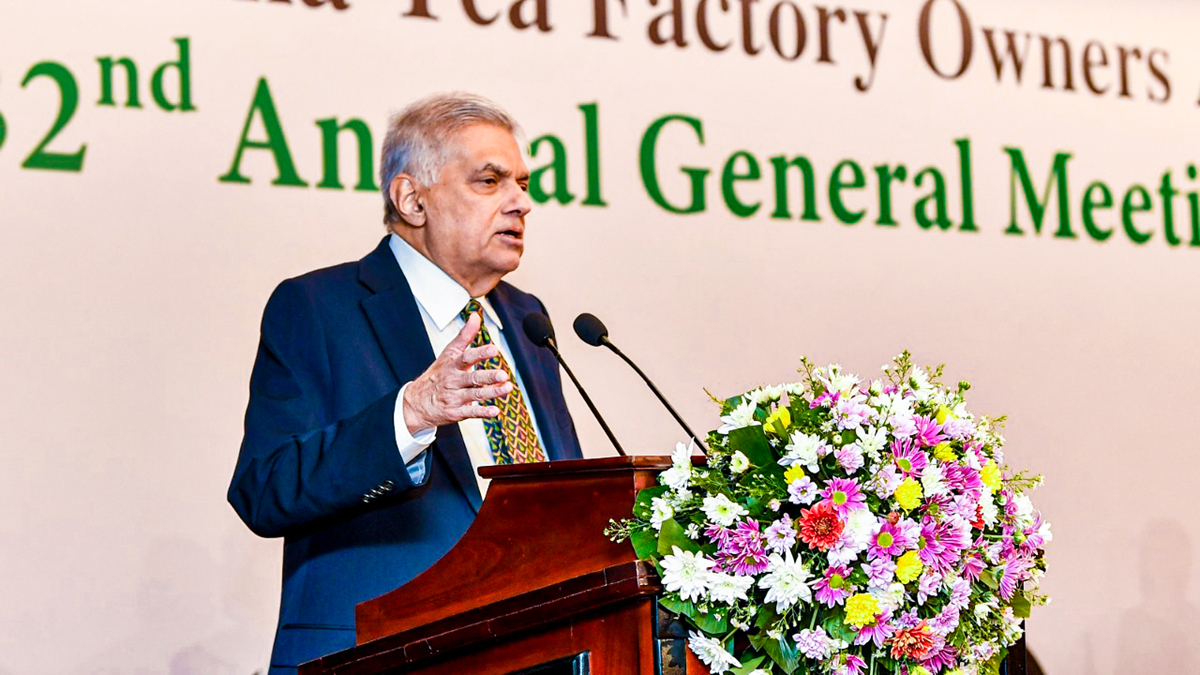
President Ranil Wickremesinghe noted that the government is aiming at an agriculture modernization programme in which tea will have a prominent place.
He said that the country has a very competitive tea industry that needs to be developed.
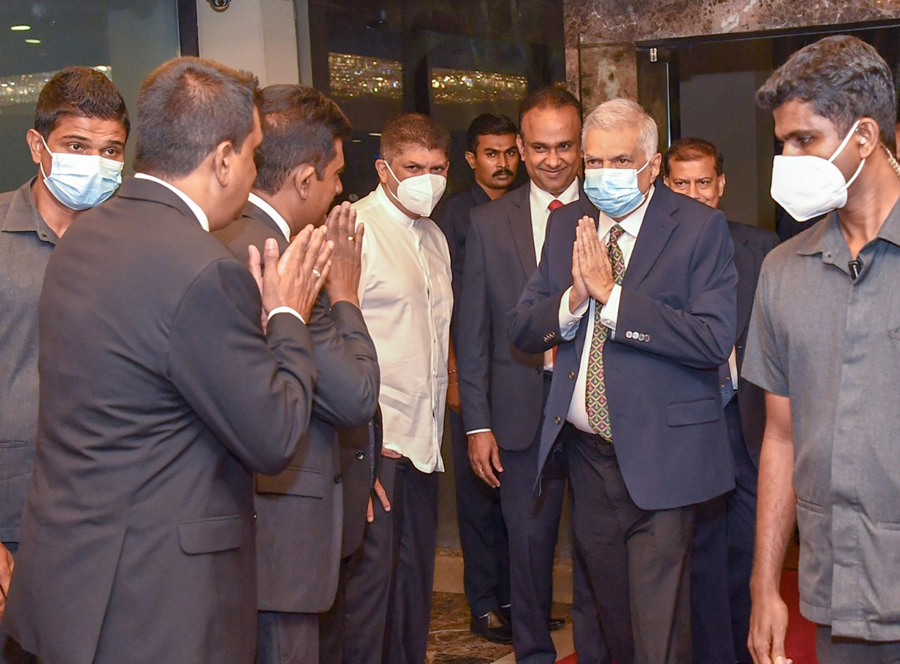
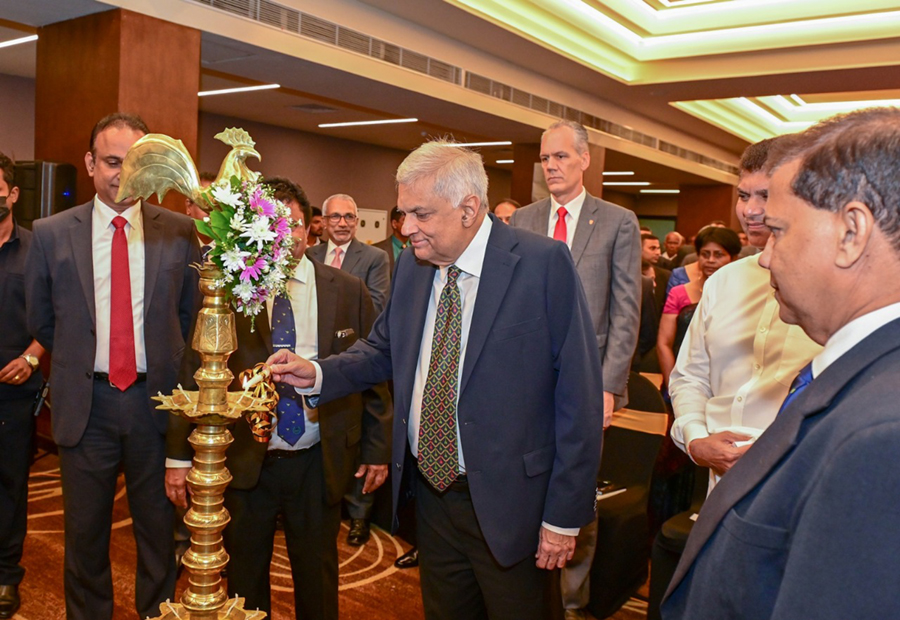
Addressing the 32nd Annual General Meeting of the Sri Lanka Tea Factory Owners Association at the Water’s Edge Hotel in Battaramulla yesterday (30), he said that the main focus should be on producing quality tea be high-grown or mid-grown.
“It is useless for us to try to compete with those who are not having the quality. We have an opportunity. Let’s go for it and develop the industry, modernize our factories, look at renewable energy, the biomass, all that is there,” the President emphasized.
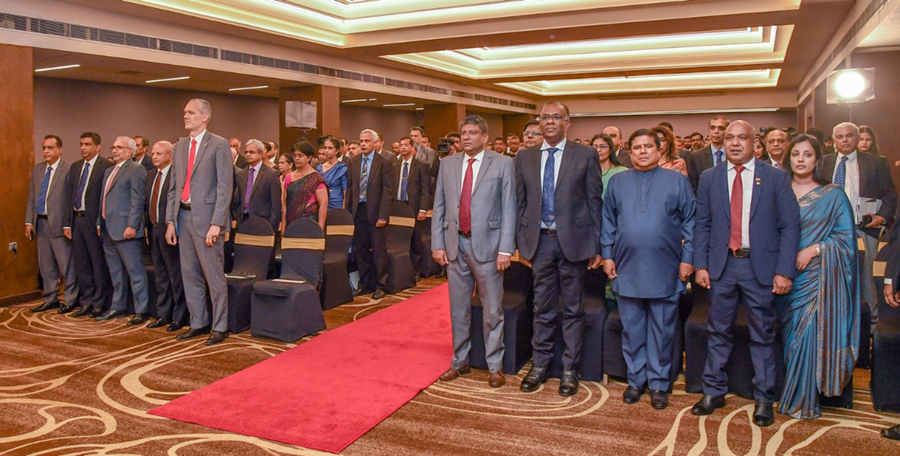
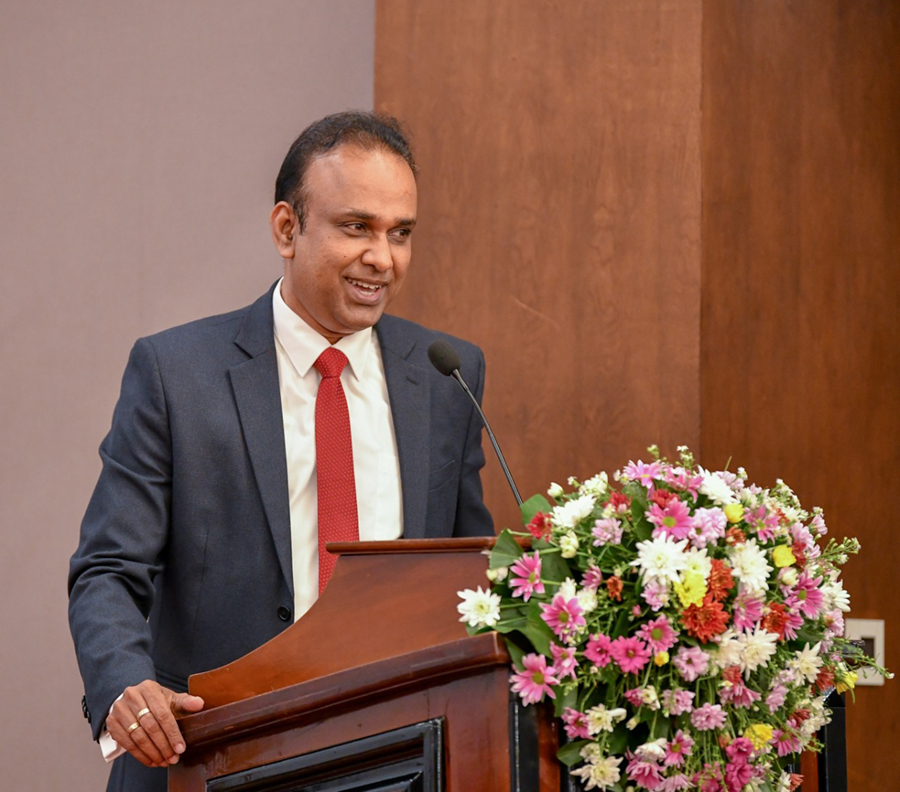
Plantation Industries Minister Ramesh Pathirana, Chief Executive Officer of A. Baur and Company (Pvt) ltd Rolf Blazer and President of Sri Lanka Tea Factory Owners’ Association Lionel Herath also addressed at the occasion.
State Minister Lohan Rathwatte, UNP leader and Parliamentarian Wajira Abeywardena, Plantation Ministry Secretary B. L. A. J. Amarakeerthi, Sri Lanka Tea Board Chairman Niraj de Mel and office bearers and the members of the Sri Lanka Tea Factory Owners’ Association participated in the event.
Following is the full speech made by the President;
“I was listening to the report by your president about a survey of the tea industry today. He came out with a tale of woes. That is understandable looking at what we have gone through this year. Now, it is my chance to come out with my tale of woes because I have taken over the titanic after it hit the iceberg. So you can just imagine where I have to start. Everything was down.
We have declared ourselves bankrupt. What have we got to do? First is to ensure that people can live and there is enough food to eat, whatever the other difficulties. With the bankruptcy that we have declared, our economy has virtually come to a halt. The inflation, the bankruptcy, and everything else that is happening have brought our economy to a grinding halt. How do we restart it? That is what we are engaged in. In addition, I thought I’d explain to you the process. Primarily, we have to conserve whatever foreign exchange we have and limit imports so that we could get fuel, fertilizer and medicine.
It has not worked fully initially, but now it’s working much better. Therefore, that is how we started. Then as the revenue dried up, we faced the difficulty of paying our bills or meeting our commitments. We had to keep two things in mind, one is to pay the salaries of government servants, about 1.7 million people and service our debts. Therefore, we have had to work within this scope.
Now that we have declared ourselves bankrupt, the first issue was to ensure that the world would now accept that we have taken sufficient steps to wipe out the label of bankruptcy, which meant that we have to go to the IMF and discuss with them. Every country and organization wanted us to meet with the IMF and devise a plan.
We did have a plan until 2019 when we cancelled the last year. Therefore, we had to start original discussions with the IMF. We had no other option. Our growth rate this year is going to be -8%. Last year too we recorded minus growth. This year is also -8%, and next year it is forecast that it would be -3%.
However, there’s one other factor which worries me. When that forecast was made, everyone thought the global economy will do well. Now, all the indications are that the global economy will fair badly. How will it impact, because the rising inflation in European and other countries will mean that the cost of living will rise? This in turn can somehow affect exports such as less clothing, maybe less tea, and less coffee. We have to understand that.
Therefore, we have to get through this year and then go into next year. Hence, we have to somehow manage two years. Our revenue reduced from 15% to 8.5% and we are expected to get the revenue back to 15%, which I think we have to do. The timeframe is 2026. I went in for a four-year program.
I didn’t think we could bear the burden if we tried to do it in two years and it may not have been possible. I’m happy that we went for four years because 2023 looks to be a bad year globally, not only for Sri Lanka.
So we had to first come to an arrangement which meant raising money. To raise that money, we had to tax everything, which also meant agriculture.
As someone once said, if it moves tax it. We had to come to that level and we had no way out. I wish we could have done it gradually but couldn’t because we needed the money. If you look at the taxes, those who paid taxes up to 2019 got a reduction 2019. Therefore, that’s a loss of revenue. Now what we are trying to do is bring it back first to the 2019 level and add a little bit more. So if you look at up to 2019, your taxation then and today is one figure. However, if you look at 2020 the gap seems much bigger. The fact is that we are suffering, it’s not only tax, but our rupee has also depreciated and interest rates have gone up.
Therefore, it is in this context that we have to operate. Ordinary people are finding it very difficult to live. I mean it’s in that condition that we have to come back. So the first issue is to ensure that we can restructure bankruptcy. We have to start talks with our creditors. I first went to the Paris Club where all the creditors were from the West and Japan.
However, we are in a unique position today where out of our three main creditors, only one belongs to the Paris Club. Japan. The other two are not in the Paris Club. They are India and China. I mean China only started dealing with bankruptcy in Zambia. I think India has it for the first time with Sri Lanka. I have already started discussions with Japan and now with India and China. We get down to a common platform of how we can resolve it while we also have discussions on bilateral issues that affect each other’s countries.
Now, this is the process, we had to move. If we can move and come to an agreement by December, which means coming to an agreement by mid-November, and going up to the IMF Board in mid-December, we will gain a big advantage. However, I don’t know whether we can do it for the simple reason that in China, the focus has started now after the party conference. However, we must aim to have it by January.
Therefore, this is what we are aiming at, and it means that we have to show that we have the revenue and we can go ahead. We start from there. Then how do we go ahead to ensure next year is better? In the meantime, we have started receiving assistance from many organizations and countries. Some countries have helped us through different organizations.
So thanks to the World Bank, ADB and others, we are having FAO, and we are having enough fertilizer. Even countries like the US have assisted us. So the fertilizer issue is solved. No one will give us money for fuel. Hence, we have to use the savings on fertilizer with local foreign exchange to buy fuel.
The next issue though, is that the price of fuel has dropped now and everyone expects the price of fuel to increase in December/January due to the Ukraine war and winter. Hence, that’s the next issue that we have to face. But since we have received fertilizer, the first thing was to revive agriculture, starting with Paddy and then getting on to tea and other crops.
Therefore, this is one part where if we get a good Maha crop by March/April next year, that will help to stabilize the economy. Meanwhile, once we get the agreement, the countries will come to help us. However, it takes time to get loans from bilateral loans again. Meanwhile, the World Bank and the ADB are willing to come up with bridging finance and the whole process will start.
Therefore, we have to thirdly go all out to improve our tourism. I think if we can aim for good tourist numbers by December next year as it grows progressively, then it will start working. Finally, we need foreign exchange reserves. There is no way in which you can raise it now. The only way in which we can raise foreign exchange reserves is by selling off some of our enterprises for dollars so that we can at least put $ 3-4 billion into the reserve, strengthening the rupee further. It will make life that much more affordable if you are moving to a complete market economy and a high-growth economy. This is the only step that we can take because so far having a vast state sector did not enable the economy to grow that fast.
I know the problems you have and I know many of you in the tea sector. Factory owners as much as in the rubber, coconut sector construction sector and the hotel sector are having problems with your banks, servicing your loans etc. So that’s why we are hoping first to bring the rate of interest down gradually.
The Governor of the Central Bank has informed us that our inflation is peaking. So by about February or March, we can see the reduction of interest rates, if not earlier. If we take all these measures by mid-year, we’ll be able to give relief on the interest rates. It’s difficult when the rupee has depreciated and the interest rates rise. But you have to remember that in two years we printed Rs 2.5 trillion worth of notes. So it has to run through the system.
There is no shortcut and the only way is by getting production up again. So here it’s a question about how we could help you in the tea industry. We have got the fertilizer. I know there are deficiencies in other areas. One of the main things that I asked is that we pay the fertilizer suppliers. We have decided to pay them, but the money hasn’t gone yet.
I hope that with the new taxes and the collection that is coming in November-December we will be able to pay them off. We also have to pay the contractors. The whole industry has come down. So there’s a long list of people with debts which the government has to honour. So that’s the process. But we want the tea industry to develop. And I must assure you, the honourable minister and the State Minister have been spending a lot of their time looking at how to help you in this circumstance.
Because helping the tea industry helps us bring in foreign exchange and save rubber and additional agriculture production. Next year we have to come through with agriculture production. That is what we have to do as we add the rupee stabilizes. Certainly, people will start sending back the exchange, the foreign employment and the money will come up. But also we can’t run on this economic model anymore.
We have to pay our debts. We have to take some more debt. We are to work completely on an export-oriented economy, and that’s what we are working on. We’ll come back to you, but you have a lot of things to do too. We know you need fertilizer. Most of the major issues are that we need replanting. We are suffering because we have not replanted. As a result, our crop per hectare is coming down. Vietnam is overtaking us. Whoever thought that Vietnam will be growing tea. That’s the position. So we are looking at an agriculture modernization programme in which tea will have a big place. We have a very competitive tea industry that we have to develop. And I think we have to go for quality tea, whether it be high-grown or mid-grown. It is useless for us to keep competing with those who are not having the quality.
We have an opportunity. Let’s go for it and develop the industry, modernize our factories, and look at renewable energy, biomass, and all that is there. So we need a modern industry and certainly, I think it’s good that you have got Price Waterhouse and Cooper. Because you can utilize their report together with the ADB report on the regional plantation companies. Some of you are doing quite well. Others are a disgrace. So let’s see how we can restructure, how we can get your help and go ahead. I thought I described this to you. I haven’t got the best picture possible, but at least I am trying to take the Titanic off the iceberg and once we do that, we’ll go ahead. Thank you very much for inviting me”.







BIZ
BOC & NSB record historic profits
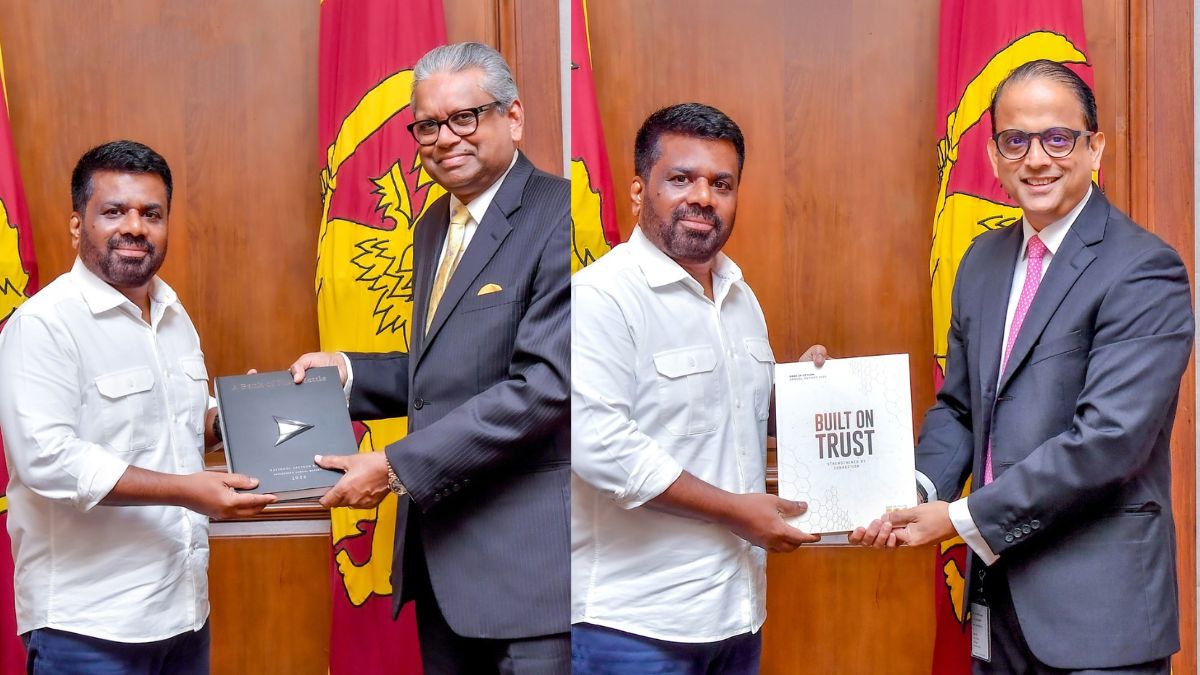
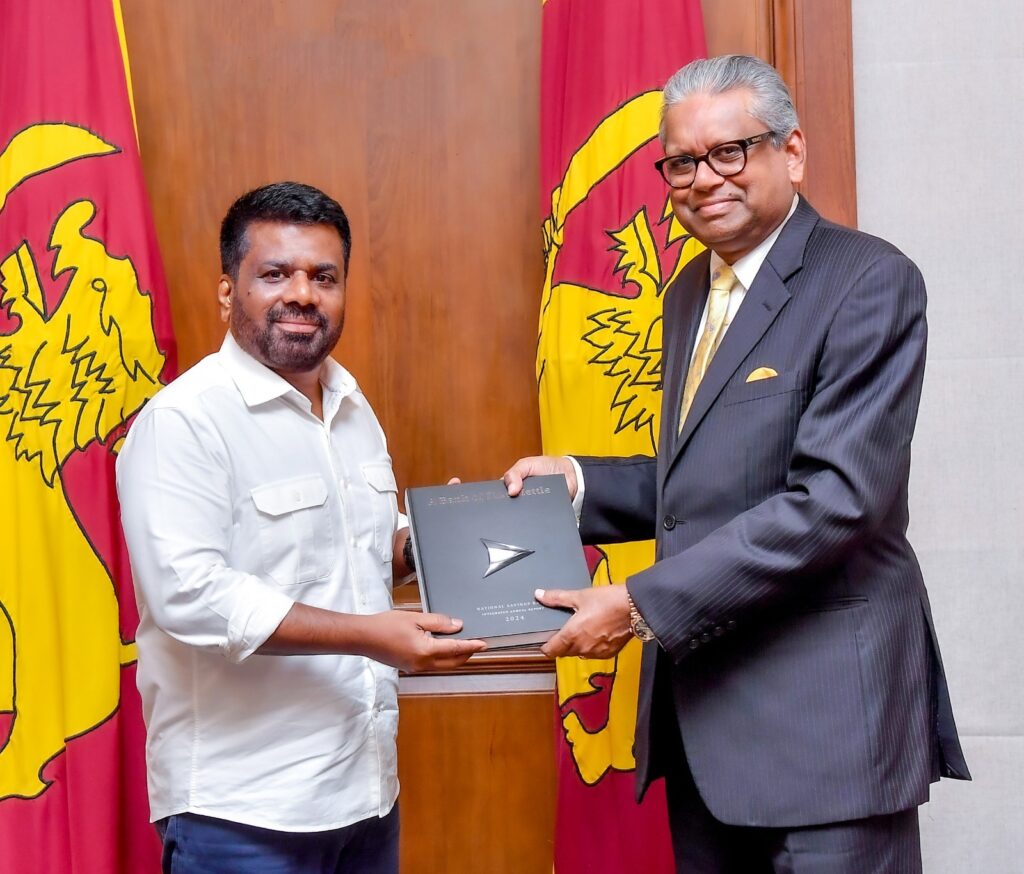
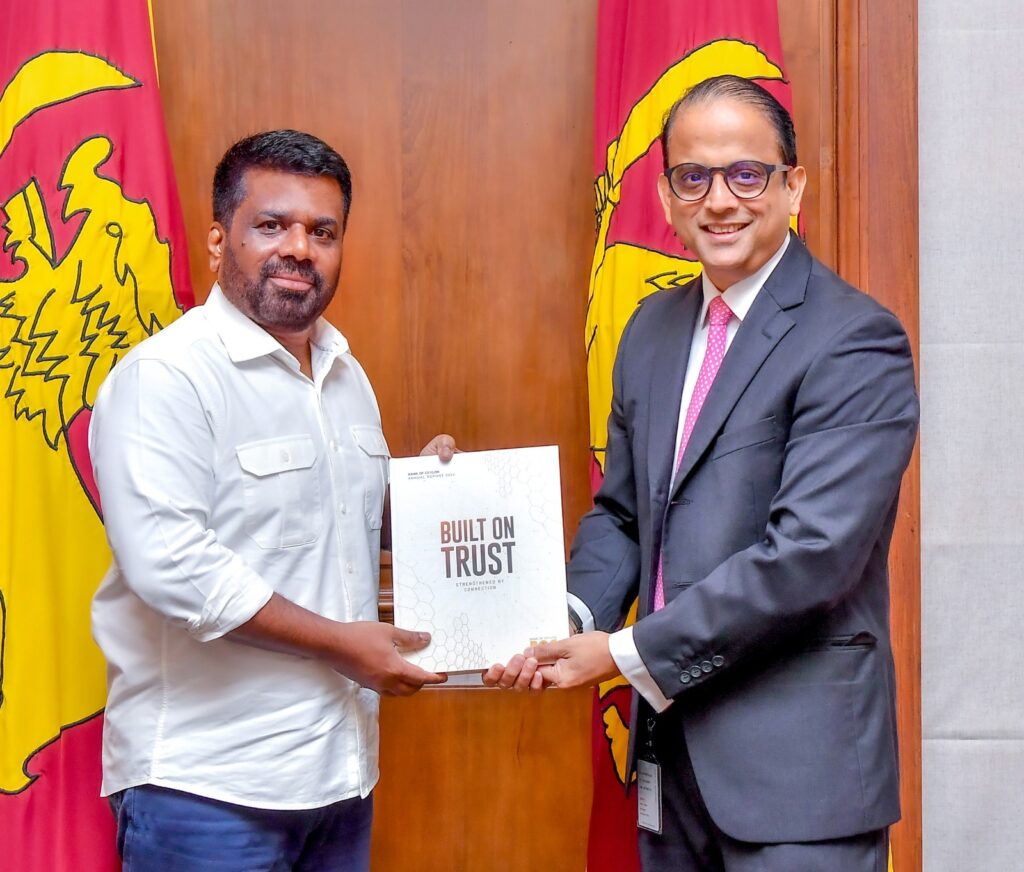
In a milestone moment for Sri Lanka’s financial sector, the Bank of Ceylon (BOC) and the National Savings Bank (NSB) reported record-breaking profits for the year 2024, officially presenting their annual reports to President Anura Kumara Disanayake at the Presidential Secretariat today (22).
The achievements, marked by robust fiscal discipline, strategic vision and public accountability, signal a renewed trajectory of confidence in state-owned banking institutions.
The BOC announced a staggering pre-tax profit of Rs. 106 billion, the highest ever recorded not only by a bank but by any institution, public or private, in Sri Lanka’s history. BOC Chairman Kavinda de Zoysa emphasized the significance of this financial milestone, stating, “This is a historic record as the BOC recorded the highest profit before tax of Rs. 106 billion, the highest profit achieved by any institution, bank or company in Sri Lanka in its entire history.”
He credited the bank’s strategic focus on national development and SME support, adding, “BOC continues as the largest SME and development bank in the country with the best business rehabilitation unit which is futuristic and supports the entire nation.”
Meanwhile, the NSB posted a dramatic turnaround, reporting a pre-tax profit of Rs. 26.4 billion, a remarkable leap from Rs. 4.2 billion in 2023. Chairman Dr. Harsha Cabral attributed this growth to prudent fiscal governance and effective stakeholder collaboration.
“The National Savings Bank recorded the highest ever profit before tax of Rs. 26.4 billion for the year 2024. This is a momentous success and a major increase from the Rs. 4.2 billion in 2023,” he said. “The success of NSB is mainly due to the financial discipline and macroeconomic stability of the country. I dedicate this achievement to the entire NSB family, including our employees, board of directors, senior staff, customers and all stakeholders who support us directly or indirectly.”
Dr. Cabral highlighted that NSB is no longer a burden on the state. “We are a self-sustaining success story and not a burden on the Treasury anymore. With professional management and financial discipline, the NSB has achieved its targets and hopes to exceed them in 2025,” he noted. He also pointed to internal reforms and staff incentives that bolstered morale and productivity. In 2024, NSB’s workforce was streamlined from 4,600 to 4,200 while maintaining a 262-branch network. Employees were rewarded with a five-month bonus, and gold coins were reintroduced for long service recognition after a five-year gap.
Both chairmen underscored a rare but significant aspect of their governance: neither they nor their board members draw a salary for their service. “Our reward is the institution’s success and its contribution to national development,” Cabral remarked, a sentiment echoed by de Zoysa as a model of civic-minded leadership.
President Anura Kumara Disanayake commended the accomplishments of both institutions, stating, “These banks demonstrate how strategic leadership and ethical governance can transform public institutions into pillars of national strength. Their performance is a beacon of what’s possible in Sri Lanka’s economic future.”
With an eye on 2025, BOC is set to expand its digital infrastructure to enhance accessibility and customer service, while NSB plans to refine its operations further, guided by corporate governance best practices.
(President’s Media Division)
BIZ
CBSL further reduces Overnight Policy Rate (OPR)
BIZ
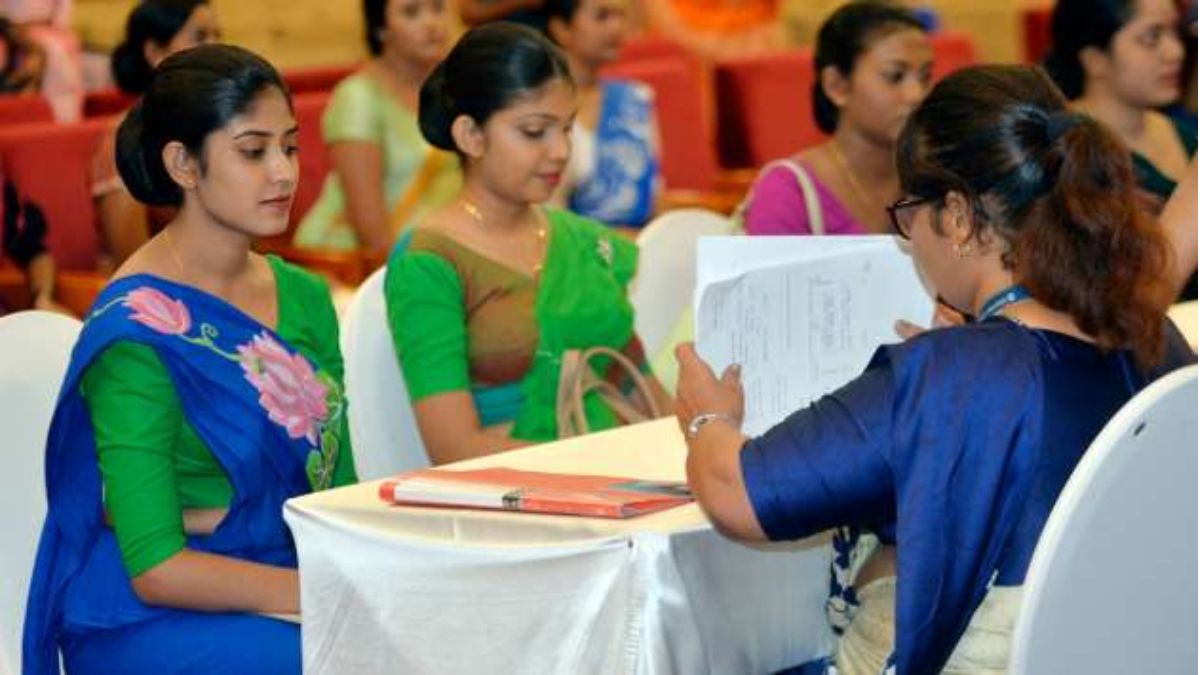
SriLankan attracts 12,000 applicants in cabin crew recruitment drive

Trump calls Putin ‘crazy’ after largest Russian attack on Ukraine

Lilo and Stitch beat Tom Cruise in box office bonanza